Showing posts with label Authors for Teens. Show all posts

Monday, 16 May 2022

Captain Blood by Rafael Sabatini (1922)

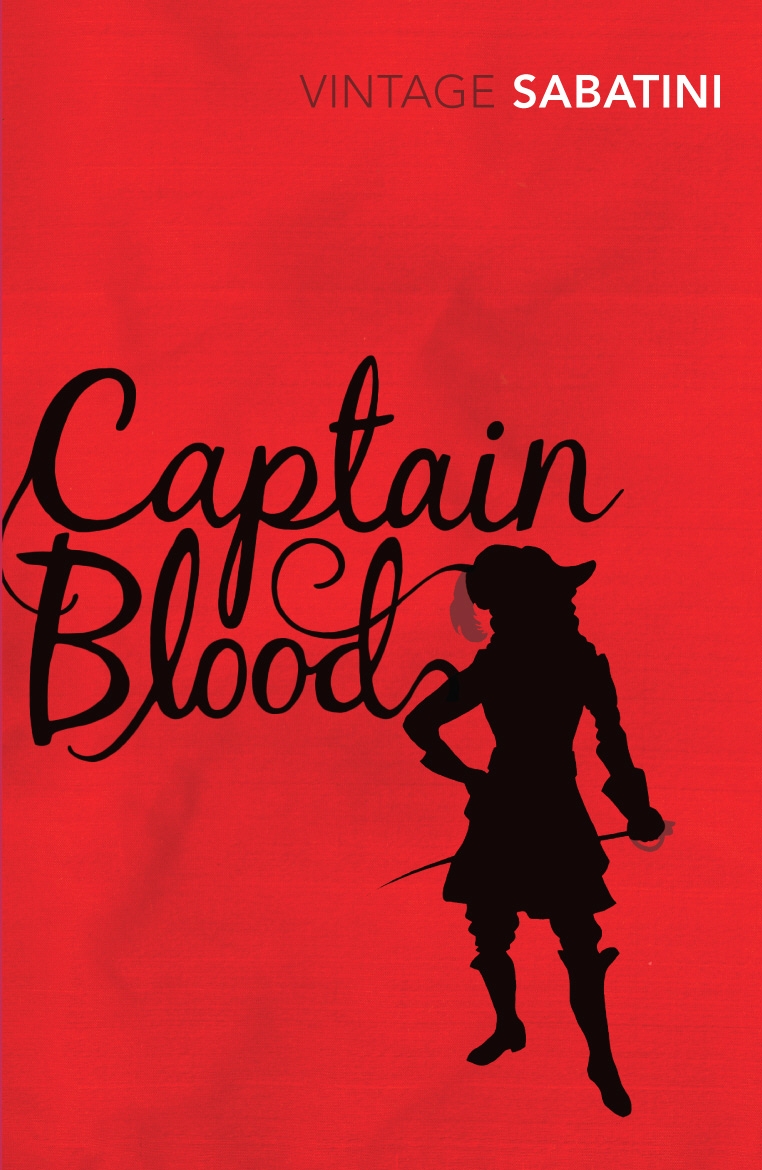
Captain Blood by Rafael Sabatini is an exciting adventure story which begins around 1685 when King James II was on the throne of England.

Peter Blood was a thirty-two year old Irish physician who had taken service with the Dutch under the great admiral de Ruyter and fought against France. He spent two years in a Spanish prison and later served with the French in their wars against the Spanish Netherlands.
As the story opens, he was in England working as a doctor, when an attempt was made by the Duke of Monmouth (the illegitimate son of Charles II and Lucy Walter) to overthrow James II after Charles’ death.
Blood watched the men of the town as they rallied under Monmouth’s banner head off to what he knew would be ignominious defeat. It was no concern to him and that night he went to bed early and didn’t wake until 4 a.m. with the sound of hammering on his door.
Blood was called urgently to treat a young nobleman wounded in the rebellion during the night; a man who had been a friendly and generous patron to him and to whom he felt indebted.
This act of mercy was to change his life.


Two months later Blood was brought to trial on a charge of high treason before the infamous Judge Jeffreys. Narrowly escaping the gallows, Blood was sentenced to ten years of slavery in Barbados.
At the first opportunity that presented itself, he devised a means of escaping with a group of slaves. This made a life of piracy their only option.
What follows is a colourful, high spirited tale involving romance, piracy and a good dose of historical detail.


Captain Blood
engaged me from the very first page and never let up with its twists and knife edge escapades. He is a very likeable character, who, despite being involved in piracy, is a man of moral character - you’ll have to read the book to understand this paradox.
Swashbuckling it definitely is. Sabatini was an exceptional writer and it is not surprising that this book quickly became a best-seller after it was published and is still in print.


I was looking through the ‘Old Favourites’ section of a Lifeline book-sale a couple of years ago and an elderly man asked me if I’d seen any books by Rafael Sabatini and explained how wonderful they were. I’d only read Scaramouche so I’ve kept a lookout ever afterwards and picked up a few of his books.
Captain Blood has been reprinted by Dover Publications; they price their books well but they’re not really robust which is a problem when you have a book like this that demands to be read by everyone in the family.
Highly recommended for teen readers or anyone who likes a ripper of an adventure story based on historical events.
Fortunately, Sabatini was a prolific author and his books are available on Kindle quite cheaply.

‘…in the Caribbean, the Spanish Admiral Don Miguel de Espinosa might be said - to use a term not yet invented in his day - to have run amok. The disgrace into which he had fallen as a result of the disasters suffered at the hands of Captain Blood had driven the Admiral all but mad. It is impossible, if we impose our minds impartially, to withhold a certain sympathy from Don Miguel. Hate was now this unfortunate man’s daily bread, and the hope of vengeance an obsession to his mind. As a madman he went raging up and down the Caribbean seeking his enemy, and in the meantime, as an hors-d’oeuvre to his vindictive appetite, he fell upon any ship of England or of France that loomed above his horizon.’


Tuesday, 20 February 2018

Newbery Honor Book: Hatchet by Gary Paulsen (1987)


Hatchet by Gary Paulsen is a gripping short story about a thirteen-year-old city boy who survives a plane crash in the Canadian wilderness after the pilot suffers a massive heart attack mid-flight.
Brian Robeson is flying from New York to Canada on a small Cessna plane to stay with his father for the summer. He is the only passenger and it is the first time he’d ever been on a plane.
Brian survives the crash of the plane into a lake, escaping with only the clothes he is wearing and the hatchet his mother gave him strapped to his belt.
He realizes very quickly that he needs shelter and food and begins his education in survival skills. He finds berries, learns how to spear fish and birds with his homemade spear, and with the aid of his hatchet, discovers how to start a fire.
He survives an attack by a moose, an encounter with a bear, a tornado, the torturous afflictions of mosquitoes and in the process gains some inner resolve and strength that he didn’t have before.

If the story was confined to the plane crash, the boy’s attempts to keep alive, and his growth during the ordeal, it would probably be an excellent read for a child around the age of twelve, but there are a few themes that might cause concern for parents, and I'd recommend a pre-read before handing it to your child (it's only about 180 pages).
The reason Brian is travelling to Canada to spend the summer with his dad is because his parents recently divorced and he is on his first visit to his father’s new home.
Bit by bit Paulsen reveals Brian’s secret: he had seen his mother in the company of another man in her car and had seen them kiss. This knowledge burned inside him and during the flight his mind flashes back to the scene; to his strained relationship with his mother who was unaware that Brian knew about her infidelity; to the secret his father was unaware of.

Divorce.
It was an ugly word, he thought. A tearing, ugly word that meant fights and yelling...the breaking and shattering of all the solid things...
Divorce.
The Secret.
Fights.
Split.
The big split. Brian’s father did not understand as Brian did, knew only that Brian’s mother wanted to break the marriage apart. The split had come and then the divorce, all so fast, and the court had left him with his mother except for the summers and what the judge called ‘visitation rights.’ So formal. Brian hated judges as he hated lawyers. Judges who leaned over the bench and asked Brian if he understood where he was to live and why. Judges who did not know what really happened. Judges with the caring look that meant nothing as lawyers said legal phrases that meant nothing.


Sitting in the cockpit with a dead pilot, the plane knocked off its course when the man smashes into the controls with the violence of his chest pain; trying to send an SOS when he has no idea of how to contact anyone; when in fact, he’d never even seen the inside of a plane except in movies - this is pretty intense stuff.

I thought Paulsen’s depiction of the inner turmoil of a young boy’s struggle with parental breakdown was very perceptive and real. He also conveyed the terrible shock, fear and loneliness of the boy's predicament before and after the crash with skill. The writing style is more likely to be appreciated by children around the age of the protagonist or even younger but I’d think hard before giving the book to anyone under the age of fourteen or fifteen.
There is an incident that occurrs when he’d been on his own for forty-two days. He hears a plane and runs with a burning piece of wood to try to signal to the aircraft but he fails to attract any attention. Up until this point he had just been waiting to be rescued but he realizes that the doomed plane had veered way off its course and no one would be expecting him to be where he was. All his hope dissipates and he tries to commit suicide by cutting himself with his hatchet.

Madness. A hissing madness that took his brain. There had been nothing for him then and he tried to become nothing but the cutting had been hard to do, impossible to do, and he had at last fallen to his side, wishing for death, wishing for an end...
Still there on his side and the sun came up and when he opened his eyes he saw the cuts on his arm, the dry blood turning black; he saw the blood and hated the blood, hated what he had done to himself when he was the old Brian and was weak, and the two things came into his mind - two true things.
He was not the same. The plane passing changed him, the disappointment cut him down and made him new. He was not the same and would never be again like he had been. That was one of the true things, the new things. And the other one was that he would not die, he would not let death in again.
He was new.


Another incident that might be too much for younger readers occurred after a tornado tore through the area. Afterwards, when Brian went to the lake, the tail of the plane was now visible. He remembered that a survival pack had been stored near the tail somewhere and he decided to try to get out to the plane and recover the pack.
Once he got to the plane, he had to dive down to loosen the pack as it was jammed in by one of the seats. As he grabbed the pack, he saw the pilot’s head, or what remained of it, and he realized that the fish he had been eating since he’d been stranded had been nibbling on the pilot all that time and the skull was almost picked clean. A bit gross, and needless to say, Brian was sick.
The ending was a little ironic. Brian finds all sorts of goodies in the survival pack, including an Emergency Transmitter that he fiddles with but it appears to be broken. He cooks himself a slap up meal using some of the treasures that come in the pack, and as he sits savouring the smell of his cooking, a plane with floats suddenly roars overhead and lands on the lake fifty-four days after the crash.
Dumfounded, Brain stares at the pilot as he gets out of the plane:

'I heard your emegency transmitter - then I saw the plane when I came over...' He trailed off, cocked his head, studying Brian. 'Damn. You're him, aren't you? You're that kid. they quit looking, a month, no, almost two months ago. You're him, aren't you?
You're that kid...'
Brian was standing now, but still silent...He looked at the pilot, and the plane, and down at himself - dirty and ragged, burned and lean and tough - and he coughed to clear his throat.
'My name is Brian Robeson,' he said. Then he saw that his stew was done, the peach whip almost done, and he waved to it with his hand. 'Would you like something to eat?'


Overall, Hatchet is an absorbing and quick read. An interesting aspect for me is Brian’s character development during the course of the story. From a slightly tubby adolescent who had no idea of how to look after himself, reeling from the trauma of his parent’s divorce and the secret he carries, he develops into a young man who learns to overcome his emotions, to think through his decisions before he acts on them, and to learn through his mistakes.
I think in the right circumstances and at the right time this book would be a good choice, especially for a boy. I’ve read that Hatchet has been assigned in some schools for 4th grade students but I think that’s too young.

The author has written a couple of sequels that I haven’t read. Brian's Winter (published previously as ’Hatchet: Winter’) continues the story by looking at what would have happened had Brain not been rescued and had to survive the winter.


Tuesday, 13 September 2016

8 Favourite Fairy Tale Re-tellings for Teens


Regina Doman's first fairy tale novel was published in 1997 by Bethlehem Books under the title, Snow White and Red Rose. A few years later it was re-published with the title Shadow of the Bear, and there followed more books in the series. I found these novels when I was searching for suitable books for my daughter's birthday. I think she was about 14 years of age when I bought the first one and she loved it and requested more in the series.
Each book is a modern re-telling of a Grimm Brother's fairy tale and each chapter commences with a quote from the original story. These classic tales are put into a modern setting (e.g. New York City), and the characters face various cultural challenges and battles that young people may find themselves in today. A familiarity with the original fairy tale is helpful (I've linked to online versions of the original tales) and enhances the story, but it's not essential.
The books mature with the reader, with subsequent books tackling darker themes. The first three should be read in order as the main characters re-appear in the books.

The Shadow of the Bear


Originally published by Bethlehem Books under the title 'Snow White and Red Rose,' this is a modern day retelling of the fairy tale of the same name. The two sisters in the re-telling are Blanche and Rose, and Bear is a mysterious, street-wise young man.

'Once upon a time in New York City...
...there lived two sisters who loved books, poetry, music, and fairy tales.
They lived with their widowed mother in a brownstone with two rose bushes in front of it.
One winter night, a Bear came to their door and they let him in, even though he could not tell them his real name or his real mission.
He became their friend, protector, and constant companion.
They never dreamed that his friendship might cost them their lives.'


Picky parents guide to this book.


My book isn't a 1950's throwback—it's not a sweet book. I'm a child of the '70s, a teen of the '80s and, growing up in the teeth of the sexual revolution, I lost the innocence of the imagination early, as many kids today still do. I have no nostalgia for a safer and purer time—I never knew one.

My two heroines, Blanche and Rose, face the ugliness that is out there today, and they don't back down. They face the battle for the culture, and they fight it by how they live their lives. I think that's one reason why teens love them. And the "enchanted prince" of the story, Bear, is a great character—guys seem to identify with his sense of purpose and his convictions. He's on a lonely, dangerous mission for justice that few would understand or appreciate, and I think that resonates with teens.


Black as Night


http://www.bookdepository.com/Black-as-Night-Regin-Doman/9780981931821/?a_aid=journey56


This sequel to The Shadow of the Bear is based on Grimm's Snow White and the Seven Dwarves,
only in this case, the seven dwarfs are seven Franciscan friars. The story revolves mostly around Blanche, but it's a great book for boys, with its strong male characters. It moves more quickly than its predecessor and although there is some harsh realism, the author's writing isn't bleak, and the themes of faith, love and honour are embedded in the story. It's a step up, maturity level wise from the first book.


Waking Rose

http://www.bookdepository.com/Waking-Rose-Regin-Doman/9780981931845/?a_aid=journey56


Waking Rose is a re-telling of The Sleeping Beauty and centres around nineteen year old Rose and her relationship with Fish, Bear's brother. Fish is struggling with an abusive past and fears that Rose wouldn't understand his situation so he distances himself from her. When tragedy strikes, Fish is drawn into web of corruption and retaliation, and into a battle for Rose's life. This is quite a suspenseful book and has some mature themes. Recommended for readers 16 years of age and up.


The Midnight Dancers


A re-telling of The Twelve Dancing Princesses.
This book is quite different from the first three and can stand on its own (one of the characters, Paul Fester, makes an appearance in Waking Rose). Rachel is eighteen and tired of her restricted life with her father, stepmother and her eleven step-sisters. When the girls discover a secret passageway from their old historic home, they make night visits to a bay, meet some interesting characters, and Rachel begins to live a double life.

 But why live in the light, when the night seems so irresistibly intriguing? 

Regina Doman is a Catholic author and in this book, Rachel's parents are strict Fundamentalists. I think she does quite a good job of showing the effects of outer (legalistic) control and its inability to change the heart. Recommended for ages 16 years and older.


www.bookdepository.com/The-Midnight-Dancers-Regin-Doman/9780981931869/?a_aid=journey56


Alex O'Donnell and the 40 Cyber Thiefs


www.bookdepository.com/Alex-ODonnell-and-the-40-Cyberthieves-Regin-Doman/9780982767702/?a_aid=journey56


This is a  modern retelling of the classic Arabian Nights tale Ali Baba and the Forty Thieves and is less intense than the other books. Alex finds out that his dad, a computer hacker and software programmer has accidentally found a mysterious website that promises instant wealth. Alex and his very untechnological girlfriend, Kateri, end up taking on 40 cyber thiefs. A good bit of technological jargon is thrown about in the book, which is probably why I didn't enjoy it quite as much as the others, but it's still a worthwhile read.
The author recommends it for ages 14 years and over.

 
Rapunzel Let Down

This is the author's latest re-telling, published in 2013. I haven't read it yet but will be buying a copy for my 23 year old daughter and probably my daughter-in-law also, as they both love Doman's books. It is definitely a book for 18 year olds and over, according to the author.


www.bookdepository.com/Rapunzel-Let-Down-Regin-Doman/9780982767771/?a_aid=journey56


There are no magical or fantasy elements in these stories and the characters are very ordinary people living ordinary lives. This 'ordinariness' has allowed the author to create characters we can relate to and identify with. I read somewhere that she set out to take Chesterton's challenge and write a moden novel as if it were a fairy tale. As Chesterton observed in his book, Orthodoxy:

The old fairy tale makes the hero a normal human boy; it is his adventures that are startling; they startle him because he is normal. But in the modern psychological novel the hero is abnormal; the centre is not central. Hence the fiercest adventures fail to affect him adequately, and the book is monotonous. You can make a story out of a hero among dragons; but not out of a dragon among dragons. The fairy tale discusses what a sane man will do in a mad world. The sober realistic novel of to-day discusses what an essential lunatic will do in a dull world.  

G.K, Chesterton 


Beauty by Robin McKinley

I read this book many years ago and recently read it again. It's a re-telling of Beauty and the Beast and is suitable for around age 13 years and up. Beauty was the nickname for the youngest of three girls whose given name was Honour. She was the ugly duckling of the three girls, a tomboy but much loved by her family. To save her father's life (or so she thought) she was obliged to go to live with the Beast in his enchanted castle. It really is a lovely story with some important but not heavy handed themes. A younger child could read it but I was thinking that my 11 year old would turn up her nose at any sign of romance so I'll be leaving it for awhile.


www.bookdepository.com/Beauty-Robin-McKinley/9780552572323/?a_aid=journey56


I'm putting this here as an option for teens or adults who haven't read or may have had difficulty reading Spencer's Faerie Queen. We've used Fierce Wars and Faithful Loves, by Roy Maynard which is scheduled in Year 8 of Ambleside Online but the re-telling by Macleod is good for a range of ages.


Linking up at Top Ten Tuesday for 'Top Ten ALL TIME Favorite Books Of X Genre' - i.e. Fairy Tale Re-tellings for Teens - even though I only managed eight out of ten.

and here:


Tuesday, 2 February 2016

The Tragedy of the Korosko by Arthur Conan Doyle (1898)


www.bookdepository.com/The-Tragedy-of-the-Korosko-Sir-Arthur-Conan-Doyle-Tony-Robinson/9781843910398/?a_aid=journey56


Arthur Conan Doyle was born in Edinburgh in 1859. After finishing school he went on to study medicine and later moved to the south of England to set up a medical practice. It was here that he started to focus on his writing and where he met his future wife, Louise. About nine years after their marriage, the couple moved to Egypt in hopes of overcoming Louise's poor health, but she died of tuberculosis six years later.
While in Egypt, Conan Doyle witnessed first hand the fragility of British rule in the Middle East and the idea for this book was born.

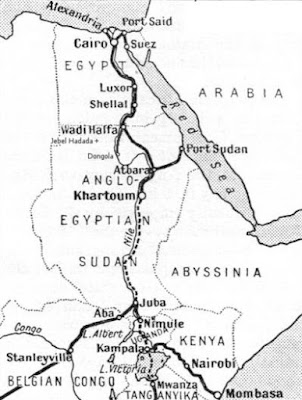
In 1895 the steamer, S.W. Korosko, set out from Shellal, a small village in Upper Egypt, with an assorted group of English, Irish and American tourists on board. Their intention was to travel up the two hundred miles of Nubian Nile, visiting the various points of interest along the way, but during one of their excursions they were kidnapped by a group of Arab dervishes and plunged into a world steeped in seventh century ideas and practice.

And now they were herded in at the base of the Abousir rock, this little group of modern types who had fallen into the rough clutch of the seventh century - for in all save the rifles in their hands there was nothing to distinguish these men from the desert warriors who first carried the crescent flag out of Arabia. The East does not change, and the dervish raiders were not less brave, less cruel, or less fanatical than their forebears.

The Tragedy of the Korosko is an absorbing adventure that, despite being published over a hundred years ago, is uncannily relevant to us in the 21st Century. It has its moments of melodrama, an improbable optimistic ending, and the colonial attitude is downright embarrassing and arrogant at times, but it is historically real. Apart from the cultural and historical aspects, which are fascinating, the author's humour is cleverly scattered throughout and his characters sensitively drawn:

Miss Adams, the Bostonian old maid:

She had never been from home before, and she was now busy upon the self-imposed task of bringing the East up to the standard of Massachusetts. She had hardly landed in Egypt before she realised that the country needed putting to rights, and since the conviction struck her she had been very fully occupied. The saddle-galled donkeys, the starved pariah dogs, the flies round the eyes of the babies, the naked children, the importunate beggars, the ragged, untidy women - they were all challenges to her conscience, and she plunged in bravely at her work of reformation. As she could not speak a word of the language, however, and was unable to make any of the delinquents understand what it was she wanted, her passage up the Nile left the immemorial East very much as she had found it...

The English bachelor:

His work had become an ingrained habit, and, being a bachelor, he had hardly an interest in life to draw him away from it, so that his soul was being gradually bricked up like the body of a medieval nun. But at last there came this kindly illness, and Nature hustled James Stephens out of his groove, and sent him into the broad world...
At first he resented it deeply. Everything seemed trivial to him compared to his own petty routine. But gradually his eyes were opened, and he began dimly to see that it was his work which was trivial when compared to this wonderful, varied, inexplicable world of which he was so ignorant.


The British colonel:

He rode with his back arched and his chin sunk upon his breast, for the old, time-rotted body was worn out, but in his bright, alert eyes there was always a trace of the gallant tenant who lived in the shattered house.

The Hesperus Press copy I have includes an interesting foreword written by Tony Robinson in 2003 in which he recounts an experience he had while making a television film in Egypt. He raises the questions of moral authority and global responsibility that Conan Doyle probed; questions that are still relevant today. My 16 year old son read and enjoyed this book after I did and it triggered an interesting discussion.
It fits into the time period covered in the last chapters of Volume IV of Churchill's History of the English-Speaking Peoples, The Great Democracies.


http://asmrb.pbworks.com/w/page/9959164/To%20Belgium%20and%20Beyond!


Linking to Back to the 2016 Classics Challenge - Adventure Classic

Friday, 9 January 2015

Authors for Teens - Part 2: World War 2

The following authors have written books set in the World War 2 period. Most of them would be suitable for readers in the mid-teens or older.


Helen MacInnes (1907-1985)

Known as the Queen of Spy, Helen MacInnes had first hand experience of World War 2 and had spent time travelling throughout Europe. Her first novels were set in that time period while her later books were centred around the Cold War. The following three books, which have a WW2 setting, are the ones we are familiar with.

Above Suspicion - a young married couple venture into pre-war Europe in 1939 on what at first seems a simple request by a friend. However, tension builds as the couple become aware of the intrigue and great risk involved in their mission.
This was MacInnes first novel - probably slow moving by today's standards - but the book is saturated with a distinct feel of the tension of the time and is a good old fashioned spy thriller.

Assignment in Brittany - A British Intelligence officer is parachuted into occupied France where he impersonates a Frenchman hospitalised back in England. My 14 year old son thought this was a really good book.

Horizon -  tale of espionage based on fact. Freed after Italy surrenders to the Allies, a prisoner of war becomes involved with Resistance fighters in mountainous South Tyrol, the meeting place of Italy and Austria.

Helen Macinnes' books have recently been reprinted byTitan Books.


Non-Fiction

Ill met by Moonlight by W. Stanley Moss - I came across this book in the library and brought it home because the title beckoned me (words spoken by Oberon to Titania in Act 2 of Shakespeare's A Midsummer Night's Dream). It tells the story of two British officers who kidnap a German general in Crete and is based on the actual diary entries of the author. Interesting and suitable for anyone who enjoys stories of war tactics and escapades.

We Die Alone by David Howarth - incredible survival and endurance account of a fugitive from the Nazis & the people of the Arctic who helped him escape. I reviewed it  here. Suitable for younger readers but there is a section where he sank into absolute despair which I think would be good to discuss:

In his loneliness, he wished he was able to pray, and lying there waiting to die he tried to set his religious beliefs in order. But like so many young men of his generation, he had grown up without the habit of saying prayers...
He had been given a technical, scientific education, and there had not been much room in it for religion. It had given him, at the age of twenty-six, a materialistic view of life...nothing he had ever been taught could help him to believe in a personal God who watched over him..
He did not despise that kind of belief, and he knew to the full what a comfort it would be to him; but nobody of a clear and serious turn of mind can change his beliefs to suit his circumstances.


The Bielski Brothers by Peter Duffy - This book would be of great interest to anyone interested in survival and bushcraft, as well as WW2. I wrote about this astonishing story here.

Paul Brickhill (1916-1991)

An Australian author who was a fighter pilot with the Royal Australian Air Force, Brickhill was shot down over Tunisia in 1943, captured by the Germans and sent to a concentration camp. Short bio here.
The books are for mature readers or preview first, mainly for language/swearing.

The Dam Busters - the story of 617 Squadron of the Royal Air Force which was formed for the specific purpose of breaching the Ruhr dams in Germany. Digger History has some interesting information on 'Operation Chastise' as it was called.

Escape or Die - a review published by the Sydney Morning Herald in 1952


The Great Escape - the true story of how 'more than six hundred men in a German prisoner-of-war camp worked together to achieve an extraordinarily daring break-out.'

Reach for the Sky - the biography of Douglas Bader, an aviator who lost both legs as a result of a flying accident prior to the war . He did active duty despite his disability during WW2 and was made a prisoner-of-war after bailing out of his aircraft over France.