Showing posts with label Ambleside Year 5. Show all posts

Sunday, 7 August 2016

The Good, the Bad and the Ugly: Moozle's review of Ambleside Online Year 5


As I mentioned in a previous post, here is 11 year old Moozle's opinion of her Year 5 books. The original schedule is here. As this year required some Australian substitutions, mostly for history, I posted about the books we used here.
A couple of things to bear in mind:

•    Some of the books were read a while back and I've noticed that once a book is off her radar she tends to have a lower opinion of it than she may have done at the time she read it.

•    These are her lesson books and generally not the type of books she'd be likely to take down off the shelf and curl up in a comfy chair and read.

•    I don't take her negative or low ratings as an indication that I need to change to another curriculum. She doesn't like eating certain foods but I don't change our diet because I know it's healthy and good for her. If I left it to her to choose she'd end up vitamin deficient and probably anaemic.

•    When I went through the books we'd used for Year 5 and asked her opinion of them for this post, she said to me that the AO books are not 'her type of books.' Her books of choice at present would be Biggles, the Jungle Doctor books, Biggles, anything by G.A. Henty, and more Biggles. I know the AO books challenge her to think and to dig out knowledge for herself. There isn't any lack of understanding on her part and her narrations are given freely and without complaint (mostly) plus she shows an interest in the content of the books at the time she is reading them.

•    Anything she considered too sad got a very low rating - I omitted Trial & Triumph in previous years because of this. We used it for about a year with no complaints, but after her uncle died suddenly two years ago, she started commenting about how horrible it was that people were killed all the time. I dropped it after that and decided she could do Saint & Heroes by George Hodges in Year 7 instead.

I asked her to give the books a rating out of 10 so here we go:

Australian History & Biographies

History of Australia - 7 (I read this aloud)
Dr. Hunger and Captain Thirst - 2 ('stupidly sad') Well, the early explorers had an awful time of it, dying of thirst in deserts, getting hopelessly lost and disappearing without a trace. It is rather depressing at times but that's what happened. I read the first half aloud and then Moozle finished it herself.

Margaret Catchpole - 7 (interesting)
River Rivals - 7 (quite good)
The Singing Wire - 10 (the best of the three)
She read the three books herself.

Other History

Abraham Lincoln's World - 7 (read herself)
Story of the World - 10 (read herself)
Passion for the Impossible - 7 (I read this aloud for 3/4 of the book and then she read the remainder herself. I'm surprised that she really engaged with book. It is stiff going)

Science/Natural History

The books below were read on her own:
Robert Boyle - 7 (in place of Isaac Newton, which I'd previously read as a family read aloud)
The Story of Madame Curie - 5 (in place of George Washingon Carver)
Wild Animals I Have Known - 4 (too sad)
Christian Liberty Nature Reader - 2 (boring)
Story of Inventions - 3 (didn't like it; old fashioned & boring)
 Always Inventing:Alexander Grahame Bell - 9

Madame How & Lady Why - 8 (I read this aloud)

Literature - read on her own

Age of Fable - 7
The Story of King Arthur - 10 (Roger Lancelyn Green)
Oliver - 5 (too sad - although she was interested enough in the story to keep  wanting to read ahead)
Kim - 8 (good!)

Favourite free reads:

Lad: A Dog - 10
The Adventures of Tom Sawyer - 8

Other ratings:

Murderous Maths - 10 (great!)
Hamlet - 4 (way too sad)
Book of Marvels - 6

If you asked your student to give ratings on their books would it look anything like this?? Rather brutal, don't you think?
I think I'll go and curl up in a corner.

Monday, 18 July 2016

Ambleside Online Year 5 - some written narration samples

Moozle is just finishing up Ambleside Online Year 5. The bulk of it is done but we got behind on a few of the readings so we'll be finishing those off and then doing an exam before heading into Year 6. The Aussie school year starts at the end of January but we've never followed the official school terms except for sometimes taking advantage of the quieter roads during the school holidays and having some days off during that time.
I often give her a choice of the books she uses for written narrations and it's interesting to see what she picks. Here are some selections from this year's work. She's read all these on her own except for the first half of Doctor Hunger & Captain Thirst, which I read aloud to her.


From Kim by Rudyard Kipling - I added some additional resources to help fill in the backgound and context of this story which I posted these here.


An Australian substitute for we used for History/Biography was Doctor Hunger & Captain Thirst and Moozle did a few picture narrations for this book:


 John McDouall Stuart


The Singing Wire was a Term 3 Aussie substitute and again, picture narrations were mostly done:


Age of Fable - this has been quite a popular choice for both wriiten and picture narrations over the past two years (it continues into Year 6)


Aurora & Tithonus Ch 26


The Story of the World Volume 4, The Modern Age, by Susan Wise Bauer is a book that Moozle has really liked and enjoyed writing about:


  When we've finished the year's work, I'll write a post about what worked and what didn't and get Moozle's opinion on the books she used.


Friday, 3 June 2016

Weekly Review

Music Appreciation

If you haven't ever listened to the dulcet tones of Peter Ustinov, you're in for a treat. We bought a CD 'Peter Ustinov Reads the Orchestra' a long time ago and I haven't ever come across it anywhere else.  When I discovered that someone had put it on YouTube, I thought I'd share it here. It's about 30 minutes long and is a wonderful narration on the instruments of the orchestra. I prefer just to listen to the audio but the video is quite nicely done and it's ideal for young children.


Art Appreciation/Picture Study

Earlier this year we visited the art gallery and I found some art books published by Phaidon that I thought would be ideal to use for Picture Study - a good variety of paintings from the artist with  lovely, good-sized colour reproductions. They didn't have any books on artists I wanted to study but I took a photo of the book and searched when I got home and found Book Depository has a good selection of them for the same price.


www.bookdepository.com/Whistler-Frances-Spalding/9780714831862?a_aid=journey56


Reading/Audio Books

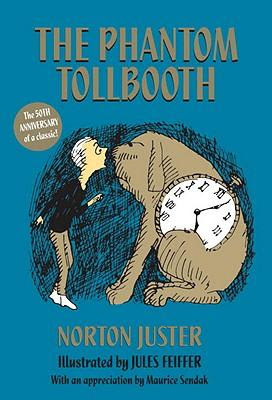
I didn't realise Moozle hadn't read The Phantom Tollbooth before, so she started reading it today. Quirky and fun, written in 1961, it's recommended for ages 8 to 12 years, but it's one of those books that appeals to all ages, adults included.

www.bookdepository.com/The-Phantom-Tollbooth-Norton-Juster-Jules-Feiffer/9780394820378/?a_aid=journey56


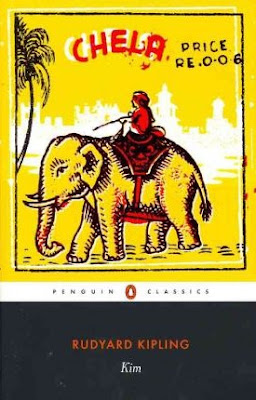
Moozle's been reading Kim by Rudyard Kipling (Ambleside Online Year 5) so I put together some background information/history/general interest related to India during British rule to help with understanding and appreciating Kipling's book.

We enjoyed listening to The Exploits of Brigadier Gerard while we were out and about in the car. It's a good choice for car listening as the chapters are almost a short story in themselves, so if one child isn't there, we can just continue and the missing person doesn't lose the plot and and can join in with the next chapter. I wrote about it here.


http://www.audible.com.au/pd/Classics/The-Adventures-of-Brigadier-Gerard-Audiobook/B00FOC9BMW


Shakespeare 

After Macbeth and Hamlet everyone was ready for a comedy. I chose The Comedy of Errors because I found the Arkangel audio recording at our library. It's Shakespeare's shortest play and the full text is here.


www.bookdepository.com/The-Comedy-of-Errors-William-Shakespeare-David-Tennant-Brendan-Coyle-Alan-Cox/9781932219050/?a_aid=journey56


Bonhoeffer: Pastor, Martyr, Prophet, Spy by Eric Metaxas is a book I bought a couple of years ago and its 624 pages have sat on the bookshelf unread - until this week. I was pushed to start it after both reading Ruth's inspiring review at A Great Book Study, and hearing how much a friend at church enjoyed it also.


www.bookdepository.com/Bonhoeffer-Eric-Metaxas/9781595552464?a_aid=journey56


The Martian by Andy Weir, was recommended to my husband and me by our son, Mr T (he's in his mid-twenties) but before we could get a hold of the book we watched the DVD. There aren't many movies my husband and I both like - our tastes are so different - but we did enjoy this one. Basically, a group of astronauts get caught in a violent storm on Mars and in the chaos, one of them is believed to have been killed. The others make the difficult decision to leave the planet, believing there was no hope of the missing man's survival. Well, he does survive, and has to work out a way to contact NASA and use his wits to keep alive until he can be rescued. Some language but considering his situation, it's not inappropriate! The first couple of sentences in the book contain expletives, but that's not the overall tone of the book. It's a great story, the movie (M rating in Australia) was excellent, and I loved the music! (e.g. Starman by David Bowie).


http://www.bookdepository.com/The-Martian-Andy-Weir/9781785031137?a_aid=journey56


Poetry

Benj, Moozle and I went to our homeschool park day this afternoon and on the way home we dropped in to see Zana who is house sitting for a few weeks. Somehow we got into a conversation (probably related to food and what we were going to have for dinner) that recalled a poem all the kids learnt when they were young. There's something very gratifying about these shared memories:


There Once Was a Puffin

Oh, there once was a Puffin
Just the shape of a muffin,
And he lived on an island
In the bright blue sea!

He ate little fishes,
That were most delicious,
And he had them for supper
And he had them for tea.

But this poor little Puffin,
He couldn’t play nothin’,
For he hadn’t anybody
To play with at all.

So he sat on his island,
And he cried for awhile, and
He felt very lonely,
And he felt very small.

Then along came the fishes,
And they said, “If you wishes,
You can have us for playmates,
Instead of for tea!”

So they now play together,
In all sorts of weather,
And the Puffin eats pancakes,
Like you and like me.

by Florence Page Jaques


Linking up at Weekly Wrap-up


Wednesday, 1 June 2016

Ambleside Online Year 5 - Reading Kim by Rudyard Kipling


www.bookdepository.com/Kim-Rudyard-Kipling/9780141442372?a_aid=journey56


Kim is scheduled for Literature in Term 3 of Ambleside Online Year 5. I started listing vocabulary that I thought may need some explanation and research but then I came across this very helpful chapter by chapter resource at the Kipling Society website. I think it covers just about everything that could possibly be problematic, plus some!
To get some background on India culturally and historically, I got together the following maps, websites, books and images that I thought were (or could be) helpful:

For a general background on India, these books by Bobbie Kalman are well done:


www.bookdepository.com/India---the-Culture/9780778796572?a_aid=journey56 www.bookdepository.com/Indi---the-People-Bobbie-Kalman/9780778796565/?a_aid=journey56www.bookdepository.com/Indi---the-Land-Bobbie-Kalman/9780778796558/?a_aid=journey56


'The major world religions and their beliefs about God. Hinduism, Buddhism, Islam, Christianity, and New Age...'
Fairly simple explanation of various religious beliefs with a little graphic to describe each one. I read through some of this with Moozle prior to her starting Kim.
The notes on the Kipling Society web pages I linked to above define the various religious beliefs/cultures as they come up in the story, but I liked the graphics at this website which helped explain things more clearly.


Kim was published in 1901 and the setting was India under British rule. In 1947, Colonial India was divided into two separate states: India and Pakistan (the Partition of India). The map below shows India prior to Partition.


There is some history here and maps to show the changes which occurred as a result of Partition.


 India after Partition - Lahore, where Kim begins, is now in Pakistan:


https://analyzingwomeninshame.wikispaces.com/Partition+of+India


 Zam-Zammah, Kim's gun.


He sat, in defiance of municipal orders, astride the gun Zam Zammah on her brick platform opposite the old Ajaib–Gher — the Wonder House, as the natives call the Lahore Museum. 
(Kim: Ch 1)


https://commons.wikimedia.org/wiki/File:Zam_Zammeh_1921.JPG


The Grand Trunk Road - map and photos 


‘Look! Brahmins and chumars, bankers and tinkers, barbers and bunnias, pilgrims and potters — all the world going and coming. It is to me as a river from which I am withdrawn like a log after a flood.’
And truly the Grand Trunk Road is a wonderful spectacle. It runs straight, bearing without crowding India’s traffic for fifteen hundred miles — such a river of life as nowhere else exists in the world.
(Kim, Chapter 3)


'The Great Game' - the struggle between the British and Russian Empires for supremacy in Central Asia. In Chapter 3 of Susan Wise Bauer's Story of the World, Volume 4, she writes about Russia and Britain's attempts to try to gain control of Afghanistan. This chapter is scheduled in Week 26 of Ambleside Online Year 5.
More on The Great Game here (for children) and here.

Benares, now known as Varanasi (Kashi); Ganges River. Some great photos here
Indian Himalayas


Simla (Shimla) c.1900 the capital city of Himachal Pradesh, and the summer capital of the British-Indian Empire.


The Spiti Valley is a desert mountain valley located high in the Himalayan Mountains in the north-eastern part of the Indian state of Himachal Pradesh. The name "Spiti" means "The Middle Land", i.e. the land between Tibet and India.


Sepoys - Indian soldiers under the command of the British


Friday, 20 May 2016

A week of Ambleside Online Years 5 and 11/12 and other happenings


Our 'new look' week is gradually falling into place. Moozle is in the last term of AO Year 5 and Benj is doing selections from AO Years 11 and 12. This year Benj is doing a Certificate IV in the Liberal Arts on Monday & Tuesday of each week so I adjust his AO readings according to his workload for each week. This has put much of my normal timetable on its head and I've had to re-order things so that the lessons we do together can happen when he's home. He's loving this course, which gladdens my heart, because when I asked him how everything went this week his laconic reply was, 'Dense and intense.' The work is a challenge but he's taking it in his stride and is enjoying the stretching process.

He has just started covering the Early Mediaeval History, a favourite time period for him, plus the study of Rhetoric using Aristotle's book (the picture on the cover isn't what I'd call inspirational) :


https://www.bookdepository.com/Rhetoric/9780486437934/?a_aid=journey5


We finished reading and listening to Hamlet. Benj gave an oral narration while Moozle decided she wanted to do a picture narration. This was taken from Act 1, Scene V:


Moozle's narration after reading a chapter from Plutarch's Life of Demetrius:


Benj's free reading:

Alice's Adventures in Wonderland and Through the Looking-Glass by Lewis Carroll - he hadn't read these previously but he decided for the sake of 'cultural literacy' that he should as there are so many allusions to the books. We have a friend who named her cat, Dinah, so now he knows where she got the inspiration for its name...My favourite source for free classic books has a nicely illustrated kindle version.


The Children of Hurin by J.R.R. Tolkein - he said this was a bit sad, but he loves the writing:


http://www.bookdepository.com/The-Children-of-Hurin-J-R-R-Tolkien-Christopher-Tolkien/9780007597338/?a_aid=journey56


AO Year 5 has Kim by Rudyard Kipling scheduled for Literature in Term 3. I was tossing up whether to read this aloud or give the book to Moozle to read for herself. She is a very confident reader but I still read aloud some of her books - mostly those I haven't previewed before, or if, for some other reason, I think I should. We're about half way through Passion for the Impossible, and I'll be going for a few months yet as I only read her a chapter a week; Madame How & Lady Why is another read aloud plus some Australian History titles and Stories From the Faerie Queen, so I decided I'd let her read Kim on her own. I did some research and put together some resources to help her understand the context and background of the story and so far she hasn't had any problems and is enjoying the story. I'll post those later on when I have the time.

Moozle's free reading:

This week the Marguerite Henry books have been all the rage. There are many to choose from and they are all good. The hardback books we've picked up secondhand are nicely illustrated by Wesley Dennis and have larger print. They're expensive to buy online so it's probably best to look out for them in secondhand bookshops.


The Misty of Chincoteague Foundation is an interesting website to browse.

The Orchestra Moozle is involved with were given a piece from Peter and the Wolf and they were  asked if they'd heard it before. Two out of about 22 children put their hands up - Moozle being one of them. The piano accompanist with the group was so surprised as it's such a famous piece of music and the kids in the group have been playing for years. Music appreciation isn't just about playing an instrument and even someone who hasn't learned to play an instrument can be at least culturally literate in this area. The video below is about 30 minutes in length and is a wonderful narration and performance of Prokofiev's Peter and the Wolf. Highly recommended!


This year I decided it was time to get back to some home-ed gatherings. I was involved in the home- ed community for a season and made some wonderful friends over the years but for different reasons that hasn't been possible for quite some time. Over the past few months some important commitments shifted to different times and this has freed up Friday afternoons for us. So now we have a fortnightly park day and the past two get togethers have been great catch up times with people I haven't seen for years. I said to my husband after our first park day that I didn't realise how much I needed this connection with others who are on the same journey until after it happened. Besides that, there are so many mothers just starting out and they sometimes just need to see that, yes, it can be done and no, your child will not be ruined for life.


Linking to Weekly-wrap-up

Monday, 18 April 2016

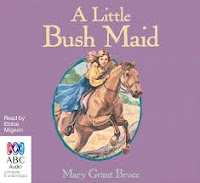
A Little Bush Maid by Mary Grant Bruce (1875-1958) - Classic Children's Literature Event 2016


A Little Bush Maid was published in 1910 and is the first book in the Billabong series by Mary Grant Bruce. There are fifteen books altogether and they follow Norah Linton from when she was a twelve year old growing up at Billabong, her father's property in rural Victoria, through to her adult years.

It's best to read the books in chronological order just to get the characters straight (although we didn't because it took us a decade to gather all the titles in the series) but the books do stand alone.
The author wrote the Billabong series over the years 1910 to 1942 and they reveal a very different Australia than that of today. They are historically interesting - three of them have World War I as a backdrop (From Billabong to London; Jim & Wally; Captain Jim) and are set in locations other than Australia.

A Little Bush Maid starts off slowly as Norah and the other characters are introduced. Norah's father was widowed when she was a baby, and he was left to bring up both her and her beloved older brother, Jim. Her upbringing so far has been unconventional. She has had no formal schooling and she spends her days in her father's company, helping out on the property and growing 'just as the bush wild flowers grow.' Jim is at boarding school in Melbourne and as the story opens, he comes home with two of his friends, Wally and Harry, for the school holidays.

A Little Bush Maid may not immediately entice a young reader as they may initially be put off by the lack of action, but it is worthwhile to keep going. There is still a good deal of lighthearted, humorous banter between the characters and when the action does begin, the story picks up quickly. Norah discovers the camp of a mysterious old hermit, the young people have encounters with venomous snakes, a disgruntled swaggie sets fire to the Linton property and a visit to the circus nearly ends in tragedy.
The title of the first book probably isn't appealing to boys, but although Norah is the main character, there are strong male characters in all the books.
Age-wise, a confident reader of nine would enjoy this book, but if they like the book as much as some of my children did, you will want to start looking for more books in the series. They are out of print but the first title can generally be found easily enough and a kindle version is available online at Gutenberg (see below).
The Mary Grant Bruce Official Website has a list of the books in chronological order.

As the book was written in 1910, the attitudes and views reflect that time period. Chinese workers, Aboriginals and servants have attributes ascribed to them that are not acceptable these days and in 1992 a revised edition produced by Angus & Robertson was published with some omissions to reflect this.

 1992 Version


We have an unabridged copy and a 1992 edition and I noted some of these changes:

Norah was driving a horse and carriage and referred to the two horses as 'Darkie' and N***er. In the revised edition the second horse's name was changed to 'Blackie.'

A remark made about black Billy, the Aboriginal station hand was omitted:

"Queer chap, that," said Dr Anderson, lighting a cigarette. "That's about the only remark he's made all day."

I'm surprised they didn't omit the reference to the cigarette...

This sentence referring to the Chinese gardener was omitted:

Wally's own idea was to tie him up by the pigtail, but this Jim was prudent enough to forbid.

In the afterward written by Barbara Ker Wilson in the 1992 revised edition she states:

With hindsight, we disclaim many of the ideas, opinions and attitudes of 1910, and a few paragraphs which might be thought of as racist today have been omitted from the text. But it would be profitless to criticise the author of a story written at that time for relaying the attitudes of her day through her characters.

Another revised edition (illustrated, same text as the book above & easy to find)


Interesting - we've been listening to an audio version of Tom Sawyer by Mark Twain and I was thinking how that book would be absolutely decimated if you took out the ideas, opinions and attitudes of the time in which it was written.
Literature is the product of a culture. Alexandr Solzhenitsyn said that 'literature is the living memory of a nation.' If we sanitise our past we are removing those memories and how do we learn and overcome our blind spots if we do not remember?

Gutenberg has four books in the series available in a kindle edition:

1) A Little Bush Maid
2) Mates at Billabong 
6) Captain Jim
7) Back to Billabong


This hardback version is unabridged and was published by John Ferguson Pty Limited in 1981. It also contains the next book in the series, Mates at Billabong:


An unabridged audio published by Bolinda Publishing is also available. I haven't listened to it but there's an excerpt here.


http://www.bookdepository.com/Little-Bush-Maid-Mary-Grant-Bruce/9781486288267?ref=grid-view


We used The Little Bush Maid as a substitute for American Tall Tails in AO Year 3. The Billabong books fit chronologically into Years 5 & 6 of Ambleside Online but we've mostly used them as free reads from the age of around 9 years.

Linking this to the 2016 Children's Classic Literature Event at Simpler Pastimes.


Monday, 15 February 2016

A Day in the Life of a Classical CM Homeschooler


About ten years ago I wrote out a day, much like I've done here, and besides having an extra five children in the mix back then, the general routine we have now still looks very similar. Our two eldest are married and we have five children still at home. Three of those still at home have graduated and are working/studying and now I'm just teaching the two youngest, Moozle and Benj, who are in Years 5 and 11. We use the Ambleside Online curriculum and adapt it when required to suit our Aussie context.

6.30am - I get up. Nougat, Zana have already left for work. Hoggy leaves home at different times depending on whether it's a study day or a work day.
I'm inconsistent with my waking times but if I get up early enough I go out for some exercise but first on the agenda is:
A cup of tea, read my Bible and a section of Augustine's Confessions. This morning I wrote in my Commonplace book which I'd neglected lately.  
While I was out I listened to a Circe podcast by Andrew Kern & Wes Callihan - 'A Perpetual Feast,' and I highly recommend a listen. There are a few in the series.

7am - Benj has his alarm set to get up at this time so he gets up and takes his time over a shower & breakfast...

8am - I get home & hang out the washing that was in the machine overnight and put on another load. I realise Moozle is still in bed so go and wake her. She is not an early riser...
Dad is also up but doesn't have to rush off this morning so I make him some bacon & eggs (rare!)

9am - this has always been our 'official' start for lessons but some of their independent work (eg music practice, maths - for the older ones, or copywork) may get done before then.

Me - hang out the washing; put on another load

Moozle  - maths (with me), copy work, poetry
Benj - Bible, maths

Moozle - Read Abraham Lincoln's World - gives me an oral narration afterwards

I hang out another load of washing

Moozle - I send her off to make bed, and brush hair her hair, which she forgot to do earlier, then she does her cello practice

10am cello lesson - one hour

Benj  - dictation; we look over his essay from the previous day and he prints it out

I start making dinner

Benj - science reading & science notebook


I finish listening to A Perpetual Feast podcast & clean up kitchen

Moozle - read chapter of River Rivals; oral narration; dictation

Benj - piano practice & exam prep. This takes up a lot of time at the moment.

Moozle - I read History of Australia aloud while she traced a map & then oral narration
Map work
French - Classical Academic Press; write vocabulary in notebook

12.30 - lunch
Listen to folksongs, French songs, composer (Rachmaninov)
We have about an hour where we all read; I check emails, finish off dinner preparation

1.30pm

Devotions - this is our time together and we've always referred to it as 'devotions,' because that's what we do first. We've been reading through 2 Kings, taking turns reading aloud. Then we do Bible memory - working on new portions and revising old, finishing with a prayer time where everyone prays.
Today we worked on a couple of newish verses:

Matthew 5  - the Beatitudes
Isaiah 43: 1-7

And reviewed some others:

 Ps 139
Colossians 1:15-20
Colossians 2: 6-12
I Thessalonians 5: 16-24

Plutarch - we're reading through Plutarch's Life of Demetrius. Benj will do a written narration about this tomorrow but Moozle will do hers today.


 M's drawing practice


That's the end of our formal 'lesson time' for today. Later in the afternoon we drive Benj to work and Moozle and I come home for a short spell, pick up her cello, and head off to orchestra recital.

We have a semi-organised schedule for what we do each day during our together time but if we miss something it just gets done the next day. Basically it looks like this:

Monday - Shakespeare


Tuesday - Read aloud

Wednesday - Plutarch

Thursday - Nature Study & nature notebooks


Friday - Read aloud, Picture Study, catch up time for anything else we may have missed or that I'd like to get done.

Most days I also read a poem aloud & from time to time we review those we've learnt. Handicrafts or drawing are sometimes done during read alouds. Some of my children have been happy just to listen, others needed something to do with their hands or they got distracted.

For the past two years, now that I don't have as many children to teach, we've had extra out of the home activities in the afternoons. All seven of our children play an instrument and took lessons over many years. We've mostly managed to have teachers come to our home during the school day for lessons which was wonderful when I had babies & toddlers but also now with the extra running around we do. This is what the week's extras include:

Monday - Benj swims

Tuesday - Moozle has Highland dance lessons; Benj and Hoggy have band practice.

Wednesday - Benj works at a bakery for a few hours in the late afternoon/early evening; Moozle has a cello lesson in the morning and a two hour orchestra recital in the late afternoon. I stay there with her and get some reading, writing or sewing done.

Thursday - both Moozle & Benj swim. An outdoor pool, all year round. I read, write, or sew.

Friday - Benj has a piano lesson in the morning; dance lesson in the afternoon for Moozle if she has a competition coming up; three of the boys are involved the youth group band and two of them are leaders so they all head off to set up and practice around 5pm.

Saturday - morning jobs around the house & yard, car-washing; Benj teaches piano at our place - he's only just started doing this & is teaching an 8 year old boy from our church. Moozle entertains his little sister while he's having his lesson.

Lunchtime reading:

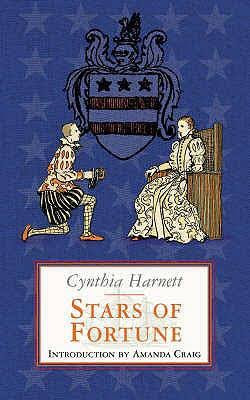
Moozle - Stars of Fortune by Cynthia Harnett (1956). A very good author of children's historical fiction, Cynthia Harnett writes about Princess Elizabeth, the future Queen of England, when she was imprisoned at Woodstock and her sister Mary Tudor sat upon the throne. The story unfolds through the eyes of young Francis Washington of Sulgrave Manor, which still stands. America's first President, George Washington, is descended from the Washingtons in this story.


www.bookdepository.com/Stars-of-Fortune-Cynthi-Harnett-Amand-Craig/9781903252246/?a_aid=journey56


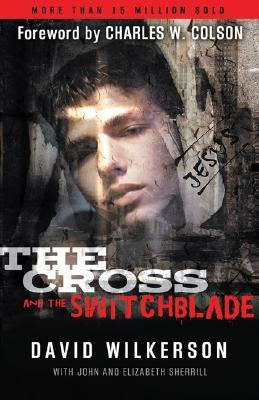
Benj - The Cross and the Switchblade by David Wilkerson (1963) A very moving and inspiring story written by the man who ministered to the gangs in New York and started Teen Challenge ministries.  Raw in places and I'd recommend a pre-read but it is a most wonderful story! It's scheduled as a free read in Ambleside Online Year 11.


www.bookdepository.com/The-Cross-and-the-Switchblade-David-Wilkerson-John-Sherrill-Elizabeth-Sherrill-Charles-W-Colson/9780800794460/?a_aid=journey56


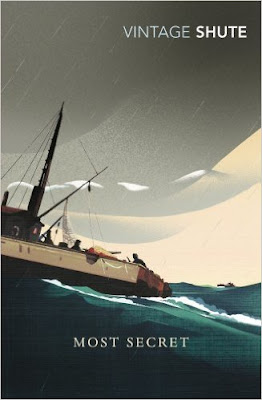
Me - Most Secret by Nevil Shute. This book was written during WW2 and was censored until 1945. Set partly in England & Brittany in France, Shute does his usual interesting character development and presents the war from a unique vantage point. There's an overview of the book here.


www.bookdepository.com/Most-Secret-Nevil-Shute-Norway/9780099530084/?a_aid=journey56


I'm linking this post up with Alison @ Learning Mama for A Day in the Life of a Classical Homeschooler.