Showing posts with label Charles Dickens. Show all posts

Monday, 1 June 2020

Martin Chuzzlewit by Charles Dickens: A Study of Selfishness


‘My main object in this story was, to exhibit in a variety of aspects the commonest of all the vices; to show how Selfishness propagates itself; and to what a grim giant it may grow, from small beginnings.’ 


This book isn’t one I’d planned to read & it’s not a Dickens’ title that had come to my attention at any time, but I saw it at a book sale and bought it because I hadn’t read anything by Dickens for a while.
It sat unread on my book shelves for some time until one night when I was considering which book I should start reading next but couldn’t make up my mind. I’d just finished The Lord of the Rings, which I’d put off for years (and found to my surprise that it was hard to put down) so when my eyes came upon Martin Chuzzlewit, I thought, ‘I’ll just read the first chapter and if I can’t get into it, I’ll choose something else.’
Well, I kept going and that was that. From memory, it usually takes me a few chapters to engage with Dickens so I was surprised at how quickly it happened with one of his books that doesn’t seem anywhere near as popular as many of his others.

Martin Chuzzlewit (1843-4) first came out in monthly installments but unlike Dickens’ previous books, The Old Curiosity Shop, and even Barnaby Rudge, sales were low for various reasons: he had abstained from novel-writing for a time and this caused him to lose ground with the public; when he did return to publishing he released the chapters monthly as opposed to weekly, which was his previous practice; his reputation declined after the public’s disappointment with Barnaby Rudge.
After the poor reception of the first instalments of Martin Chuzzlewit, Dickens decided to change some aspects of the story and set parts of it in America where he had recently spent some time. (He wrote a record of that journey in American Notes.)

Dickens himself considered Martin Chuzzlewit his best work and when it was published in book-form it proved to be one of his greatest successes.
Not only is Martin Chuzzlewit a study in selfishness, it also concerns itself with how suffering shapes character. Oswald Chambers said that ‘Sorrow burns up a great deal of shallowness, but it does not always make a man better’ and Dickens’ demonstrates the effects the same circumstances may work for better or worse in different people. Chambers also observed that if you yield in childhood to selfishness, you will find it the most enchaining tyranny on earth. Some of the characters in Martin Chuzzlewit never broke free of those chains.

Dickens’ satire on the Chuzzlewit family portrays ‘the poison of selfishness as transmitted within a family,’ and the ‘false notions of family grandeur and the parasites which they breed.’
As usual, there is a large cast of characters in the story but I thought there were many more likeable persons here compared to some of his other books and more redemptive aspects in the characters’ lives.
I really enjoyed the developing friendships between some of the young men. The loyalty and unselfish regard they had toward one another stood out in comparison to the opportunistic relationships in the greater Chuzzlewit family.

Some Notable Characters:

Martin Chuzzlewit: the young protagonist of the story; he had fallen out with his Grandfather, of the same name, who had brought him up, and now struck him out of his will. Martin junior was frank and generous by nature but his upbringing had allowed him to grow selfish. Circumstances opened his eyes to see others he had taken for granted and used.

‘How was it that this man who had had so few advantages, was so much better than he who had had so many?’

'Martin - for once in his life, at all events - sacrificed his own will and pleasure to the wishes of another, and consented with a fair grace. So travelling had done him that much good, already.'

Mr Pecksniff: an absolute hypocrite and selfish to the core. 

'He was a most exemplary man: fuller of virtuous precepts than a copy-book. Some people likened him to a direction post, which is always telling the way to a place, and never goes there.
(His) detractors thought he bore a fanciful resemblance to his horse, not in his outward person but in his moral character - full of promise, but of no performance.
He was a kind of animal who infused into the breasts of strangers a lively sense of hope, and possessed all those who knew him better with a grim despair.’

His comment on seeing a beggar on the street: ‘If everyone were warm and well-fed, we should lose the satisfaction of admiring the fortitude with which certain conditions of men bear cold and hunger.'

Tom Pinch - unpretentious and noble-souled; his Grandmother had skimped and saved to allow him to enter Pecksniff’s service as a student of architecture after he had dazzled her with prospects of Tom’s happiness and advancement. ('Pecksniff’s genius lay in ensnaring parents and guardians, and pocketing premiums.') And poor Tom was completely take in by the man.

One of the characters who undergoes a transformation of character (but I won’t spoil the story by mentioning names):

‘I never thought at all; I had no thought, no heart, no care to find one; at that time. It has grown out of my trouble. I wouldn’t recall my trouble, such as it is and has been - and it is light in comparison with trials which hundreds of good people suffer every day, I know - I wouldn’t recall it tomorrow, if I could. It has been my friend, for without it no one could have changed me; nothing could have changed me.’

I agree with Dickens that Martin Chuzzlewit is one of his best stories and I highly recommend it.
Moozle, who is 15yrs of age and has never taken to Dickens (I think The Old Curiosity Shop turned her off!) was hunting for something to read and agreed to try MC after I said how I enjoyed it. I’m very happy to say that she actually liked it!!


Linking to the Back to the Classics Challenge 2020: 19th Century Classic 


Thursday, 11 January 2018

Reading, Thinking, & Domesticity #2


We started lessons again this week but we're not back into full swing yet. It will be short weeks for the next little while as we have a camping trip planned. The night sky isn't easily observed where we live so to view the sky we have to get up out of the valley and away from all the trees that overhang us. I want to use the opportunity of being away from suburbia to do some star gazing and hopefully identify some constellations.

Family from interstate visited last weekend and Moozle joined her two cousins and two aunties for a visit into the city. All three girls came back with their hair braided after a visit to a braiding shop.


While the girls were doing this, Nougat drove down to Canberra with his Uncle and his cousin to the Summernats Exhibition - a testosterone-fuelled event of noise, burnouts, and cars in general.

Our weather has been extremely hot so a family trip to the beach late in the afternoon for a dinner of fish & chips went down well last weekend and the girls and I had a couple of visits to Bridal shops this week so that Zana could try on some dresses.

Technology

It's laughable that I could share anything technologically related that would help any of my readers, but you never know...I've had some issues with Blogger over the years that I've had to sort out with a little help on the side from the techy people in the family, who say they know nothing about blogging but usually manage to point me in the right direction.

* At one stage Feedburner stopped sending out emails to some subscribers to this blog. Apparently, whenever I copied & pasted what I'd written from a Word document directly to my blog post, rather than typed directly onto Blogger, it included lots of random HTML code. You can check this out by clicking on the HTML link at the top left hand side of your dashboard. For some reason this can interfere with Feedburner. The problem is, you don't know you have a problem unless someone tells you they're not receiving your blog's emails. The solution was to copy & paste my Word document contents onto an online notepad and then copy it from there onto your blog post. A couple of online notepads I've used are: rapidtables and anotepad.

*  Wordpress users sometimes have difficulties posting comments on Blogger. To fix this, I went into Settings & clicked on Posts, comments & sharing. In comment location you have four choices: embedded, full page, pop up window & hide. I've always used 'embedded' but this supposedly was causing problems, so I changed that recently to pop up window & it seems to be working ok. What I don't like with this new setting is that you can't always reply directly to a comment. Your comment just goes under the last one that was logged so it can be confusing if you don't address each person by name when you reply to them.

*  On occasion, I've used Google Forums if I had a problem. Often you'll find it's not only your own blog but others are having similar issues, like I discovered last year when my followers gadget disappeared.

Reading

These are my unfinished books from last year that I will be reading in 2018. I'm taking ages to read N & N as I really have to be in the right frame of mind to read it. It's good but very dense. Or maybe it's me that's dense:

Norms & Nobility by David Hicks

Formation of Character by Charlotte Mason

Parents & Children by Charlotte Mason

Life Under Compulsion by Anthony Esolen - Esolen throws in all sorts of quotes and references to authors and literature, which is something I enjoy & appreciate, and I like to know what books an author has read or been influenced by.
Esolen's Introduction alone refers to Genesis, Little House on the Prairie, The Screwtape Letters, The Bethrothed, Dante, and Thomas Aquinas!

I read the three books below last year but never got around to writing about them until now:

The Wednesday Wars by Gary D. Schmidt was written in 2007 and is a Newbery Honor book. It is set in 1967 and centres around the mishaps and adventures of Holling Hoodhood, a 7th Grade student, who is forced to read Shakespeare by Mrs. Baker, whose husband has just been deployed to Vietnam.
At first this book annoyed me. It's written in the first person from the protagonist's point of view and it struck me as frivolous at first. It's quite funny in places and when Benj read it at around 15 or 16 years of age he thought it was good. It grew on me as it went on and the conversations between Mrs. Baker and her student about life and Shakespeare's characters showed sensitivity and thoughtfulness. Readers from about age 14 years and up would enjoy this - boys, especially, and particularly boys who don't like Shakespeare! With it's backdrop of the Vietnam War, Holling's family tensions, and even some of the reflections about Shakespeare, some maturity on the part of the reader would be helpful in order to get the most out of this story.

"You know," I said, "it's not easy to read Shakespeare - especially when he can't come up with names you can tell apart."

..."Shakespeare did not write for your ease of reading," she said.

No kidding, I thought.

"He wrote to express something about what it means to be a human being in words more beautiful than had ever yet been written."

"So in Macbeth, when he wasn't trying to find names that sound alike, what did he want to express in words more beautiful than had ever yet been written?"

Mre. Baker looked at me for a long moment. Then she went and sat back down at her desk. "That we are made for more than power," she said softly. "That we are made for more than outr desires. That pride combined with stubbornness can be a disaster. And that compared with love, malice is a small and petty thing."
  
Dombey & Son by Charles Dickens - Paul Dombey is a cold and ambitious man whose wife had died leaving him with two children, his daughter Florence, whom he callously ignores and neglects, and her younger brother, whom he positively dotes on. Pride is the overarching theme of this book and as the Book of Proverbs says, 'Pride goes before destruction,' so it goes with an array of characters in this story; but there is also an eleventh hour where love snatches a life from the jaws of Pride, the destroyer. As is usual with Dickens' novels, it is peppered with deplorable characters, the worst of whom is Mr. Carker, who is an even darker and more dangerous version of David Copperfield's Uriah Heap. A great story!

The Root of the Righteous by A.W. Tozer- I loved this book and I've scheduled it for Moozle in Term 3 of AmblesideOnline Year 7 in place of the suggested devotional book as I thought it would be a better fit for her. The Root of the Righteous is a simple & wise book that I let distill into my soul for the better part of last year:

Speed and noise are evidences of weakness, not strength. Eternity is silent; time is noisy. Our preoccupation with time is sad evidence of our basic want of faith. The desire to be dramatically active is proof of our religious infantilism; it is a type of exhibitionsm common to the kindergarten.

The bias of nature is toward the wilderness, never toward the fruitful field.

Of all persons Christians should have the largest hearts; to them the narrowing of the heart should be an unthinkable calamity...
And one singular characteristic of the enlarging life is that it is quietly unaware of itself. The largest heart is likely to be heard praying, 'Narrow is the mansion of my soul. Enlarge Thou it.'

January Reading:

The Gulag Archipelago by Alexandr Solzhenitsyn - this will take me a few months I expect. Non-ficiton, very readable, but awful in places. Goodness! How can we not learn from history?

The Screwtape Letters by C.S. Lewis

Crafting

This is what Moozle has been working on:


Update: this is what Moozle made after watching the video above. Very cute:


A neat little boxed stationery set


Take the lid off and there's a storage area for cards, notepads, pen, etc


Who Has Seen the Wind?

Who has seen the wind?
Neither I nor you:
But when the leaves hang trembling,
The wind is passing through.

Who has seen the wind?
Neither you nor I:
But when the trees bow down their heads,
The wind is passing by.

by Christina Rossetti (1830-1894)


Wednesday, 9 December 2015

A Year of Listening

As I had to spend about 3 hours per week driving Moozle to dance lessons, and various competitions this past year, I made sure we had some decent audiobooks to listen to while we were in transit. Our local library is very good generally but abysmal when it comes to children's audiobooks. Not that they don't have any - they actually have a good size collection - but most of it is tripe, so in desperation, I decided to try out some classics which I had read myself. Although I was comfortable about their content, I wasn't sure that Moozle would find them interesting, especially the first:


I enjoyed Agnes Grey by Anne Bronte, but I know many who find it rather tedious. Anyhow, I put it on and Moozle didn't complain. I had to turn it off at one point because it was scratched and kept repeating on a section. Moozle wasn't happy about that because, 'We just got to the good bit!' I gave the CDs a bit of a clean & we listened to the rest of it over the following weeks.


http://www.bookdepository.com/Ann-and-the-King-of-Siam-Margaret-Landon-Anne-Flosnik/9781610452915?ref=grid-view


Anna and the King of Siam by Margaret Landon is the unabridged semi-fctionalised biography of Anna Leonowen, narrated by Anne Flosnik. The story, published in 1944, was based on diaries kept during Leonowen's five year stay as a governess to the King of Siam's many children. The narrative goes into some detail regarding Buddhist beliefs and practices - there's a review here of the story. The King's use of  "etc..." was quite extensive, which Moozle thought was hilarious. There is also a fairly heavily abridged version of the book with the title, 'Anna and the King.'  Benj also listened to this one.


http://www.bookdepository.com/Tale-of-Two-Cities-Charles-Dickens-Anton-Lesser/9789626343593?ref=grid-view


A Tale of Two Cities by Charles Dickens - Anton Lesser narrates this so well. We so enjoyed listening to the voices of the multitudinous characters in this story. Dickens combines tragedy and humour in such a masterly fashion.The boys in the family have never been keen on Dickens but well done audiobooks are helpful for reluctant Dickens' readers; especially if you're in the car and they are a captive audience. Martin Jarvis is my very favourite Dickens narrator.


http://www.bookdepository.com/The-Wombles-Elisabeth-Beresford/9781408825655?ref=grid-view


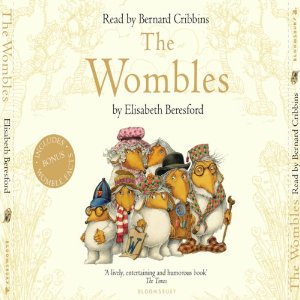
The Wombles by Elisabeth Beresford is just a delight. I vaguely remembered something about The Wombles of Wimbledon from way back so I grabbed this when I saw it, hoping it would be enjoyable. The narrator, Bernard Cribbins, is excellent. Even though the stories are recommended for ages 5 to 7, they are suitable for anyone who would be happy to listen to Pooh Bear or Wind in the Willows. It reminds me a little of Redwall minus the battles and the baddies; the Wombles are a gentle lot. You can have a listen here.


http://www.bookdepository.com/Mansfield-Park-Jane-Austen-Juliet-Stevenson/9789626344675?ref=grid-view


Mansfield Park by Jane Austen. Juliet Stevenson is another excellent narrator who is well suited to portray Jane Austen's characters. Moozle can now do a pretty good imitation of Lady Bertram after listening to this audio. The Naxos website has short audio clips if you want to listen to a narrator's voice & make sure they are not going to drive you mad.


http://www.bookdepository.com/Pride-and-Prejudice-Jane-Austen-Emili-Fox/9789626343562?ref=grid-view


Pride & Prejudice by Jane Austen is narrated by Emilia Fox, who played the part of Georgiana, Mr. Darcy's sister, in the wonderful 1995 miniseries of Pride & Prejudice. She isn't as dramatic as Juliet Stevenson but she is also very good. I've read P & P a number of times but listening to this audio gave me a greater appreciation for Jane Austen's razor sharp wit. I've been surprised a number of times when my 10 year old daughter caught the satire in Austen's words and looked across at me, smiling, to see if I also understood.


The Merry Adventures of Robin Hood by Howard Pyle; narrated by Christopher Cazenove. We hadn't heard this narrator before and he does a brilliant job of this book. I've read this book aloud in the past and Moozle & Benj know it well, but listening to it was a treat.
'Marry, come thither sweet chuck!' Wot!'


Cue for Treason by Geoffrey Trease, read by Clive Mantle. This is a good adventure story set in Elizabethan England and was first published in 1940. A 14 year old boy is on the run after throwing a rock at heartless Sir Philip Morton. He makes his way to London where he is befriended by William Shakespeare. Suitable for around ages 7 ish and up.


Thursday, 5 March 2015

The Old Curiosity Shop by Charles Dickens


When The Old Curiosity Shop was first published in serial form in 1840 to 1841, its Victorian readers were enamoured with it. The story became an immediate success and so I was a little surprised upon reading the book at how much less enjoyable I found it compared to other books I've read by Dickens.
Whilst still retaining his wonderful way with words and introducing some remarkable characters, Dickens unfortunately overwhelms the story with sentiment, especially in regards to the main character, Nell.
Nell and her Grandfather are reduced to poverty and are forced to flee from their home in the old shop. Begging as they go, they travel away from the city and into the unknown. While they are wandering around the countryside, the story returns to events back in the city and Nell disappears for long periods in the narrative. 
While she is sidelined, other characters appear who are more interesting, such as Quilp, the grotesque tyrant, evil and cunning

Quilp...ate hard eggs, shell and all, devoured gigantic prawns with the heads and tails on, chewed tobacco and water-cresses at the same time and with extraordinary greediness, drank boiling tea without winking, bit his fork and spoon till they bent again, and in short performed so many horrifying and uncommon acts that the women were nearly frightened out of their wits, and began to doubt if he were really a human creature.

Richard Swiveller, an idle young man who regularly uses literary quotes to bemoan his fate, is a character who doesn't show much promise at first but his character develops and expands as the story progresses. And then there's the Marchioness, the mistreated 'small servant,' - nameless, parentless, locked up and deprived.

I mentioned in my post on A Tale of Two Cities that one of the delights of reading Dickens is his skilful ability to intertwine tragedy and humour. His clever juxtaposition of the two creates an atmosphere that makes for natural sympathy with his characters. This ability was less obvious in The Old Curiosity Shop.
    

G.K. Chesterton in Appreciations and Criticisms of the Work of Charles Dickens, made this observation regarding Dickens' use of pathos:

He strained himself to achieve pathos. His humour was inspiration; but his pathos was ambition. His laughter was lonely; he would have laughed on a desert island. But his grief was gregarious. He liked to move great masses of men, to melt them into tenderness, to play on the people as a great pianist plays on them; to make them mad or sad. His pathos was to him a way of showing his power; and for that reason it was really powerless. He could not help making people laugh; but he tried to make them cry. 

I agree with Chesterton that:

The real hero and heroine of The Old Curiosity Shop are of course Dick Swiveller and the Marchioness. It is significant in a sense that these two sane, strong, living, and lovable human beings are the only two, or almost the only two, people in the story who do not run after Little Nell. They have something better to do than to go on that shadowy chase after that cheerless phantom. They have to build up between them a true romance; perhaps the one true romance in the whole of Dickens. 


 http://www.stanwardine.com/cribbage.html

The short story, Dick Swiveller and the Marchioness, can be read online here.

'This poor little Marchioness has been wearing herself to death!’ cried Dick.
‘No I haven’t,’ she returned, ‘not a bit of it. Don’t you mind about me. I like sitting up, and I’ve often had a sleep, bless you, in one of them chairs. But if you could have seen how you tried to jump out o’ winder, and if you could have heard how you used to keep on singing and making speeches, you wouldn’t have believed it — I’m so glad you’re better, Mr Liverer.’
‘Liverer indeed!’ said Dick thoughtfully. ‘It’s well I am a liverer. I strongly suspect I should have died, Marchioness, but for you.’


Friday, 20 February 2015

A Tale of Two Cities by Charles Dickens (1812-1870)

The Storming of the Bastille by Jean-Pierre-Louis-Laurent Houel
http://en.wikipedia.org/wiki/File:Prise_de_la_Bastille.jpg


*   Charles Dickens wrote fifteen novels, the final book remained unfinished at the time of his death. Two out of the fifteen were historical fiction - Barnaby Rudge, written in 1841 and A Tale of Two Cities in 1859.

*  A Tale of Two Cities begins and ends with famous lines that are familiar even to people who haven't read the book.

*  The 'Two Cities' refer to London and Paris where the story takes place.

I'm a long-term admirer of Charles Dickens' writing, but some of his books have more developed plots than others and flow with an intensity that sweeps the reader along, regardless of the fact that they are often convoluted sagas.  A Tale of Two Cities is certainly in that category, although it is shorter in length (about 450 pages) than some of his others.
Dickens paints a large canvas in which the atmosphere of London's Old Bailey and the unrest and terror of the French Revolution form the background. Against this background he places such memorable characters as Mr Cruncher, the grave robber, and Mr Lorry, the old faithful friend and 'man of business.' Miss Pross, the devoted servant; Madame Defarge, formidable and implacable, and Sydney Carton, the dissolute young man - not to mention the three main characters - Doctor Manette, his daughter Lucie and Charles Darnay - plus a host of seemingly unconnected individuals. 
One of the most pleasurable aspects of reading Dickens is the way he handles both tragedy and humour, often in quick succession, without losing the sense of either. He is an expert wordsmith.

...Mr Lorry looked at Jerry in considerable doubt and distrust. That honest tradesman's manner of receiving the look, did not inspire confidence; he changed the leg on which he rested, as often as if he had fifty of those limbs, and we're trying them all; he examined his finger-nails with a very questionable closeness of attention; and whenever Mr. Lorry's eye caught his, he was taken with that peculiar kind of short cough requiring the hollow of a hand before it, which is seldom, if ever, known to be an infirmity attendant on perfect openness of character.

"I should have hoped, gentlemen both," said the spy, always striving to hook Mr. Lorry into the discussion, "that your respect for my sister—"
"I could not better testify my respect for your sister than by finally relieving her of her brother," said Sydney Carton.

It was in vain for Madame Defarge to struggle and to strike; Miss Pross, with the vigorous tenacity of love, always so much stronger than hate, clasped her tight, and even lifted her from the floor in the struggle that they had. 

So far I've read eleven of Dickens' novels and have re-read some of those. A Tale of Two Cities is high on the list as one of my favourites. Besides being a great story, Dickens' use of the historical context recreates the time period in a way not easily forgotten.
My favourite books by Dickens are:

A Tale of Two Cities
Bleak House
David Copperfield
Our Mutual Friend
Hard Times

A Tale of Two Cities is scheduled as a free read in Year 9 of the Ambleside Online Curriculum but it would also be a worthwhile read aloud.
Madame Defarge's culminating vengeance grew from the injustice her family suffered, but in the end she became a perpetrator of injustice herself. 

There were many women at that time, upon whom the time laid a dreadfully disfiguring hand; but, there was not one among them more to be dreaded than this ruthless woman, now taking her way along the streets. Of a strong and fearless character, of shrewd sense and readiness, of great determination, of that kind of beauty which not only seems to impart to its possessor firmness and animosity, but to strike into others an instinctive recognition of those qualities; the troubled time would have heaved her up, under any circumstances. But, imbued from her childhood with a brooding sense of wrong, and an inveterate hatred of a class, opportunity had developed her into a tigress. She was absolutely without pity. If she had ever had the virtue in her, it had quite gone out of her.

Unforgiveness, injustice and revenge; loyalty and self-sacrifice; faithfulness, courage and love - there is so much in this book that lends itself to some great discussion.


 Women's March on Versailles 1789
http://en.m.wikipedia.org/wiki/Women's_March_on_Versailles#/media/File:Women%27s_March_on_Versailles01.jpg

...the day came coldly, looking like a dead face out of the sky. Then, the night, with the moon and the stars, turned pale and died, and for a little while it seemed as if creation were delivered over to Death's dominion.
But, the glorious sun, rising, seemed to strike those words, that burden of the night, straight and warm to his heart in its long bright rays...
A trading-boat, with a sail of the softened colour of a dead leaf, then glided into his view, floated by him, and died away. As its silent track in the water disappeared, the prayer that had broken up out of his heart for a merciful consideration of all his poor blindness and errors, ended in the words, 'I am the resurrection and the life.'


This book is my 19th Century entry in the Back to the Classics Challenge