Showing posts with label Writing. Show all posts

Tuesday, 16 April 2019

Review of The Art of Poetry: Classical Academic Press


My daughter turned 14 years of age earlier this year and as with many students in the high school years, her days are very full. Besides her lessons at home, she is studying the cello at a level which requires about 6 hours of practice per week and she swims in a competition squad for 8 hours a week. From what I've observed, many other home educated children are in similar circumstances with a variety of similar or other commitments.

So why include the study Poetry? What use is it? Isn't it one of those 'enrichment' subjects that aren't really necessary; just a fancy add on and reserved for those kids who are into that type of thing? 

Something to consider:

'…your days are long and crammed with obligation and information and technology. You are at risk for thinking that this is knowledge. Poetic knowledge insists that beauty and truth can’t be separated. It reminds us that the rational alone will not take us to full knowledge and that we should be astonished by what is true.'

The Art of Poetry is a Poetry Curriculum but what it also does admirably is to give a beautifully articulated defence for the need of poetry in our lives, no matter what our age.

‘Poetry acknowledges something deep within our nature...’


This curriculum was written for students in the 7th to 10th Grade and includes an anthology of 39 poems from well-known and lesser known poets.
There are 16 Chapters each having a short anthology of poems with a variety of discussions questions, followed by an activity section and quiz at the end of the chapter. The activity section has a wide scope of options for students. My daughter loves drawing and enjoyed some of the more creative ideas for mixing poetry with art. Students who prefer writing, reciting, or acting, will also find plenty of ideas here.

There are three main sections in the text:

1) Elements of Poetry - eight chapters discussing Images, Metaphor, Symbols, Word, Sound, Rhythm, Shape, and Tone.

2) The Formal History of Poetry - seven chapters covering  the History of Form, Verse Forms, Shaping Forms, A Case Study in Form, Open Verse, A Case Study in Open Verse, and Narrative Poems.

3) Application - a section on growing your interest in poetry with suggestions such as starting a poetry group, finding mentors, and a range of other ideas.

Three Apendices include short biographies of the poets covered in The Art of Poetry; planning ideas, a glossary of terms, bibliography, timeline, and quizzes.

A few timetable options are suggested: an intense month long unit; spreading the curriculum out over the year - two sections per month; or expanding it out over several years.


‘Poetry fundamentally changes our relationship to language - we can no longer see words
 as merely serviceable vehicles.’

The complete curriculum for The Art of Poetry includes a Student Text, a Teacher’s Edition, and a set of 7 DVD’s with over 15 hours of material.
The DVD’s aren’t essential but I found them helpful and Miss 14 enjoyed the discussions between Christine Perrin and her four students. The students were of a similar age to my girl, and the banter between them added a nice dynamic.

At the beginning of each chapter, the author reads from sections of the text and then has a group discussion. At the end of this, she chooses one or two of the activities and demonstrates it.
One of our favourites was a free writing exercise. I thought I knew what this meant but as the author talked through it and then went ahead and modelled it, I realised I didn’t! For five minutes we wrote about images from one of the four seasons - no planning, just writing anything that came to our minds during that time, without stopping. I was pleasantly surprised with both of our efforts. This is a great exercise for those who tend to overthink things or get mental blocks when faced with a blank page.

Other activities included:

An exercise in Ekphrasis - a poem written in response to a visual piece of art. Moozle observed Pieter Bruegel's work, The Land of Cockaigne, and wrote this in response to it:


From the section on Metaphors:

‘Draw a picture of the bird of hope as you imagine it from Dickinson’s poem...
Will you ever see a bird now without considering the way in which its miraculous wings defy gravity and lift into the air? This is how poetry begins to live with us each day and in the scenes we encounter.’

Moozle chose to draw a blue wren, a tiny, beautiful, Australian native bird, as a metaphor for hope:


'Poetry remind us that the metaphor is the basic way of knowing the unknown and that we often describe one thing in terms of another. Poetry gives us images to cherish and to invigorate 
our daily experience.'


If you were planning to use the course with a group or needed some guidance in how to teach poetry in general, the DVD's would be a good resource. Or if like me you're using the curriculum with only one student, seeing other kids getting involved in a poetry discussion helps facilitate your own. 
The Teacher’s Edition includes the text from the Student Edition along with suggestions for discussion questions, answers to discussion questions for the poems, and answers to quizzes. It is arranged in such a way that you could use the Teacher’s Edition for the Student as the discussion answer guides are found tucked away at the end of the chapters.
The answers to the quizzes are sometimes on the opposite page so you could either cover them up or give the questions orally.
The Student Edition has the same content as the Teacher’s Edition minus the answer keys.


'Educating the imagination is an important aspect of studying poems.'


Pros

* A good variety of poems are studied
* The chapter introductions are just beautifully written (the quotations in this post were taken from the text)
* There is an emphasis on reciting and memorisation
* The activities have a mixture of analytical and creative suggestions
* The course is taught by a poet who obviously loves her subject
* It is very adaptable and could also be used for Mother Culture!

Cons

* There is so much content in this curriculum that it could overwhelm at first sight. In fact, the author specifically says in her introduction not to let it do this.

* Depending on the student, they may not be ready for the more analytical aspects of the curriculum.
If a student hasn't had much exposure to poetry before, I'd concentrate more on appreciating the various poems the author presents, reading them aloud, and covering the section 'The Elements of Poetry.'

The author reminds us that poetry can communicate before it is understood. Keeping that in mind takes the pressure off so that we can enjoy studying aspects of poetry and return to a lesson later on to look at it in a more analytical way. 
Appendix C has a simplified plan on Page 252 that summarize some practices to help initiate you into the world of poetry. 

For those following a Charlotte Mason method of education, I'm using this in Year 9 of Ambleside Online.


'…Poetry may make us from time to time a little more aware of the deeper unnamed feelings which form the substratum of our being, to which we rarely penetrate; 
for our lives are mostly a constant evasion of ourselves.'

 T.S. Eliot


Classical Academic Press kindly provided me with a free copy of The Art of Poetry Curriculum for review purposes and what I wrote above is my honest opinion.
They are also offering a 20% discount for the Art of Poetry Program (discount won’t apply to individual texts). Discount code “AOP2019” can be applied at checkout for the 20% off. 
The discount will run through until the 31st May 2019.


For further information:

Art of Poetry samples at Classical Academic Press

http://artofpoetry.us/


Thursday, 4 January 2018

Reading, Thinking & Domesticity #1


My plan is to have a regular post that will include a variety of domestically related ideas and practical matters plus things that I've read that don't make it into a more formal 'book review,' such as articles, current affairs and anything else that I think is interesting.


'Domesticity' - Latin,  domesticus, from domus, a house (home)
The word 'domesticate' means to accustom to live near the habitation of man; to tame. 'Domestication' is the act of taming or reclaiming wild animals. Sometimes it feels like that in family life. We're taming and reclaiming lives, including our own.

Liturgy has been a word that has resonated with many of us over the past few years. The dictionary definition is:

  A form or formulary according to which public religious worship, especially Christian worship,
 is conducted.


I emphasised the word public above as it is an important point, especially in light of the article below. Are we seeking authentic community & commitment, or self-expression and aesthetic experience? 

‘The desire for liturgical forms of worship that are structured, ancient and formal, steeped in Scripture and Church Fathers, is commendable if the desire is for that liturgy to shape community life together, rather than being a new form of aesthetic and preference for a consumer-driven culture.But if all this is is a reflection of the "hipster magpie" making serendipitous finds in the vintage store alongside the 78 records then it's highly suspect. Taking a piece from this era, an object from that era, and blending it all together to form one's own "authentic experience", completely divorced from the values and frame of the cultures and eras from which these things are taken, simply means that yet again style has indeed trumped substance.In other words, as Jamie Smith points out, the point of all liturgy is to embed  itself as practice in our communal lives.  But if the practice of our individual lives is to be a private consumer then, ironically, a return to liturgy can mask such a practice with the appearance of worship.’


A couple of new authors I read in 2017 were:

Dorothy B. Hughes who wrote The Expendable Man in 1963. Published by Persephone Books, this is a suspenseful story that starts with a solitary man, a young doctor, driving through the desert towns of the American Southwest, as he returns to his hometown for a wedding. From the beginning there is an undercurrent of unease that builds up as the story progresses. It is a time of racial unrest, where an innocent decision taken by the wrong person in an atmosphere of prejudice, may have disastrous consequences.
A great story with a romantic thread that despite its lack of character development kept me spellbound till the end.

There was a picture in a gold frame hung on the mottled gray of the wallpaper. It was of a country cottage, smothered with roses, banked in green, shaded by leafy trees with a brook at their feet. In spite of what this man was, in spite of what he had done, the pathos of that picture smote Hugh. That it was there, a home, an old home far from this desert wasteland. That misshapen old relic was once a country child, was once a boy with dreams, once a student with aspirations, once a Doctor of Medicine. The poignant cry rose silently in him: What can happen to a man? Why? 


I’ve read books in the spy/espionage genre by John Buchan and Helen MacInnes and thoroughly enjoyed them but this was my first foray into the darker world of subterfuge where things don’t end well. I was prepared for a dismal ending with The Spy Who Came in From the Cold by John le Carré (also published in 1963) but I was interested in reading something a bit different, and le Carré's book is set during the Cold War, an era that has always intrigued me. However, this was such a good story that I tended to reflect not on the ending, which was inevitably tragic, but upon the clever plot, the twists and all the little hints I missed while I was reading.

John le Carré’s was a British security agent who left his life of espionage to write full-time after the success of his third novel, The Spy Who Came in From the Cold. The book thrust the author into the spotlight when it was published in 1963. Written over the course of six weeks, le Carré had flown from Bonn to Berlin as soon as the work on the Berlin Wall began and looked on in disgust and terror. His observations of the ‘perfect symbol of the monstrosity of ideology gone mad,’ coupled with his deeply unhappy professional and private life, resulted in this chilly, disturbing tale of Alec Leamas, the spy who wanted to end his life of espionage, to ‘come in from the cold.’
Burnt out and cynical, Leamas agrees to one last assignment before he leaves his life of spying. Unwittingly he is used by British Security to secure the position of a British double agent (a man Leamus hates and believes to be the enemy) and to his dismay, ends up in East Germany. There he finds that the young woman, the one who had begun to awaken his humanity, has been caught up in the machinations of both sides because of her association with him.
The Spy Who Came in From the Cold is a bleak look into the ruthless game of espionage with its accompanying lies, fears and treachery but it also has a few swift moments of beauty:

He knew then what it was that Liz had given him; the thing that he would have to go back and find if he ever got home to England: it was the caring about little things - the faith in ordinary life; the simplicity that made you break up a bit of bread into a paper bag, walk down to the beach and throw it to the gulls. It was this respect for triviality which he had never been allowed to possess...

Inspiring Reads from 2017 


One of the best books I read last year was Life and Death in Shanghai by Nien Cheng. In fact it's one of the most inspiring books I've ever read and I wholeheartedly recommend it!!

Exceptional books for those aged about 12 or 13 years and older were The Forgotten Daughter and The Small Woman.

Domestics

I've been cooking regular family meals for close on thirty years and in the last twenty years, I've had to cook in bulk for my growing family. Cooking en masse doesn't lend itself  to gourmet creations - at least not in my case. I have a few dishes that are standard, mostly because they are popular and don't require too much work to produce. Every now & again - actually, very rarely, I come across a new recipe that makes it into my hit list. This was one I found late last year, although I've changed the herbs around a bit to accomodate the eaters here: Herby Green Roast Chicken
The author of the website is a diabetic so the meals are low carb but she has a whole range of options which work well for families plus a free ebook. I'm trying out a few of the dishes in the ebook and this is one that I liked but everyone else was turned off by the green colour: broccoli sandwich bread.

Something I've done this year is to use cauliflower in place of white sauce when making lasagne. I just use a packet of frozen cauliflower, steam it, and them put it in the blender with a few dollops of ricotta cheese & a little seasoning. It thickens up very well and makes a good, healthy substitute.

I've always been good at beefing up mince, pardon the pun - I grate a huge amount of zucchini and mix it up in the mince as I cook it. Sometimes I add a grated carrot or two as well, but the zucchini alone is great. I add some burrito seasoning with some hot water and let it all simmer for a while. If I need to extend it even more I'll add a tin of kidney beans and some tomato puree or passata sauce. Great with salad, burritos & grated cheese.

We're in the middle of summer here and we're reasonably close to a number of beaches and my sons often head off to one of them on the weekend or after work if it's been really hot. A couple of the beaches are known for their strong rips. I read this article today about rip tides that occurred on a Sydney beach eighty years ago. This was a more unusual event, but rips kill many more people every year in Australia than shark attacks but they don't get anywhere near the same attention & warnings.


Patchwork

I really like the look of triangles in patchwork and recently found an easier method of sewing them.
So now I'm experimenting with all my blue fabric scraps...


These are only two ways but there are oodles of options, as we keep finding out...


Praise to the Lord, who o’er all things so wondrously reigneth,
Shelters thee under His wings, yea, so gently sustaineth!
Hast thou not seen how thy desires e’er have been
Granted in what He ordaineth? 


Wednesday, 18 March 2015

Playing with Plutarch with the artful aid of alliteration


After I had read our Plutarch lesson & Bengy and Moozle had taken turns narrating sections, I had them both write out a number of words starting with the letter 't.'
'T' was the obvious letter to use as we're going through the life of Timoleon and just about everyone involved in the narrative has a name starting with that letter.
Then I asked them to write a short paragraph or verse relating to our reading using alliteration.
This was just a quick & rough exercise but they had a bit of fun.
Alliteration is enjoyable for a younger child to try - it's one of the more obvious and easiest poetic devices to use.

Bengy wrote:

Trustworthy Timoleon trusted
Tumultuous, tyrannical Timophanes
Who had a tendency to terrify
Tremendously true citizens
But Timophanes turned traitor
And Timoleon tried to tell him
To give his crown to the people
But tumultuous, tyrannical Timophanes
Laughed the trusted warnings aside
And so Timoleon, with tremendous tenacity
Therein killed Timophanes!


This is Moozle's (unedited) version where spelling goes out the window:

Timoleon tried to peswade his brother Timophanes to stop his tyranicall tyranny and thinking that his traterus tyranny would sucsed. He would be tyrannicly traiterus to the people, Timoleon said.
He already had a tyrannical aditude towards the peoples and it would not turn out well.


Edited copy:

Timoloeon tried to persuade his brother Timophanes to stop his tyrannical tyranny and thinking that his traitorous tyranny would succeed.
He would be tyrannically traitorous to the people, Timoleon said.
He already had a tyrannical attitude towards the peoples and it would not turn out well.


Friday, 25 July 2014

Charlotte Mason: How to Use Books

In Chapter 16 of School Education, Charlotte Mason gives us some hints about using good books in educating our children, while stressing that we should be careful not to let the devices we use
'come between the children and that which is the soul of the book, the living thought it contains.'

Putting aside a straight forward narration (the child or the teacher reads a given passage and then the child tells back what he has read or heard read) what other ways may be used to get a child to labour in thought over the ideas presented to him via a living book?

How do we get our children to
'generalise, classify, infer, judge, visualise, discriminate, labour in one way or another, with that capable mind of his, until the substance of his book is assimilated or rejected, according as he shall determine'?

I've had to learn much of this myself as I went along, filling in the gaping chasms left by my own interrupted schooling; picking up ideas along the way and putting them into practice with my own children; learning with them; challenging myself to read more widely.

Charlotte Mason mentions a variety of ways we can use books:

Give the points of a description;
Give the sequence of a series of incidents; 
Give the links in a chain of argument; 
Enumerate the statements in a given paragraph or chapter; 
Analyse a chapter, divide it into paragraphs under proper headings, tabulate and classify series; 
Trace cause to consequence and consequence to cause; 
Discern character and perceive how character and circumstance interact; 
Get lessons of life and conduct; 
Let the pupil write for himself half a dozen questions which cover the passage studied.

'...until they have begun to use books for themselves in such ways, they can hardly be said to have begun their education.'

I'm often asked if I have a teaching background mainly because I've home schooled all the way through high school. I don't but I've found a few 'teacher's helps' along the way that have given me ideas and helped me to get my children to labour with their minds without destroying the enjoyment of learning.
Here are some of them:

A Philosophy of Education by Charlotte Mason

This was the first book in the series that I read and I can't praise it enough. If you're starting out with older children this book is the one to read. Go to The Curriculum, Chapter 10 and there you'll find a variety of examples of writing by the students of CM's time. I was really inspired after reading this and gleaned some ideas which went really well with my 17 year old at the time.

Outlining

I've used Rod and Staff Grammar to teach outlining. Following the Plan (English 5) covers it thoroughly. After they are comfortable with the process I get them to outline the chapters from a book or take notes during a sermon on a Sunday and then write an outline for it at the beginning of the week.
Knowing the basics of outlining will help a student develop the ability to use the first five ways that CM suggests above. 

 I think my eldest was about 13 years of age when she did this after taking notes from a sermon:


A simple less formal outline from 10 yr old girl:


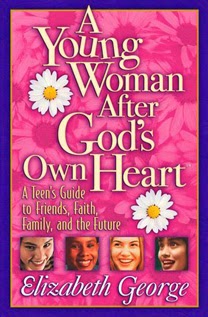
Some books lend themselves well to using this tool, for example, How Should we Then Live by Francis Schaeffer (around the age of 15 years and up) and A Young Woman After God's Own Heart (good for girls about 13 years of age and older). After a chapter is read they write an outline or summary.


http://www.bookdepository.com/Young-Woman-After-Gods-Own-Heart-Elizabeth-George/9780736907897/?a_aid=journey56


Plutarch Guides by Anne White

I couldn't come up with these questions for the life of me and they've been the catalyst for some interesting conversations and opportunities to write as Anne often suggests topics for narrations.

Shakespeare

Some Shakespeare guides are often too explicit in their sidebar comments so I generally don't give them to my children to use but they have some good ideas for writing and I can always find them cheaply second hand. We're currently reading through The Winter's Tale and the other week my 14 year old used a suggestion from the Oxford School Shakespeare:

'Archidamus is most appreciative of the reception and entertainment offered to Polixenes in Sicilia, and he reports the details back to Bohemia. Write his report, either in a letter to his family and friends; or in an article for the national newspaper.'

Other guides I've seen that offer writing ideas are the Cambridge School Shakespeare and the Heinemann Shakespeare.

The Brightest Heaven of Invention by Peter J. Leithart explores six of Shakespeare's plays and suggests writing topics for each one. This was one of my daughters' favourite books. An excerpt of the book is here.


http://www.bookdepository.com/Brightest-Heaven-Invention-Peter-Leithart/9781885767233/?a_aid=journey56


Another book by the same author and done in a similar manner is Miniatures and Morals: The Christian Novels of Jane Austen. Thoughtful questions which present opportunities for writing topics are included and an excerpt of the first chapter, Real Men Read Austen, is here. I found this when my second daughter was about 15 years old & she enjoyed it thoroughly. The boys have surreptitiously watched the BBC Pride and Prejudice and secretly enjoyed it and I said they had to read Northanger Abbey because it was an AO Year 9 free read. They did but that's about the extent of their Jane Austen immersion. 


http://www.bookdepository.com/Miniatures-Morals-Peter-Leithart/9781591280156/?a_aid=journey56

Poetry

Writing a poetic narration using the rhyme scheme of a poem they know
Choosing a ballad poem and changing it to story form
Writing about a subject using alliteration
Writing acrostic poems


Composition

When I first started homeschooling my three older children (now 25, 23 & 21 years of age) I hadn't read any of Charlotte Mason's books but used what I'd gleaned from Susan Schaeffer Macaulay's book For The Children's Sake, and what I could source for a reasonable price here in Australia. I found the two books below and they worked well for us. The Creative Writing course can be adapted to make it CM friendly and the second book works well as is and for those with large families it's well priced, uncomplicated & non-consumable. I have the 1992 & 1996 editions respectively although they've been revised since.

Wordsmith - A Creative Writing Course for Young People by Janie B. Cheaney

The author states that creative writing is basically 'expressing oneself' and the book is designed to sharpen language skills and then apply them. It comes with a Teacher's Guide, is written to the student and is designed for about Grade 7 and up. 90 pages.

There are three parts to the course:

Part 1 - concentrates on word usage with a brief overview of grammar, choosing words, pronouns and antecedents. I like how the author connects good grammar with writing and shows its effects.

Part 2 - active and passive voice, sentence structure.

Part 3 - figures of speech, story structure, writing assignments, revision, proofreading.

The teacher's guide has a suggested plan of study which covers 36 weeks and a short section called 'Writing all over the Curriculum' which I like and have gleaned ideas from. I used this for two of the girls who loved writing and they breezed through it. They published a newsletter with another home schooled friend for many years and wrote stories, poems and a variety of other newsworthy material, sending it out to family members scattered across the country and to others who asked for a copy, about 4 or 5 times a year. Although the writing assignments in the book could be substituted with others of your own making to make it more usable in a CM context, it is probably better only to use it with a child who loves writing.


Inspired after listening to Mozart's Sleighride:


Wordsmith Craftsman

This was written as a self-directed programme for Grade 10 and up. The book has suggested schedules for students starting in Year 9, 10, 11 or 12 and also has three parts.

Part 1 - writing every day: note taking, outlining, letters, summaries

Part 2 - paragraphs, writing techniques

Part 3 - the essay: structure, brainstorming, the topic, thesis statement. I think it walks through the essay writing process in a clearer way than some other books I've seen.

A short appendix contains a note taking form, a summary writing form, summaries of the steps used in the four types of essay writing and a list of common fallacies of argument with brief descriptions and examples.
93 pages.


Inspired by Ten Fingers for God: The Life and Work of Dr Paul Brand by Dorothy Clarke Wilson: