Monday, 25 July 2016

Ten Things Books Have Made Me Want To Do or Learn About After Reading Them


Books are an unending springboard for philosophical and practical rabbit trails. These are some of the things I've wanted to do or learn about after reading books:

1) These books had me wondering how I'd cope without community, electricity, running water, a dependable food supply, fuel and everything else I take for granted on a daily basis. How knowledgeable am I about even basic survival skills?? I enjoy dystopian-type books mostly because of the philosophical questions they raise about human behaviour and the development of character. 


On the Beach by Nevil Shute - an apocalyptic/dystopian look at a community of people in Australia preparing for the arrival of airborne radiation which has already wiped out the population of the Northern Hemisphere. It was interesting to read about aspects of radiation and its effects on humans that Shute wove into the story. Not my favourite book because it was quite depressing and I stupidly kept waiting for everything to come good, but of course, it couldn't and didn't. Apart from my shattered hopes, it was a compelling and well-written story. Nancy @ipsofactodotme wrote an excellent and detailed review of the book.


www.bookdepository.com/On-The-Beach/9780099530251/?a_aid=journey56


 Alas, Babylon by Pat Franklin - survivors of a nuclear holocaust try to rebuild their lives. I read books like this and realise I probably wouldn't last five minutes in the same scenario with my limited survival skills.

Thus the lights went out, and in that moment civilization in Fort Repose retreated a hundred years.

The Day of the Triffids by John Wyndam - this is one of my favourite dystopian reads. It has a more  literary flavour than some of the others I've read and explores the 'What if?' and social structures. I loved it.

2) Books that inspired me to be a better mother, to watch my words, and to work on my lack of the virtue known as  patience:


Little Women by Louisa May Alcott - I first read this book when I used it as a read aloud for my older children when they were quite young. When I came to the chapter 'Jo Meets Apollyon,' it was as if it was written just for me:

"Jo, dear, we all have our temptations, some far greater than yours, and it often takes us all our lives to conquer them. You think your temper is the worst in the world, but mine used to be just like it.”

"...you must keep watch over your ‘bosom enemy’, as father calls it, or it may sadden, if not spoil your life. You have had a warning. Remember it, and try with heart and soul to master this quick temper, before it brings you greater sorrow and regret than you have known today."


3) A book that made me want to go and hug my girls and tell them how much I appreciated them.

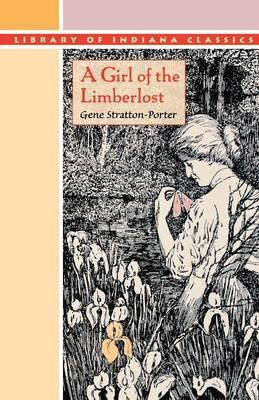
Girl of the Limberlost by Gene Stratton-Porter - Elnora's mother has kept a dark secret for many years and as a result has never been able to show her daughter any real love. Elnora goes off to highschool and is ridiculed because of her clothes and obvious poverty. Her mother refuses to provide her with money for books and tuition because she considers her desire for an education 'foolishness.' This is a beautiful story that poignantly shows the effect of the withholding of love but also the release that forgiveness can bring. Lovely!

www.bookdepository.com/Girl-of-the-Limberlost-Gene-Stratton-Porter-Wladyslaw-T-Bend/9780253203311/?a_aid=journey56


4) A Book That Made Me Want to Homeschool my Children


For the Children's Sake by Susan Schaeffer Macaulay

"Educating extends to all of life. In fact, an educational system that says, one bright summer's day in the dawn of my youth, 'There. Now you are educated. This piece of paper says so,' is doing me a gross disfavor. The truly educated person has only had many doors of interest opened. He knows that life will not be long enough to follow everything through fully." 


www.bookdepository.com/For-the-Childrens-Sake-Susan-Schaeffer-Macaulay/9781433506956/?a_aid=journey56


"How do we shortchange the child of today? We coop him up like a battery hen in a gaudy plastic cage. We 'timetable' his day with 'improving' activities so that he is a foreigner to himself and to the great outdoors."

"Many schools excel in wasting time. Time is like a fortune; it is wrong to allow it to be buried. Child are tired out with busy work. They are talked at until their attention habitually wanders, and maybe nine-tents of their time is wasted."


5) A Book That Made Me Want to Keep Homeschooling Them


www.bookdepository.com/Dumbing-Us-Down-John-Taylor-Gat-Thomas-Moore/9780865714489/?a_aid=journey56


Dumbing Us Down: The Hidden Curriculum of Compulsory Homeschooling by John Taylor Gatto - Gatto was a public school teacher for about 30 years and a recipient of the New York State Teacher of the Year award.

 "School is a twelve-year jail sentence where bad habits are the only curriculum truly learned. I teach school and win awards doing it. I should know."

"It is time that we squarely face the fact that institutional schoolteaching is destructive to children." 

"Although teachers do care and do work very, very hard, the institution is psychopathic — it has no conscience."


6) A book whose author referrenced a whole lot of books he read growing up and inspired me to search them out

Uncle Tungsten: Memories of a Chemical Boyhood by Oliver Sacks - apart from being a wonderful autobiography and introduction to the world of chemistry, Sacks talked about the books he'd read and how they motivated him and inspired his love for science. What impressed me was the wide range and genres he absorbed and gleaned from: Our Mutual Friend by Dickens, Conan Doyle's Sherlock Holmes and Professor Challenger books; War of the Worlds by H.G. Wells; T.E. Lawrence and John Steinbeck's Cannery Row, to name a few.


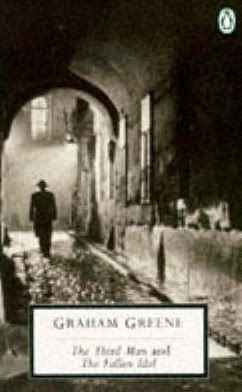
7) A book that had me finding out all about post WWII Vienna - the city was divided into four allied zones which were administered by Britain, USA, Russia & France. A fifth zone in the inner city was administered by all four powers. A dangerous and fascinating city.

The Third Man by Graham Greene


www.bookdepository.com/The-Third-Man-Graham-Greene/9780140185331/?a_aid=journey56


8) Books that made me long for the land of my birth

The Three Hostages & The Island of Sheep by John Buchan - Buchan's books are often set at least partly in Scotland, and whenever I read them, I want to pack up and head off back to my homeland. He describes the Scottish landscape so perfectly; I feel the cold air, imbibe the damp atmosphere and lose myself for a time.


www.bookdepository.com/The-Three-Hostages-John-Buchan/9781846971570?a_aid=journey56


9) A book that introduced me to Croatia, a new artist, and gave me insights into The Odyssey

Island of the World by Michael O'Brien - actually, this book did much more than introduce me to Croatia, Marc Chagall and aspects of The Odyssey. It's a very moving and painful epic about loss, hatred, justice and forgiveness that still lingers in my thoughts after two and a half years.


www.bookdepository.com/The-Island-of-the-World/9781586174903/?a_aid=journey56


 10) An author whose books explore aspects of human behaviour and provides interesting details for rabbit trails about topics as diverse as art, bell-ringing, publishing companies, poison, university life, relationships...


Clouds of Witness  by Dorothy L. Sayers


One of the true pleasures inherent to picking up a Sayers novel now is to see how the times in which we live alter our perceptions of the world around us, while doing nothing at all 
to alter the core of our humanity.
Elizabeth George

My two favourites

www.bookdepository.com/Strong-Poison-Dorothy-L-Sayers/9780450013928/?a_aid=journey56 

Ten Things Books Have Made Me Want To Do or Learn About After Reading Them is the topic for this week's:

http://www.brokeandbookish.com/p/top-ten-tuesday-other-features.html


Wednesday, 20 July 2016

Top Ten Tuesday - Ten Books Set Outside the USA


http://www.brokeandbookish.com/2016/07/ten-books-set-outside-us-that-weve.html

Top Ten Tuesday is a weekly link up hosted by The Broke & the Bookish. It's Wednesday here in Australia so I'm late. This week the topic is: Ten Books Set Outside the U.S.A. Here are some that I've enjoyed and I've linked to any previous reviews I've written:


China

The Painted Veil by W. Somerset Maugham (1925)


This is an unusual and almost bizarre story that grabs you from the very first page. It is set partly in England but mostly in China and Hong Kong when the latter was under British rule in the 1920's.
Shallow but likeable in many ways; beautiful, outgoing and frivolous, twenty-five year old Kitty, afraid of being left on the shelf after spending her youth partying and flirting, and declining a number of marriage proposals, marries Walter Fane, an intense, introverted, young doctor. They go to live in Hong Kong where he has been working in bacteriology and while there Kitty becomes involved with a married man.
Walter discovers her unfaithfulness and forces Kitty to face the truth that her 'lover' had no intention of leaving his own wife and was just using her. Walter gives his wife an ultimatum whereby her only available option is to travel with him to a cholera ravaged outpost in China.
The story doesn't sound very appealing!! but I loved the author's writing and his exploration of Kitty's gradual awakening of conscience and development of character.
It is a little sad; Walter is a tragic sort of character. The ending wasn't perfect, but as good as it probably could be considering the circumstances. Overall, I think it's a very interesting and absorbing read.

Belarus

The Bielski Brothers by Peter Duffy

In June 1941 Hitler's armies invaded Russia in what was known as Operation Barbarossa, and quickly advanced to the city of Novogrudek in Western Belarus where they began to impose regulations to control the Jewish population and set up the Novogrudek ghetto. This is the story of three Jewish  brothers who waged a guerilla warfare against the Nazis and created a 'Jerusalem in the woods.'


India

Death of a Guru by Rabindranath R Maharaj

A fascinating and wonderfully engaging book first published in the 1970's at the height of Eastern Mysticism's introduction into the western world.


www.bookdepository.com/Death-of-Guru-Rabindranath-R-Maharaj-Dave-Hunt/9780340862476/?a_aid=journey56


Iran

The House I Left Behind by Dr. Daniel Shayesteh

This book is a unique insight into the life of a practicing Muslim through the lens of a man raised in an Iranian (Persian) culture dominated by fundamentalist Islam (historically Iran has not always been Muslim and defended its Persian heritage for many years despite Arabic invasions).
It's the story of a man who desired democracy and economic justice for his country and believed the Iranian Revolution which deposed the Shah of Iran and opened the door for the rule of the Ayatollah Khomeini in 1979 would be the means of accomplishing this.
I wrote a little about it here.


England

Cover Her Face by P.D James - written in 1962, this was P.D James's first novel. Her books give very picturesque descriptions of the English landscape.


France

Pied Piper by Nevil Shute - Shute is an author who never fails to please. His characters are just normal everyday sorts of people with their flaws and weaknesses, but he places them in exceptional circumstances that call upon all their resources. A very satisfying book with an unusual plot and twist at the end.

Germany


All Quiet on the Western Front by Erich Maria Remarque - the best book on World War I that I've ever read. Written by a German who fought on the front and a book not to be missed!


Egypt


The Tragedy of the Korosko by Arthur Conan Doyle

In 1895 the steamer, S.W. Korosko, set out from Shellal, a small village in Upper Egypt, with an assorted group of English, Irish and American tourists on board. Their intention was to travel up the two hundred miles of Nubian Nile, visiting the various points of interest along the way, but during one of their excursions they were kidnapped by a group of Arab dervishes and plunged into a world steeped in seventh century ideas and practice.


Lebanon

Nothing Else Matters by Patricia St. John - a young adult book set during the civil war in Lebanon during the 1970's.


Greece


Decision at Delphi by Helen McInnes - one of my favourite authors whose espionage books are set all through Europe.


Monday, 18 July 2016

Ambleside Online Year 5 - some written narration samples

Moozle is just finishing up Ambleside Online Year 5. The bulk of it is done but we got behind on a few of the readings so we'll be finishing those off and then doing an exam before heading into Year 6. The Aussie school year starts at the end of January but we've never followed the official school terms except for sometimes taking advantage of the quieter roads during the school holidays and having some days off during that time.
I often give her a choice of the books she uses for written narrations and it's interesting to see what she picks. Here are some selections from this year's work. She's read all these on her own except for the first half of Doctor Hunger & Captain Thirst, which I read aloud to her.


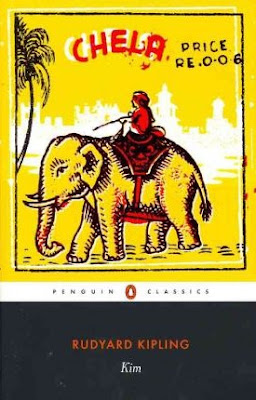
From Kim by Rudyard Kipling - I added some additional resources to help fill in the backgound and context of this story which I posted these here.


An Australian substitute for we used for History/Biography was Doctor Hunger & Captain Thirst and Moozle did a few picture narrations for this book:


 John McDouall Stuart


The Singing Wire was a Term 3 Aussie substitute and again, picture narrations were mostly done:


Age of Fable - this has been quite a popular choice for both wriiten and picture narrations over the past two years (it continues into Year 6)


Aurora & Tithonus Ch 26


The Story of the World Volume 4, The Modern Age, by Susan Wise Bauer is a book that Moozle has really liked and enjoyed writing about:


  When we've finished the year's work, I'll write a post about what worked and what didn't and get Moozle's opinion on the books she used.


Friday, 15 July 2016

Nothing Else Matters by Patricia St John (1919-1993)


Patricia St John has been called 'a poet of forgiveness,' and you don't have to  look any further than the wonderful stories she wrote for young children to understand why. Tanglewood's Secret (1948), Treasures of the Snow (1950), Star of Light (1953) and Rainbow Garden (1960), are just a few of the powerful, engrossing and redemptive books she wrote for children.
I came across them a couple of years after we were married and were visiting my husband's grandparents in New Zealand. I found a few of the author's books in the home library they kept for children's ministry and sat up until the wee hours of quite a few mornings, often in tears, in order to finish them. Patricia St John's books were often based on her own experiences; she knew what redemption was and had the gift to be able to express God's love and forgiveness creatively.
In 1982, the author moved into a more mature readership with the publication of Nothing Else Matters (also published under the title, If You Love Me: A Story of Forgiveness).


This story is set in Lebanon in the mid 1970's during the civil war. After the State of Israel was established, refugee camps were set up by the United Nations as the conflict with the Palestinians spilled over the border into Lebanon. The Palestinian Liberation Organisation grew out of these camps and this resulted in the establishment of military training centres.
There was a brief civil war in 1958, and then in 1975, war broke out again between the Maronite Christians (a strong 'right wing' political party) and the Muslim militia and Palestinians, or 'left wing.'
Nothing Else Matters is the story of a Lebanese Maronite family; Elias, Rosa and their children: 16 year old twins Amin and Lamia; eleven-year old Sami and eight year old Huda. Rosa has a simple and sincere faith but the rest of the family are only nominal Christians. As the life they know disintegrates around them, and hatred rises up in its place, Lamia's struggles with the horrors of the war bring her to a place where she begins to grasp that forgiveness and love are the most important things. Nothing else matters, ultimately.
The story is written in the author's usual simple but powerful style so the reading level isn't difficult,  but the themes are. I know every family feels differently about age appropriateness so here are a few samples from the book that may help you judge whether it's suitable for your situation:

Lamia finds a dead Palestinian woman with her infant lying unhurt beside her underneath her cloak. Taking the child, Moomi, home, Rosa immediately accepts him, but when Elias comes home he is enraged:

'The child of our enemies, and your brother not three weeks dead. I tell you, I will not have this brat in our house.'
'Father, we have lost one brother; let us keep this one.'
His taut nerves gave way and his anger blazed out.
'So! this little bastard can take he place of our brother, can it? You have forgotten him already...be silent, you fool of a girl, or I'll throw him out now, thus minute!'

The church stood like a grey rock jutting from the mountainside, but she did not go in. She had never been in since Amin died, because the pale Christ on the cross, and his mournful faced mother with her eyes uplifted had not answered her prayer any more than any of her bits of wood and plaster. 'I think I'm an atheist now,' she thought rather vaguely, and her deep sense of loneliness increased because it was so terrible to believe that there was no one there at all.

So many of the children had run out of their homes to play and had never come home again.


After an all night bombardment, Elias realised there was no hope for their survival if they stayed in their home. He said to Rosa,

'If there's a lull, we might still get away, unless the car has been stolen or smashed. It was well hidden.'
'Yes, if there is a lull I think we should try and get away in the dark. It's Lamia I worry about the most. She is so beautiful, and they do terrible things to girls.'
'It's not only the girls; you, too, are beautiful. But don't worry. If they come to rape you or Lamia, I shall shoot you both with my own gun, before they shoot me.'
And Lamia, woken by the strangeness of a five minute silence, heard what her father said, and lay marvelling. He would shoot her himself, rather than see her raped or mutilated, and die content, with her. Her silent father had always cared for her and provided for her, but now she knew, for the first time, how deeply he loved her. For love is a strange plant. It may grow unnoticed and unrecognised on the sunny slopes and only break into flower in the valley of the shadow of death.


Writing about an attack by the Palestinians which became known as the 'Battle of the Hotels,' the author wrote:

When it was over, the victors posed for photographs round the headless body of one of their victims, while other bodies were hitched to jeeps and dragged through the streets to celebrate the victory.

In 1978, Patricia St John travelled to Beirut to visit her sister, Hazel, a missionary and teacher who had survived the first three years of the civil war. Hazel had broken her femur in a fall and Patricia spent five weeks with her during her convalescence. Once back home in England, Patricia wrote Nothing Else Matters which was based on the true experiences of a Lebanese family who lived with Hazel after losing their home and belongings in the war.
(See 'Patricia St. John Tells Her Own Story,' 1995).


Wednesday, 6 July 2016

The Worship of Success

I've almost finished the 2010 biography of Dietrich Bonhoeffer by Eric Metaxas. According to the author, Bonhoeffer was fascinated by the way people worship success. He experienced firsthand the fickleness of the crowds at bullfights when he was in Spain; one minute roaring for the toreador, the next, for the bull. In 1938, just after the infamous Kristallnacht, Bonhoeffer, disheartened by the inability of the Church to be bold and firm in the face of oppostion and suffering, wrote in an Advent letter:

 '...God's cause is not always the successful one...we really could be "unsuccessful"and yet be on the right road. But this is where we find out whether we have begun in faith or in a burst of enthusiasm." Pg. 318.

Metaxas writes:

After the fall of France, many understood that Hitler was destroying Germany through success.

Hitler himself saw his success as 'Providential.' Bonhoeffer had a different view:


Christians in Germany will face the terrible alternative of either willing the defeat of their nation in order that Christian civilization may survive, or willing the victory of their nation and thereby destroying our civilization.   

Dietrich Bonhoeffer, 1939.


In a world where success is the measure and justification of all things the figure of Him who was sentenced and crucified remains a stranger and is at best the object of pity. The world will allow itself to be subdued only by success. It is not ideas or opinions which decide, but deeds. Success alone justifies wrongs done...
With a frankness and off-handedness which no other earthly power could permit itself, history appeals in its own cause to the dictum that the end justifies the means...
The figure of the Crucified invalidates all thought which takes success for its standard.
Bonhoeffer, pg 363


Calvary by Jan Bruegel, c.1610


It is not your business to succeed, but to do right. When you have done so the rest lies with God.
C.S. Lewis


Wednesday, 29 June 2016

Some Light, Literary Reading


Winter is definitely here and we've even had some snow falls about an hour and a half away from us. Between the cold snap and a persistent cough that has worn me out by keeping me awake at night, it's been an ideal time to indulge in some light but literary reading.
Enter P. D. James.
I say 'light reading' but P. D. James didn't write cozy mysteries like Agatha Christie. In some ways she is similar to Flannery O'Connor in her use of external situations to reflect what is going on within a character. She wrote in a literary style but the content of her books is often uncomfortable as she explores the unpredictability of the human heart . Disordered love is a recurring theme in her writing. Violent, horrific and dreadful, are words that could be used to describe situations in her stories, but murder is all these things...

Murder is the unique crime; it's the only one for which we can never make reparation to the victim. We feel that the murderer steps over an invisible line which divides him or her forever from the rest of us. It is an astonishing act and we regard it with horrified fascination. I think most of us are capable of quite atrocious sins, but I do believe that comparatively few of us are capable of deliberately planning the death of another human being.

The Black Tower by P.D.James


https://www.bookdepository.com/The-Black-Tower/9780571248865/?a_aid=journey56


P. D. James concerned herself more with why rather than who, and I enjoy the ability she had to thresh out her characters. In The Black Tower (1975) James' fifth mystery novel, this character development is mostly focussed on her detective, Adam Dalgliesh.

It was, he had thought, uncommonly inconsiderate of his doctors to reconcile him so thoroughly to death and then change their minds. It was embarrassing now to recall with what little regret he had let slip his pleasures and preoccupations, the imminence of loss revealing them for what they were, at best only a solace, at worst a trivial squandering of time and energy. Now he had to lay hold of them again and believe that they were important, at least to himself.

Commander Adam Dagliesh, having resigned himself to the fact that he had acute leukaemia and wasn't long for this world, felt a sense of outrage when this diagnosis was proved to be incorrect. Instead, his doctor happily bestowed on him an atypical mononucleosis complicated by a bout of pneumonia.
Sleepless nights during his illness allowed him to take a dispirited inventory of his life. He had lived an emotionally detached and self-sufficient life after the death of his wife and child, and had used his grief, his job and his poetry to justify his actions. Now feeling ill-equipped to return to his previous occupation at Scotland Yard, he was left with the conviction that it was time for him to get away from the world of crime and courts, manhunting and corpses.

He wasn't sure whether this disenchantment with his job was caused solely by his illness, the salutary reminder of inevitable death, or whether it was the symptom of a more fundamental malaise, that latitude in middle-life of alternate doldrums and uncertain winds when one realizes that hopes deferred are no longer realizable, that ports not visited will now never be seen, that this journey and others before it may have been a mistake, that one has no longer even confidence in charts and compass.

There was a personal commitment he needed to fulfil now that death could not excuse him. An invitation had come from the elderly priest, Father Baddeley, an old family friend and his father's curate, asking him to visit.
Eleven days later, Dalgleish drove out of London and headed to Dorset where his old friend now served as chaplain to Toynton Grange, a private home for the young chronic sick and disabled.

He smelt for the first time the clean half-illusory salt tang of the sea. The air moved warm and gentle against his skin. He was suddenly suffused with happiness and, as always in these rare transitory moments, intrigued by the purely physical nature of his joy. It moved along his veins, a gentle effervescence. Even to analyse its nature was to lose hold of it. But he recognized it for what it was, the first clear intimation since his illness that life could be good.

Dalgleish arrived at Toynton Grange to find that his old friend had died suddenly eleven days previously and his body cremated six days after that. There was no reason to suspect foul play; the man was in his eighties, but Dalgliesh had a sense of foreboding that all was not as it seemed. When other deaths occur he finds himself in dangerous territory and once again fighting for his life.

An Unsuitable Job for a Woman
(1972)


 www.bookdepository.com/An-Unsuitable-Job-for-Woman-P-D-James/9780571253401/?a_aid=journey56


 This is the first of two books that introduces P. D. James' female sleuth, the vulnerable and courageous Cordelia Gray. Adam Dalgliesh is referred to throughout the book but it isn't until the final chapter that he actually makes an appearance.
Cordelia Gray is a twenty-two year old woman who inherits a run-down detective agency after the death of its principal, Bernie Pryde, an ex-detective who previously worked under Inspector Dalgliesh.
Cordelia is frequently told that her work is 'an unsuitable job for a woman,' but she is determined to keep the agency going for the sake of her old partner.
Just after she returns to the office after Bernie's funeral, she has a visit from a woman who is representing Sir Roger Callender, a well known scientist. Callender's son, Mark, committed suicide eighteen days beforehand and his father wants to know why his son hanged himself.
Cordelia starts to investigate what led the young man to this point and discovers a trail of insidious family secrets. When an attempt is made on her own life she is convinced that Mark's death was the result of murder and not by his own hand.
There is nothing cozy about this novel with its 1970's Cambridge University setting and a family full of disordered loves and secret sins. Cordelia Gray is a very likeable sleuth and the last chapter where she is interviewed by Dalgliesh is one of my favourite parts of the book.

Bernie wouldn't have been any help here. To him the moral dilemma at the heart of the crime would have held no interest, no validity, would have seemed a wilful confusion of straightforward facts...
But the Superintendent might have understood...She recalled Ronald Callender's words that love was as destructive as hate. Would Dalgliesh assent to that bleak philosophy? She wished that she could ask him. This, she recognized, was her real danger - not the temptation to confess but the longing to confide.


Further reading:

'How the detective fiction of P.D. James provokes theological thought.'

Tuesday, 14 June 2016

Parents as Inspirers: the Educational Functions of Parents


There are four chapters or essays in Charlotte Mason's second volume, Parents and Children, that have the title 'Parents as Inspirers.' Each of these four chapters (chapters III to VI) looks at different aspects.

Chapter III starts with the idea that parents owe a Second Birth to their children i.e. a birth into the spiritual life of the intelligence and moral sense and looks at the educational functions of parents. CM observed that some parents may neglect to do this for their children and in so doing unleash a Pandora's box of misfortune by their carelessness. However, there is also a cup of blessing that is available for them to dip into that will bring good to their children.
God uses men and women, parents above all others, as vehicles for the transmission of his gifts and although there are exceptions to the rule:

'Train up a child in the way he should go and when he is old he will not depart from it,' (Proverbs 22:6) nevertheless, it is a rule, and God honours those who keep His law.

•    Heredity isn't taken into account in the Second Birth. The fact that a child is brave or timid, generous or selfish, careful or reckless, boastful or modest, quick-tempered or placid has more to do with inheritance than education. Inherited nature is present at birth and is the base foundation upon which everything else is built.

•    The child brings with him into the world, not character but disposition (temperament, nature, inherent qualities)

•    He has tendencies which may need to be strengthened, channelled, or nipped in the bud

•    'A good habit can overcome ten bad natures'

•    A person's character is the disposition they inherited, worked upon by education, circumstances, self-control and

•    The Spirit of God

There were certain dispositions that our children came into the world with. Some were of the type that we were keen to strengthen. Some needed to be channeled in the right way. Others definitely needed to be repressed. When you see your child has inherited tendencies that you've wrestled with yourself, you realise how important it is that you don't treat them in a fatalistic fashion: 'They are who they are and they're stuck with it.' I wish I'd had some of my inherited 'qualities' channeled or nipped in the bud when I was younger.
Tendencies to shyness, timidity and fear are not traits I want to strengthen.
If my child is by nature an introvert, I don't want them to use that as an excuse to stop them being initiators.
I don't necessarily want to squash a quickness of temper but to channel it in a creative way. I want to strengthen an obvious talent and make opportunities for it to be developed even more.
We are not limited to what we possessed at our 'first birth.' Thankfully!

Charlotte Mason called the Holy Spirit 'the supreme agency,' that is sometimes 'little suspected and as little solicited.' I've been guilty of forgetting that the Holy Spirit has the capacity of exerting His power in my children's lives. I can think of so many times I've fretted over things I had no control over when I could have saved myself the trouble by acknowledging His agency in their lives.

CM touches on something that even now is considered to be new ground: the idea that mental activity isn't just a product of the brain, but it is also a shaper of the brain. She didn't use the term back then but today we'd call this neuroplasticity. She uses quotes from Physiology of Mind by a Dr. Maudsley, but a more recent book that looks at learning and the 'switching on of genes' that change neural structure is 'How the Brain Changes Itself' by Norman Doidge, and it is fascinating.


http://www.bookdepository.com/The-Brain-That-Changes-Itself-Norman-Doidge/9781921372742/?a_aid=journey56


I thought of the place of copy work and memory work (learning by heart) in a Charlotte Mason education when I read these words by Doidge:

...for hundreds of years educators did seem to sense that children's brains had to be built up through exercises of increasing difficulty that strengthened brain functions. Up through the nineteenth and early twentieth centuries a classical education often included rote memorisation of long poems in foreign languages, which strengthened the auditory memory (hence thinking in language) and an almost fanatical attention to handwriting, which probably helped strengthen motor capacities and thus not only helps handwriting but added speed and fluency to reading and speaking...the loss of these drills have been costly; they may have been the only opportunity that many students had to systematically exercise the brain function that gives us fluency and grace with symbols.

And her emphasis on developing habits i.e. 'habit is to life what rails are to transport cars:'

Most of us think of the brain as a container and learning as putting something into it. When we try to break a bad habit, we think the solution is to put something new into the container. But when we learn a bad habit, it takes over a brain map, and each time we repeat it, it claims more control of that map and prevents the use of that space for "good" habits. That is why "unlearning" is often a lot harder than learning...

CM called the brain, 'the organ and instrument of the mind' and she believed that when we think a thought there is a distinct motion set up in some tract of the brain that operates in a similar way to what happens with the arm muscles in order for the hand to write. Recognising this helps us to understand that the behaviour of the brain tissue may provide a key to an effective approach in our educational efforts regarding character formation.

About a hundred years after she penned her thoughts, the science researcher and author of 'How the Brain Changes Itself' writes:

This book is about the revolutionary discovery that the human brain can change itself...

Since the brain could not change, human nature, which emerges from it, seemed necessarily fixed and unalterable as well.

The brain...is not an inanimate vessel that we fill; rather it us more like a living creature with an appetite, one that can grow and change itself with proper nourishment and exercise.


Wednesday, 8 June 2016

Reading Europe: The Netherlands - Girl With a Pearl Earring by Tracy Chevalier


Girl With a Pearl Earring is set during the 17th Century in the Dutch city of Delft. It is a work of historical fiction involving the artist Johannes Vermeer and this painting:

 Girl With a Pearl Earring, 1665


This is a quick and quite enjoyable book to read and is told from the viewpoint of Griet, a 16 year old girl sent to work as a maid in the Vermeer household.
When Griet's father is blinded in an accident at work, she must work to help to support her parents and her younger sister. Griet's brother, Frans, has already been apprenticed out and lives elsewhere.
Griet goes to live with the Vermeer family and becomes a little besotted by the artist. There is friction between Griet and other members of the household, including Vermeer's wife, Catharina, and this escalates when Vermeer asks Griet to grind expensive pigments for him and later uses her as a model for his 'Dutch Mona Lisa.'

It was strange to meet so many new people and see so many new things in one morning, and to do so apart from all the familiar things that made up my life. Before, if I met someone new I was always surrounded by family and neighbors. If I went to a new place I was with Frans or my mother or father and felt no threat. The new was woven in with the old like the darning in a sock.

Chevalier's writing is quite descriptive and overall she captures a sense of the times but Griet's character sometimes spoiled the story for me. The novel would have had more appeal for me if its intended audience was clearer. There were a couple of places where I thought it went beyond the place I'd feel comfortable giving it to someone in their mid-teens. On the other hand, it lacked the depth I'd expect from an adult novel - characters were a little flat and undeveloped, and the ending felt rushed.
Not much is known of Vermeer's life but Chevalier obviously did quite a bit of research into the artist's life and coupled it with her imagination to paint a picture for her readers.


http://www.bookdepository.com/Girl-with-Pearl-Earring-Tracy-Chevalier/9780452282155/?a_aid=journey56


I liked this part of the conversation between Vermeer and Griet when she had asked him if his paintings were Catholic (Griet was a Protestant):

"It's not the painting that is Catholic or Protestant," he said, "but the people who look at it, and what they expect to see. A painting in a church is like a candle in a dark room - we use it to see better. It us the bridge between ourselves and God. But it is not a Protestant candle or a Catholic candle. It is simply a candle."

"There is a difference between Catholic and Protestant attitudes to painting," he explained as he worked, "but it us not necessarily as great as you may think. Paintings may serve a spiritual purpose for Catholics, but remember too that Protestants see God everywhere, in everything. By painting everyday things - tables and chairs, bowls and puckers, soldiers and maids- are they not celebrating God's creation as well?"


The maid Griet is fictitious, but many of the other characters in the book were real people in Vermeer's life - Anton van Leeuwenhoek, the 'father of microbiology;' Pieter van Ruijven (Vermeer's patron), Vermeer's wife, Catharina, and her mother, Maria Thins, for example. These links to actual historical people were interesting as were Chevalier's attempts to fill in the background of this celebrated and mysterious portrait. If you would enjoy a mix of some art history and a light read, this would be a good book to while away an evening or two on.


Linking this to Reading Europe Challenge 2016: The Netherlands 


Friday, 3 June 2016

Weekly Review

Music Appreciation

If you haven't ever listened to the dulcet tones of Peter Ustinov, you're in for a treat. We bought a CD 'Peter Ustinov Reads the Orchestra' a long time ago and I haven't ever come across it anywhere else.  When I discovered that someone had put it on YouTube, I thought I'd share it here. It's about 30 minutes long and is a wonderful narration on the instruments of the orchestra. I prefer just to listen to the audio but the video is quite nicely done and it's ideal for young children.


Art Appreciation/Picture Study

Earlier this year we visited the art gallery and I found some art books published by Phaidon that I thought would be ideal to use for Picture Study - a good variety of paintings from the artist with  lovely, good-sized colour reproductions. They didn't have any books on artists I wanted to study but I took a photo of the book and searched when I got home and found Book Depository has a good selection of them for the same price.


www.bookdepository.com/Whistler-Frances-Spalding/9780714831862?a_aid=journey56


Reading/Audio Books

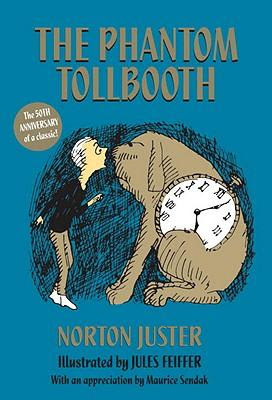
I didn't realise Moozle hadn't read The Phantom Tollbooth before, so she started reading it today. Quirky and fun, written in 1961, it's recommended for ages 8 to 12 years, but it's one of those books that appeals to all ages, adults included.

www.bookdepository.com/The-Phantom-Tollbooth-Norton-Juster-Jules-Feiffer/9780394820378/?a_aid=journey56


Moozle's been reading Kim by Rudyard Kipling (Ambleside Online Year 5) so I put together some background information/history/general interest related to India during British rule to help with understanding and appreciating Kipling's book.

We enjoyed listening to The Exploits of Brigadier Gerard while we were out and about in the car. It's a good choice for car listening as the chapters are almost a short story in themselves, so if one child isn't there, we can just continue and the missing person doesn't lose the plot and and can join in with the next chapter. I wrote about it here.


http://www.audible.com.au/pd/Classics/The-Adventures-of-Brigadier-Gerard-Audiobook/B00FOC9BMW


Shakespeare 

After Macbeth and Hamlet everyone was ready for a comedy. I chose The Comedy of Errors because I found the Arkangel audio recording at our library. It's Shakespeare's shortest play and the full text is here.


www.bookdepository.com/The-Comedy-of-Errors-William-Shakespeare-David-Tennant-Brendan-Coyle-Alan-Cox/9781932219050/?a_aid=journey56


Bonhoeffer: Pastor, Martyr, Prophet, Spy by Eric Metaxas is a book I bought a couple of years ago and its 624 pages have sat on the bookshelf unread - until this week. I was pushed to start it after both reading Ruth's inspiring review at A Great Book Study, and hearing how much a friend at church enjoyed it also.


www.bookdepository.com/Bonhoeffer-Eric-Metaxas/9781595552464?a_aid=journey56


The Martian by Andy Weir, was recommended to my husband and me by our son, Mr T (he's in his mid-twenties) but before we could get a hold of the book we watched the DVD. There aren't many movies my husband and I both like - our tastes are so different - but we did enjoy this one. Basically, a group of astronauts get caught in a violent storm on Mars and in the chaos, one of them is believed to have been killed. The others make the difficult decision to leave the planet, believing there was no hope of the missing man's survival. Well, he does survive, and has to work out a way to contact NASA and use his wits to keep alive until he can be rescued. Some language but considering his situation, it's not inappropriate! The first couple of sentences in the book contain expletives, but that's not the overall tone of the book. It's a great story, the movie (M rating in Australia) was excellent, and I loved the music! (e.g. Starman by David Bowie).


http://www.bookdepository.com/The-Martian-Andy-Weir/9781785031137?a_aid=journey56


Poetry

Benj, Moozle and I went to our homeschool park day this afternoon and on the way home we dropped in to see Zana who is house sitting for a few weeks. Somehow we got into a conversation (probably related to food and what we were going to have for dinner) that recalled a poem all the kids learnt when they were young. There's something very gratifying about these shared memories:


There Once Was a Puffin

Oh, there once was a Puffin
Just the shape of a muffin,
And he lived on an island
In the bright blue sea!

He ate little fishes,
That were most delicious,
And he had them for supper
And he had them for tea.

But this poor little Puffin,
He couldn’t play nothin’,
For he hadn’t anybody
To play with at all.

So he sat on his island,
And he cried for awhile, and
He felt very lonely,
And he felt very small.

Then along came the fishes,
And they said, “If you wishes,
You can have us for playmates,
Instead of for tea!”

So they now play together,
In all sorts of weather,
And the Puffin eats pancakes,
Like you and like me.

by Florence Page Jaques


Linking up at Weekly Wrap-up


Wednesday, 1 June 2016

Ambleside Online Year 5 - Reading Kim by Rudyard Kipling


www.bookdepository.com/Kim-Rudyard-Kipling/9780141442372?a_aid=journey56


Kim is scheduled for Literature in Term 3 of Ambleside Online Year 5. I started listing vocabulary that I thought may need some explanation and research but then I came across this very helpful chapter by chapter resource at the Kipling Society website. I think it covers just about everything that could possibly be problematic, plus some!
To get some background on India culturally and historically, I got together the following maps, websites, books and images that I thought were (or could be) helpful:

For a general background on India, these books by Bobbie Kalman are well done:


www.bookdepository.com/India---the-Culture/9780778796572?a_aid=journey56 www.bookdepository.com/Indi---the-People-Bobbie-Kalman/9780778796565/?a_aid=journey56www.bookdepository.com/Indi---the-Land-Bobbie-Kalman/9780778796558/?a_aid=journey56


'The major world religions and their beliefs about God. Hinduism, Buddhism, Islam, Christianity, and New Age...'
Fairly simple explanation of various religious beliefs with a little graphic to describe each one. I read through some of this with Moozle prior to her starting Kim.
The notes on the Kipling Society web pages I linked to above define the various religious beliefs/cultures as they come up in the story, but I liked the graphics at this website which helped explain things more clearly.


Kim was published in 1901 and the setting was India under British rule. In 1947, Colonial India was divided into two separate states: India and Pakistan (the Partition of India). The map below shows India prior to Partition.


There is some history here and maps to show the changes which occurred as a result of Partition.


 India after Partition - Lahore, where Kim begins, is now in Pakistan:


https://analyzingwomeninshame.wikispaces.com/Partition+of+India


 Zam-Zammah, Kim's gun.


He sat, in defiance of municipal orders, astride the gun Zam Zammah on her brick platform opposite the old Ajaib–Gher — the Wonder House, as the natives call the Lahore Museum. 
(Kim: Ch 1)


https://commons.wikimedia.org/wiki/File:Zam_Zammeh_1921.JPG


The Grand Trunk Road - map and photos 


‘Look! Brahmins and chumars, bankers and tinkers, barbers and bunnias, pilgrims and potters — all the world going and coming. It is to me as a river from which I am withdrawn like a log after a flood.’
And truly the Grand Trunk Road is a wonderful spectacle. It runs straight, bearing without crowding India’s traffic for fifteen hundred miles — such a river of life as nowhere else exists in the world.
(Kim, Chapter 3)


'The Great Game' - the struggle between the British and Russian Empires for supremacy in Central Asia. In Chapter 3 of Susan Wise Bauer's Story of the World, Volume 4, she writes about Russia and Britain's attempts to try to gain control of Afghanistan. This chapter is scheduled in Week 26 of Ambleside Online Year 5.
More on The Great Game here (for children) and here.

Benares, now known as Varanasi (Kashi); Ganges River. Some great photos here
Indian Himalayas


Simla (Shimla) c.1900 the capital city of Himachal Pradesh, and the summer capital of the British-Indian Empire.


The Spiti Valley is a desert mountain valley located high in the Himalayan Mountains in the north-eastern part of the Indian state of Himachal Pradesh. The name "Spiti" means "The Middle Land", i.e. the land between Tibet and India.


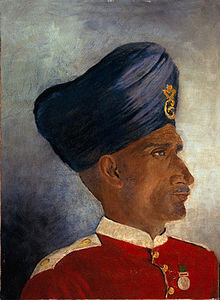
Sepoys - Indian soldiers under the command of the British