Showing posts with label Australian Poetry. Show all posts

Friday, 22 April 2016

Nature Poetry: Poetry Month Celebration

The author of the beloved children's book, Charlotte's Web, was not surprisingly, also a poet. I love this poem which he wrote for his wife in 1929...


 Natural History
 
  The spider, dropping down from twig
  Unwinds a thread of her devising:
  A thin, premeditated rig
  To use in rising.

  And all the journey down through space,
  In cool descent, and loyal-hearted,
  She builds a ladder to the place
    From which she started.

  This I, gone forth, as spiders do,
  In spider’s web a truth discerning,
  Attach one silken strand to you
  For my returning.

   E.B. White (1899-1985) 

Garden Orb Weaving Spider I came across on my walk


A Noiseless Patient Spider

A noiseless, patient spider,   
I mark’d, where, on a little promontory, it stood, isolated;   
Mark’d how, to explore the vacant, vast surrounding,   
It launch’d forth filament, filament, filament, out of itself;   
Ever unreeling them - ever tirelessly speeding them.            
 
And you, O my Soul, where you stand,   
Surrounded, surrounded, in measureless oceans of space,   
Ceaselessly musing, venturing, throwing, - seeking the spheres, to connect them;   
Till the bridge you will need, be form’d - till the ductile anchor hold;   
Till the gossamer thread you fling, catch somewhere, O my Soul.

Walt Whitman (1819-1892) 


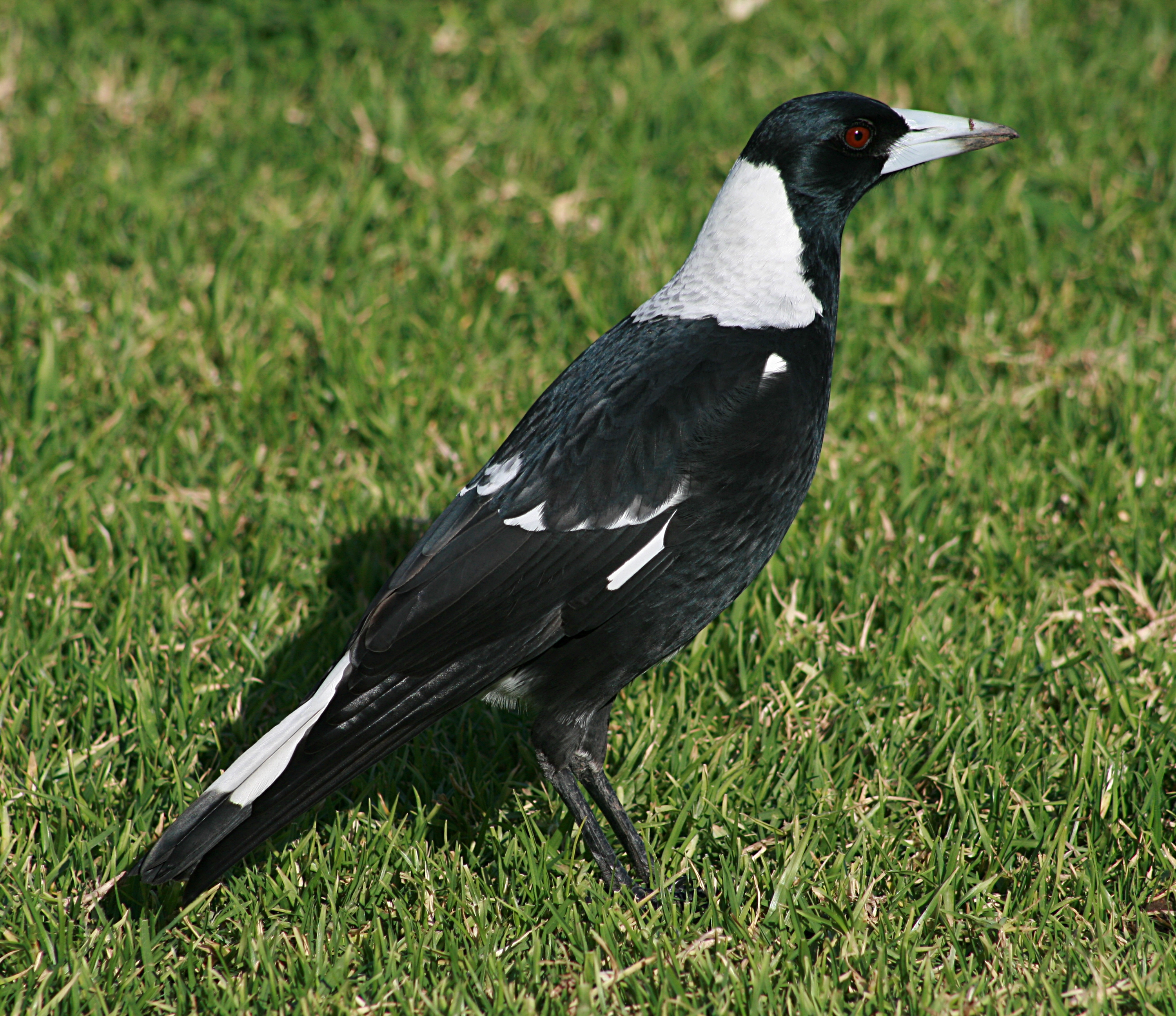
 Australian Magpie (c. Toby Hudson)


Magpies  

Along the road the magpies walk
with hands in pockets, left and right.
They tilt their heads, and stroll and talk.
In their well-fitted black and white.

They look like certain gentlemen
who seem most nonchalant and wise
until their meal is served - and then
what clashing beaks, what greedy eyes!

But not one man that I have heard
throws back his head in such a song
of grace and praise - no man nor bird.
Their greed is brief; their joy is long.
For each is born with such a throat
as thanks his God with every note.

Judith Wright (1915-2000)


Sunrise, Northern Territory, north of Alice Springs, 2011


The Australian Sunrise


The Morning Star paled slowly, the Cross hung low to the sea,
And down the shadowy reaches the tide came swirling free,
The lustrous purple blackness of the soft Australian night,
Waned in the grey awakening that heralded the light;
Still in the dying darkness, still in the forest dim
The pearly dew of the dawning clung to each giant limb,
Till the sun came up from ocean, red with the cold sea mist,
And smote on the limestone ridges, and the shining tree-tops kissed;
Then the fiery Scorpion vanished, the magpie's note was heard,
And the wind in the she-oak wavered, and the honeysuckles stirred;
The airy golden vapour rose from the river breast,
The kingfisher came darting out of his crannied nest,
And the bulrushes and reed-beds put off their sallow grey
And burnt with cloudy crimson at the dawning of the day.


James Lister Cuthbertson (1851-1910)


Leaf-tailed Gecko by Moozle aged 11


The Gecko

The Gecko lying on his stone
Is always very much alone,
Nor is the reason hard to trace
By those who've seen its form and face
It's hard to realise a mite
Can be so venomous a sight,
Or in its little frame compress
Such concentrated ugliness.
Now wonder other creatures fly
Each time a Gecko ambles by.
No wonder that its chosen mate
Recoils from the connubial state.
Yet underneath its skin, we're told,
There beats a heart of purest gold.
Its children do not know neglect;
It treats its mother with respect.
It never, ever beats its wife,
And lives a most unblemished life.
Its aspect is its sole defence
Against the world's malevolence.
So when you see a Gecko stay
Uncharitable thoughts and say:-
"The gruesome are not always gross-
even a reptile bears its cross!"

Leon Gellert (1892-1977)


http://theedgeoftheprecipice.blogspot.com.au/p/poetry-month-celebration.html


Monday, 11 April 2016

Poetry Celebration Tag

As part of  the Poetry Celebration at The Edge of the Precipice during April, Hamlette has posted some questions which I've answered below.


What are some poems you like?

I've loved poetry for as long as I can remember so I'm culling a lot here...


The Hound of Heaven by Francis Thompson (1859-1907)

"Ah, fondest, blindest, weakest,
I am He Whom thou seekest!
Thou dravest love from thee, who dravest Me."


The Fool's Prayer by Edward Rowland Sill (1841-1887)

"The ill-timed truth we might have kept -
Who knows how sharp it pierced and stung!
The word we had not sense to say -
Who knows how grandly it had rung!"


When You are Old by William Butler Yeats (1865-1939)


Ozymandias by Percy Bysshe Shelley (1792-1822)


The Pulley by George Herbert (1593-1633)


Scots Wha Hae by Robert Burns (1759–1796) Because I'm a Scot...


What are some poems you dislike?

Nothing really stands out. There are lots I don't care for but there are so many good poems anyhow I don't think too much about those I don't fancy.


Are there any poets whose work you especially enjoy?  If so, who are they?


George Herbert
William Butler Yeats
Leon Gellert

I like the humourous poetry of Hillaire Belloc, Arthur Guiterman, Edward Lear, and this piece by Australian poet, Thomas E. Spencer, How McDougal topped the score


Do you write poetry?


Yes, I do but I haven't written much in recent years. Most of my poetry has been reflective & personal but I've written a number of songs - poetry set to music.


Have you ever memorized a poem?

I've memorised poems I've read to my children, because I read them over & over for years and I know snippets of longer poems. Poems set to music have definitely helped me enjoy and memorise poetry and these days it seems to be the only way I really memorise well.


Do you prefer poetry that rhymes and had a strict meter, or free verse?  Or do you like both?

I probably prefer poems that rhyme as long as it's not forced but they don't have to have a strict meter.


Do you have any particular poetry movements you're fond of?  (Beat poets, Romanticism, Fireside poets, etc?)(If you haven't got any idea what I'm talking about, that's fine!  You can check out this list for more info, if you want to.)


I'm not familiar enough with all these terms to answer this question properly but I'm not fond of poems that are too flowery and have an overabundance of references and allusions to matters I have no idea about. I like to be able to make a connection in some way with what I'm reading. I enjoy reading ballad poems aloud to the kids - some favourites have been:


The Destruction of Sennacherib by George Gordon Byron
Horatius at the Bridge by Thomas Babington Macaulay
The Highwayman by Arthur Noyes
Lady Clare by Alfred, Lord Tennyson


Some other posts related to poetry:

Poetry Selections for Memory Work
Poetry as a Means of Intellectual Culture
Ideas for Poetry with Children

Wednesday, 6 April 2016

An Elegy for a Lost Generation

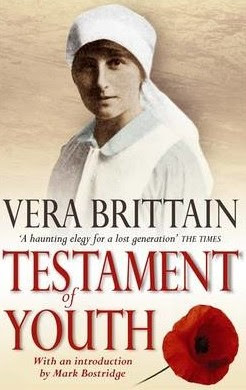
During the month of April I'm taking part in a Poetry Celebration (see link on the right). I recently started reading Testament of Youth by Vera Brittain, a WW1 memoir, described as 'A haunting elegy for a lost generation.' and decided to read some World War 1 poetry for the challenge. Vera Brittain had become engaged just before her fiancee went to the front in 1915. She writes of the tension she felt every time she heard the sound of the doorbell or the ring of the telephone, thinking that it could be news that her fiancee was dead. In addition to this continual anxiety, a new fear began to plague her:

...a new fear that the War would come between us - as indeed, with time, the War always did, putting a barrier of indescribable experience between men and the women they loved, thrusting horror deeper and deeper inward, linking the dread of spiritual death to the apprehension of physical disaster. Quite early I realised this possibility of a permanent impediment to understanding. 'Sometimes,' I wrote, 'I have feared that even if he gets through, what he has experienced out there may change his ideas and tastes utterly.

http://www.bookdepository.com/Testament-of-Youth-Ver-Brittain-Shirley-Williams/9780860680352?ref=grid-view


When I read Leon Gellert's poem, The Husband (? 1917) it confirmed the validity of Vera's fears. The husband comes home bereft and unable to shake off the memories and trauma of the war. He keeps his memories to himself and a barrier falls between himself and his wife as he thrusts the horror deeper within himself. He cannot even touch his wife's hair without the sense that he is defiling her. The husband has left the war zone but the war still goes on inside him.

The Husband

Yes, I have slain, and taken moving life
From bodies.  Yea! And laughed upon the taking;
And, having slain, have whetted still the knife
For more and more, and heeded not the making
Of things that I was killing.  Such 'twas then!
But now the thirst so hideous has left me.
I live within a coolness, among calm men,
And yet am strange.  A something has bereft me
Of a seeing, and strangely love returns;
And old desires half-known, and hanging sorrows.
I seem agaze with wonder.  Memory burns.
I see a thousand vague and sad tomorrows.
None sees my sadness.  No one understands
How I must touch her hair with bloody hands.


Sunday, 3 April 2016

Australian Poetry in World War 1


Leon Gellert (1892-1977) is said to have written some of the best poetry that came out of WW1 and is generally considered to be Australia's finest war poet. I stumbled upon one of his poems in a small anthology of Australian verse, The Call of the Gums, and sought out more of his work. A volume of his poems, which was published as Songs From a Campaign, hasn't been reprinted since 1917, as far as I know, and it's not easy to find his poetry in print.
The drawings below were done by Gallipoli artist, Major Hore (1870-1935). They are taken from  Gallipoli & the Anzacs site, which also contains the background information related to the drawings and much more besides. It is well worth a good look around.


Anzac Beach – June 1915


Leon Gellert was 23 years old when he landed on Anzac Beach (better known as Anzac Cove) on 25 April 1915 with the 10th Battalion, South Australia. In July he was evacuated to Malta due to illness and shrapnel wounds, and after that to London. There he was declared medically unfit for duty, and was discharged from the forces at the end of June.

North Beach – Evening Nov 5. 1915


Anzac Cove

    There’s a lonely stretch of hillocks:
    There’s a beach asleep and drear:
    There’s a battered broken fort beside the sea.
    There are sunken trampled graves:
    And a little rotting pier:
    And winding paths that wind unceasingly.
    There’s a torn and silent valley;
    There’s a tiny rivulet
    With some blood upon the stones beside its mouth.
    There are lines of buried bones:
    There’s an unpaid waiting debt:
    There’s a sound of gentle sobbing in the south.


‘Early Morning Gallipoli’ – Oct 1915


The Cross

'I wear a cross of bronze,' he said,
                   'And men have told me I was brave.                 
He turned his head,
   And pointing to a grave,
'They told me that my work of war was done.'
His fierce mouth set.
'And yet, and yet…..'
   He trembled where he stood,
 'And yet, and yet'…..
I have not won
     That broken cross of wood!' 


‘Finis’ – Dec 20 1915 – Evacuation


The Last To Leave

The guns were silent, and the silent hills
had bowed their grasses to a gentle breeze
I gazed upon the vales and on the rills,
And whispered, "What of these?' and "What of these?
These long forgotten dead with sunken graves,
Some crossless, with unwritten memories
Their only mourners are the moaning waves,
Their only minstrels are the singing trees
And thus I mused and sorrowed wistfully

I watched the place where they had scaled the height,
The height whereon they bled so bitterly
Throughout each day and through each blistered night
I sat there long, and listened - all things listened too
I heard the epics of a thousand trees,
A thousand waves I heard; and then I knew
The waves were very old, the trees were wise:
The dead would be remembered evermore-
The valiant dead that gazed upon the skies,
And slept in great battalions by the shore.


A short biography of Gellert is here and some of his poems are available online e.g. allpoetry,
and as a PDF here.
The AusLit  website has a list of the contents of Gellert's book Songs of a Campaign.


 I'm linking this post to the Poetry Month Celebration at Edge of the Precipice.


Tuesday, 11 November 2014

A Homeschooling Year for a 9 year old Girl - Ambleside Online Year 3


Moozle completed Ambleside Online's Year 3 which covers the late 1400's-1600's (Renaissance to Reformation) about two months ago. She was eight years old when we started Year 3 but turned nine a few months later.
The scheduled books and time period of Year 3 didn't require much adapting for our Australian context but I did do some substitutions, additions & subtractions which I'll share in this post.

History & Literature

We used some of the chapters from This Country of Ours, especially those scheduled in Term 2, because of their connection with British History eg. Sir Walter Raleigh, the Cavaliers and the Pilgrims.

We skipped American Tall Tales and substituted A Little Bush Maid by Mary Grant Bruce & didn't do Pilgrim's Progress because I'd already used it as a family read aloud the previous year.

Shakespeare and Plutarch

Moozle has been listening in when I've done both of these with her older siblings for some years and this year she decided to try doing her own written narrations. I wrote about that here.

Just be aware that she's a girl and an avid reader and that the three boys above her wouldn't have done this in a fit. It was a pleasant surprise to me to suddenly have another child who loved to write as it hadn't happened for quite a few years.

I also started studied dictation with her around the time she started to write and have seen some improvement in her spelling which used to be woeful.

Natural History

Warrigal the Warrior by C.K. Thompson - as a read aloud

Wonderland of Nature by Nuri Mass - for help with nature study. We also use The Handbook of Nature Study and participate in the Outdoor Hour (see link on side bar).

Bush Stories by Amy Mack - this is out of print but I found a copy in excellent condition in a secondhand Aussie bookshop which sells through Abebooks. The book I have was a reprint done in 1983.


I read aloud Pagoo & Secrets of the Woods - natural history is a favourite topic for this young lady and she's loved everything AO has scheduled plus our Australian selections.


Food & Nutrition

This eBook is quite a good introduction to food and nutrition for a child especially if you are familiar with Nourishing Traditions as the author shares a similar view to those expressed in that book. I bought my copy when the author was offering about 25% off - I don't think I would have paid the full price of $19.95. But then again, I haven't seen much else on food and nutrition for this age group. There are 15 short chapters with a colouring page, which we didn't use, plus a word puzzle at the end of each chapter (she loves these). We didn't start the book until about half way through the year so we're continuing with it in Year 4.


The Body Book for Younger Girls

I used this book as a framework for talking about puberty and the changes girls go through as they approach this time in their lives. The book is quite well done and is written for girls of 8 years and up to read on their own. I read it aloud and skipped bits and pieces that I didn't think were applicable - nothing inappropriate but just unnecessary for her at this stage (bras, boys, tampons, body image).
The book covers pre-puberty and puberty in a practical and sensible way. It has 109 well illustrated pages and I spread it out over a few months. 


Instrument - Cello

After having piano lessons for a couple of years, Moozle started cello lessons at the beginning of the year. She has always wanted to play this instrument and is doing well. We started off renting a cello but when she outgrew that one we decided to buy one secondhand. Hopefully, she won't outgrow this one too soon. This is one drawback to starting stringed instruments with younger children. We have four different sized violins that one of her older sisters went through. We didn't have to worry about that with our children who played the piano.


Highland dancing

Moozle entered her second competition a few weeks ago. At her first competition she knocked the swords as she danced. That instantly disqualifies you so she had to stand in 'first position of arms' until the other dancers had finished. This time she won first place in The Lilt and second place in The Swords, which delighted her no end.
Highland dancing competitions are quite challenging in that you gave a group of dancers on stage - there were six for most of the dances at this last competition. The dancers are in various levels so you could have a ten year old dancing alongside a 20 year old. They often have different steps to their dances and they are all dancing at the same time with a couple of judges watching their every move. They have to really concentrate on what they are meant to be doing - a good test of their attentiveness.


Timeline

 A very simple one:


We use an extra large spiral drawing book just to keep everything in the one place. At some stage I may pull the pages out and connect them all up in chronological order. She's marked in our Plutarch men in another section.

Geography

Charlotte Mason's Geography book. There is a link to it on the AO website.

Explore His Earth - Moozle loved this book and I posted our schedule, with videos and other things we used as we read through it here. (We skipped most of the activities suggested in the book.)

Updated to add: We also did Marco Polo: His Travels and Adventures, by George Makepiece Towle and used The Adventures of Marco Polo by Freedman for mapwork.

French

Free resources we used are here.

Music & Art Appreciation

As I've tended to do all along, we mostly studied different artists and composers to the AO term selections.

Moozle read Hildegard's Gift by Megan Hoyt and listened to a couple of Hildegard's compositions but we didn't spend a lot of time on her music.
We did spend a few months on some Spanish composers, which was wonderful and I chose some pieces that featured the cello and other stringed instruments.
Marc Chagall was an artist she enjoyed.

I posted some of the folksongs related to the Year 3 time period here.

Handicrafts

English paper piecing - this is the current project which might eventually turn into a cushion.


Another sewing project in the past year was this bag holder
She enjoyed trying her hand with some basic leather work & is keen to do some more projects.


Memory work

Scripture - we all do this together. Which reminds me - I need to update our list and put it up on my pages index at the top of the blog.

Poems -  Poetry is another area I often tweak to better suit our situation and interests. Jabberwocky by Lewis Carroll, The Eagle by Tennyson and The Arrow & the Song by Longfellow were some that Moozle chose to memorise on her own. My Country by Dorothea Mackellar, an Australian poem, is one that she enjoyed also.


This is a poetic narration she did based on a story form The Jungle Book:


Some of the free reads that we don't have were substituted with Australian titles:

Verity of Sydney Town by Ruth C. Williams - this is a better fit for Year 5 historically but I added it because I thought Moozle would enjoy it more now than leaving it until later and the setting is an area we are familiar with.

Seven Little Australians by Ethel Turner

The Australian Twins by Daphne Rook

The Bush Boys by James Tierney

Enemy Brothers by Constance Savery - I added this as a night-time read aloud because I love the story and Moozle kept asking me if she could read it. It's a wonderfully rich book and I'd always planned to read it aloud to her at some time as I'd done with her older siblings years ago.

Updated to add: I was intrigued by some references the author made to the sword Chrysaor and an Elizabethan poem and finally found out some things about them recently.

Devil's Hill by Nan Chauncy is out of print but if you find it it's a good fit for this age group.


Sunday, 26 January 2014

Poetry Selections for Memory work, Appreciation, Inspiration & Fun

A well-worn list of poems we've enjoyed over many years.
Some have been memorized, some can be recalled with a bit of prompting and some have been the opening of a door for a holy moment. Some of the links are to the the words of the poems others are to versions set to music which we find helpful for memorizing. I've marked these with an *


Mary's Lamb - Sarah Josepha Hale
Time to Rise - Robert Louis Stevenson
Singing Time - Rose Fyleman
Once I Saw a Little Bird
The Little Turtle - Vachel Lindsay
There Once was a Puffin - Florence Page Jaques
Windy Nights - Robert Louis Stevenson
The Land of Counterpane - Robert Louis Stevenson
My Shadow - Robert Louis Stevenson
The Land of Story-Books - Robert Louis Stevenson
Some One - Walter de La Mare
Furry Bear - A.A. Milne
The Owl and the Pussy-cat - Edward Lear
The Song of Mr. Toad - Kenneth Grahame
Sea Fever - John Masefield
Be Strong! - Maltie Davenport Babcock
The Wooing of Sir Keith -Howard Pyle
Horatius - Thomas Babington Macaulay
The Arrow and the Song - Henry Wadsworth Longfellow
I Never Saw a Moor - Emily Dickinson
The Day is Done - Henry Wadsworth Longfellow
Ozymandias - Percy Bysshe Shelley
If No One Ever Marries Me - Lawrence Alma-Tadema
Jabberwocky - Lewis Carroll *


Little Things - Julia Fletcher Carney
The Four Friends - A.A. Milne
Forgiven - A.A. Milne*
The Lamb - William Blake
The Tiger  - William Blake
Cock Robin
Tartary -Walter de La Mare
The Highwayman - Alfred Noyes
Lady Clare - Alfred Lord Tennyson
The Inchcape Rock - Robert Southey
If - Rudyard Kipling
No Enemies - Charles Mackay
Waltzing Matilda - A.B. Paterson *


Andy's Gone with Cattle - Henry Lawson *
How McDougal Topped the Score - Thomas E. Spencer
My Country - Dorothea Mackellar *


Pied Beauty - Gerard Manley Hopkins
The Fool's Prayer - Edward Rowland Sill

Paul Revere's Ride - Henry Wadsworth Longfellow *

Opportunity - Edward Rowland Sill
The Hound of Heaven - Francis Thompson
The Charge of the Light Brigade - Alfred Lord Tennyson
Father William - Robert Southey
An Old Woman of the Roads - Padraic Colum
Christmas Bells - Henry Wadsworth Longfellow *
The Destruction of Sennacherib - George Gordon Byron
My Gift - Christina Rossetti 
Daddy Fell into the Pond - Alfred Noyes
The Cupboard - Walter de La Mare
Mr. Nobody
The Night Wind - Eugene Field
Godfrey Gordon Gustavus Gore - William Brighty Rands
"One, Two, Three!" Henry Cuyler Bunner
The Wreck of the Hesperus - Henry Wadsworth Longfellow
Excelsior - Henry Wadsworth Longfellow

Clancy of the Overflow - A.B.Paterson *


 Some newer additions:

The Song of Wandering Aengus - W.B. Yeats *


LetsHSHS.com High School Homeschool Blog Hop

Monday, 18 March 2013

A Midsummer Noon in the Australian Forest


A Midsummer Noon in theAustralian Forest by Charles Harpur (1813-1868)


Not a sound disturbs the air,
There is quiet everywhere;
Over plains and over woods
What a mighty stillness broods!


All the birds and insects keep
Where the coolest shadows sleep;
Even the busy ants are found
Resting in their pebbled mound;
Even the locust clingeth now
Silent to the barky bough:
Over hills and over plains
Quiet, vast and slumbrous, reigns.


Only there's a drowsy humming
From the yon warm lagoon slow coming:
'Tis the dragon-hornet - see!
All bedaubed resplendently.


O 'tis easeful here to lie
Hidden from noon's scorching eye,
In this grassy cool recess
Musing thus of quietness.