Thursday, 21 June 2018

The Woods are Lovely, Dark & Deep...Nature Study in June

We're in the throes of bathroom renovations. Outside it's been wet and cold and not conducive to bushwalking. However, the jackhammering got the better of us and outside we went. We followed our usual trail but I remembered there were some paths we hadn't explored so we decided now would be a good time to do so.
Fortunately, the tracks were quite clear, which meant less chance of picking up leeches!


We were surprised to find that this track followed our local creek but on the opposite side to that which is accessible from our place. Moozle decided to sketch a map of the area & record our sightings.

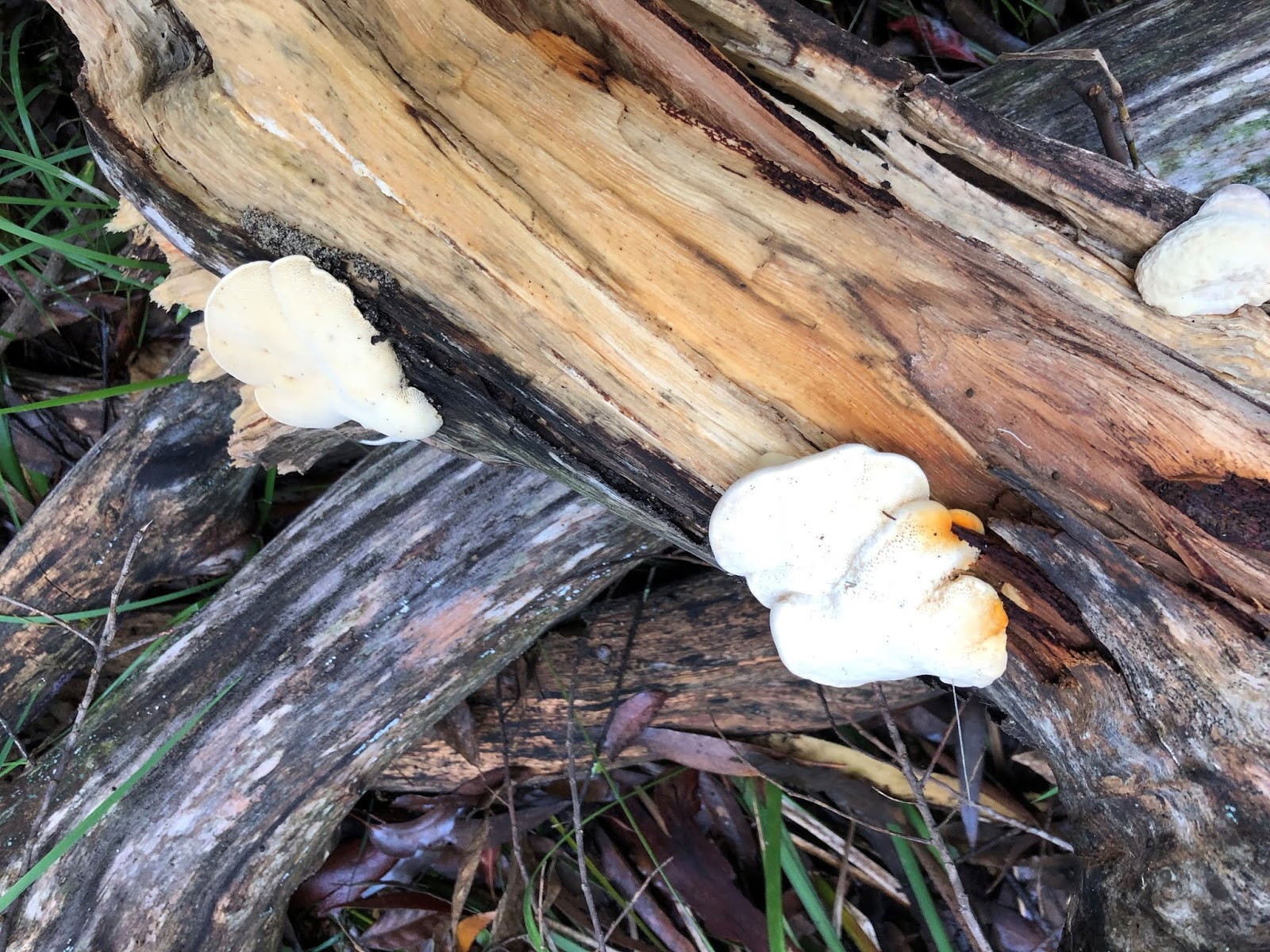
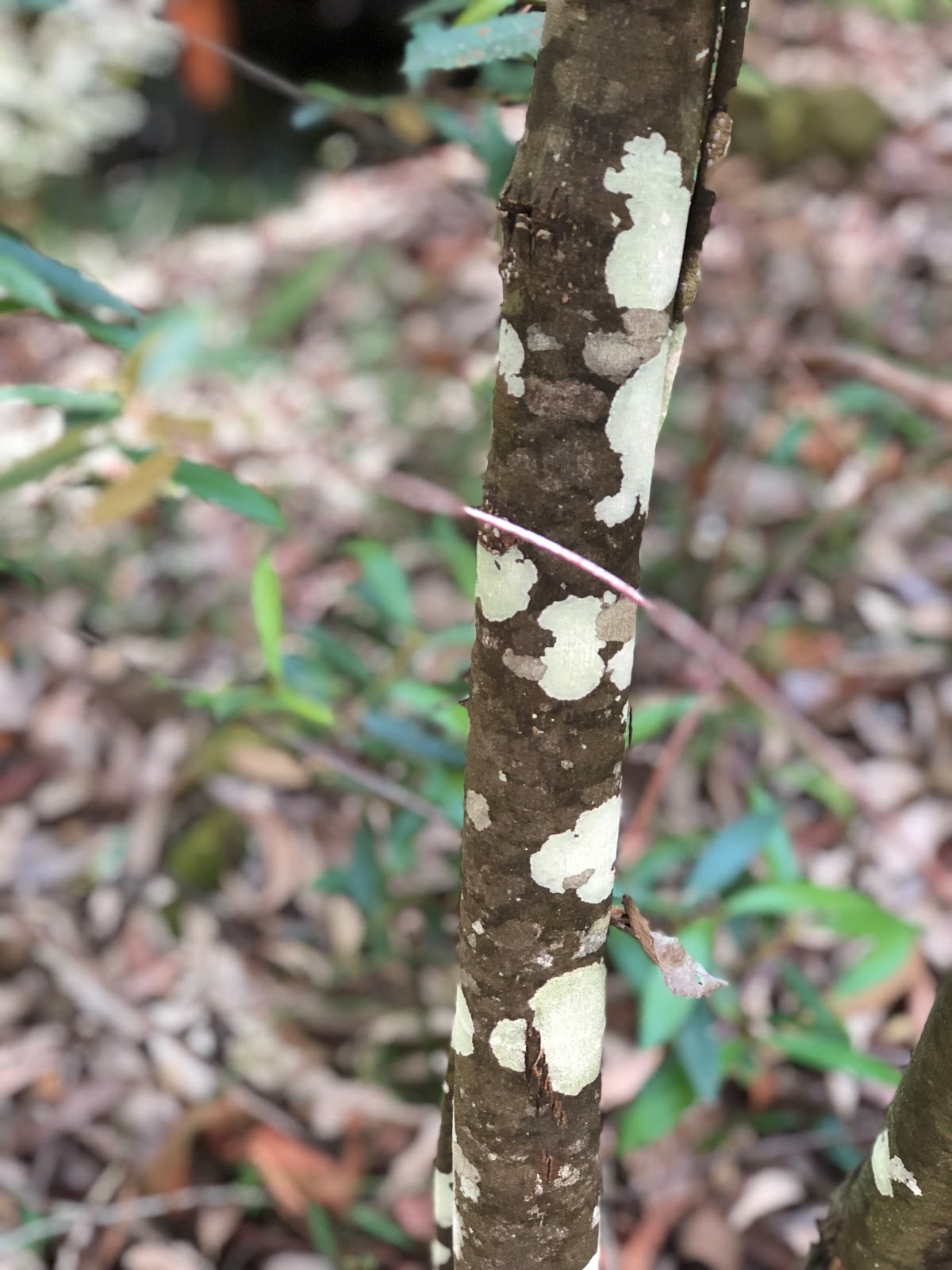
Fungi & plentiful moss & lichen
Two brush turkeys building their nest
A brown cuckoo dove
A cicada shell
A lone magpie
We heard Eastern Whipbirds call but didn't see any


June is the first month of Winter in Australia and there generally isn't a great deal happening, especially with native flowers. We did see some Bossiaca heterophylla (yellow pea flowers):


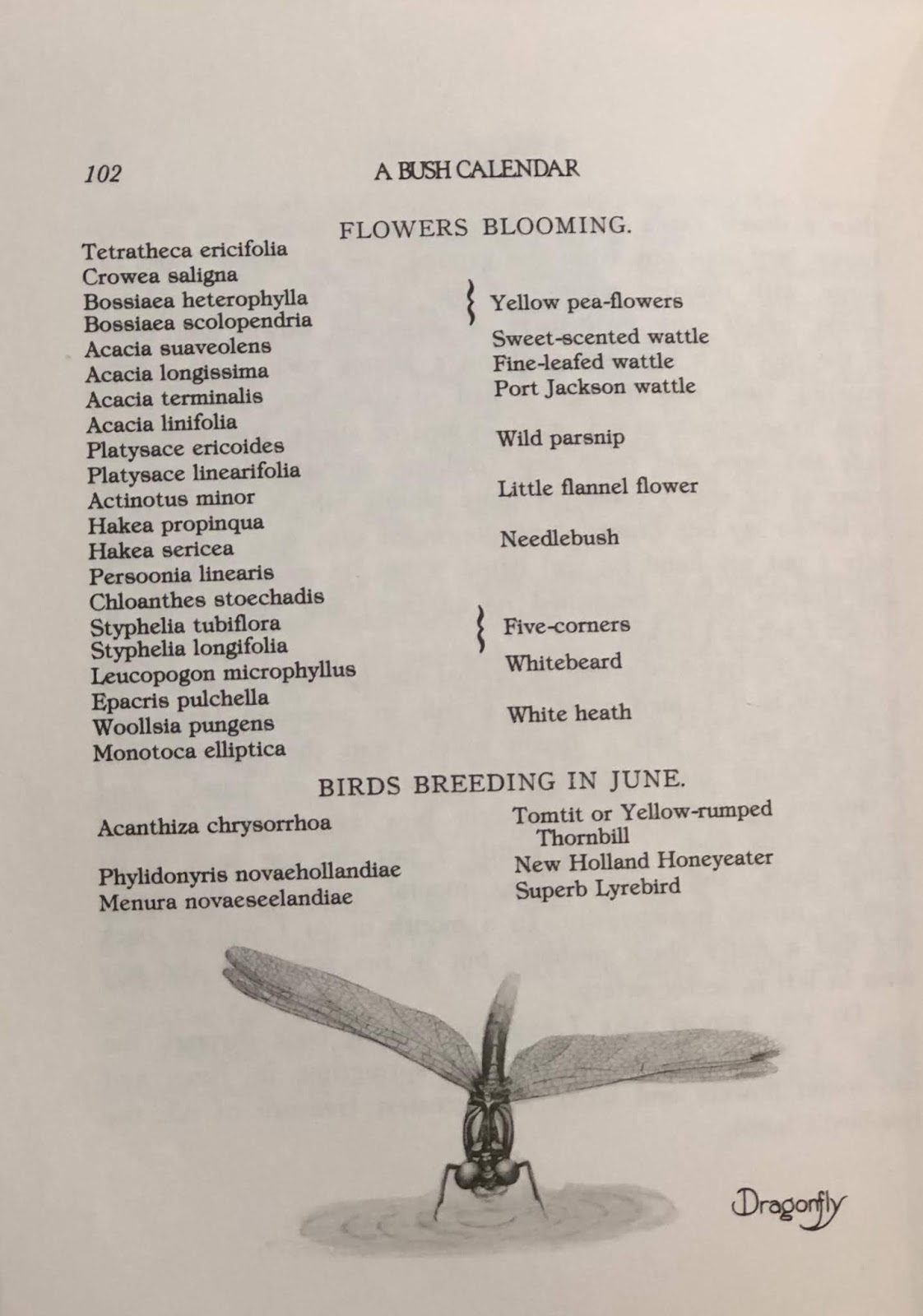
It's breeding season for the Superb Lyrebird. A lovely living book (unfortunately it's out of print) for younger children about this bird is, Silvertail: The Story of a Lyrebird by Ina Watson.


Bracket fungi


Last month, Moozle completed a free six week Natural Illustration course offered online by Edx.org which I wrote about here.
One of her assignments was on 'form drawing' and she drew this possum. She wasn't happy with the area between the body & the tail but she was a lot happier with her final assignment - a drawing of our cat. This took her a few days of trying to get the fur right.


It's a pretty good likeness of His Royal Highness


Moss & Lichen


'...we are an overwrought generation, running to nerves as a cabbage runs to seed; and every hour spent in the open is a clear gain, tending to the increase of brain power and bodily vigour, and to the lengthening of life itself.'

Charlotte Mason, Home Education, Pg. 42


A break in the weather - lessons out of doors


Cicada shell


Tuesday, 12 June 2018

Back to the Classics: Linnets & Valerians by Elizabeth Goudge (1964)


I had a mixed reaction to Linnets & Valerians, a children’s book by Elizabeth Goudge which was published in 1964. On the one hand, most of the characters in this book are attractive, well portrayed, and interesting. The storyline is involved and has plenty of appeal also but I was uncomfortable with how Goudge handled the magical side of the story as the book progressed. I think Goudge's writing is very endearing so I am genuinely sorry I can't recommend this book without reservation.

The Story

Four children, Nan, Robert, Timothy, Betsy, and their dog, Absolom, are left in the care of their grandmother when their father went off exploring in Egypt. The children were a bit too much for Grandma to handle, so she decided that Absolom must go and that Robert and Nan should be sent to boarding school while her companion, Miss Bolt (christened 'Thunderbolt' by the children) would teach Timothy and Betsy at home. The children did not want to be either educated nor separated from each other, and were determined to keep their dog. So they did what any child would want to do in that situation:

'Escape. People always escaped from prison if they could. The question was, could they? Robert was ten years old, stocky and strong, and he had a penknife, green eyes and red hair, and when a question like this presented itself to his mind he did not ask it twice.'

By coincidence, they ended up at the house of their eccentric bachelor uncle, their father’s elder brother. Although Uncle Ambrose was adamant that he did not like children, underneath he was a decent fellow. He had firm views about children and did not hold with boarding school for girls:

‘Home’s the place for girls, though they should have a classical education there. I have always maintained that women would not be the feather-headed fools they are, were they given a classical education from earliest infancy.’

He agreed to let the children stay with him subject to certain conditions:

‘I intend to impose conditions upon your sojourn with me. You will keep them or go to your Uncle Edgar, who lives in Birmingham and will dislike you even more than I do myself...
I must tell you that I have a devouring passion, not for children themselves, for I abominate children, but for educating them...’


And so began their education in Greek, Latin, and Literature, with a good amount of free time thrown in if they completed their work.
The children’s mother had died five years previously and the children were close and trusted each other. Nan, responsible, steady, and sensitive, and twelve years of age. Being the eldest, she was of a domesticated turn of mind. She 'did not have many ideas of her own because it was she who had to deal with what happened after Robert had had his.'
She also believed that ideas should be chewed on for twenty-four hours, whereas Robert was impulsive and full of ideas - especially about how to make money; Timothy and Betsy, both feisty and headstrong were aged eight and six respectively.
Although their uncle was a stern disciplinarian, he was a wonderful teacher and did genuinely love his charges. He recognised that Nan had a reflective temperament like himself so he gave her her own little parlour where she could go for privacy:

‘A parlour of her own! She had never even had a bedroom of her own, let alone a parlour...
Something inside her seemed to expand lie a flower opening and she sighed with relief. She had not know before that she liked to be alone. She sat still for ten minutes, making friends with her room, and then she got up and moved slowly around it, making friends with all it held.’

Goudge showed her knowledge of children and their needs in a sensitive, charming, and humorous manner throughout this book, but as I mentioned previously, I was uncomfortable with how she handled the magical aspects of the story. I don’t have an issue with magic per se, and our children have read Tolkien, Lewis, and other authors, some modern, whose books contain this element, not to mention fairy tales. In a fairy tale, there are consequences for evil doers, but in Linnets & Valerians there were characters with dark motives and actions who didn’t have to face the consequences of their deeds. I think this is confusing to a child.
One particular instance that bothered me was when Nan discovered a book of spells in a cupboard in her parlour. They had been written by Emma Cobley, a woman who was jealous because the man she loved married Lady Alicia. Emma used her spells to inflict Lady Alicia’s son so that he became deaf and dumb, while her husband, Squire Valerian, was afflicted with a loss of  memory. Both of them were estranged from Lady Alicia for many years and she believe them to be dead. The children, with the help of old Ezra who lived with Uncle Ambrose, were able to reverse the spells and reunite Lady Alicia with her loved ones.
When Emma discovered her book of spells had been burned and her deeds revealed, she replaced the old sign of the falcon on the inn that had been removed when Squire Valerian disappeared and just went back to life as usual as though nothing had happened. No consequences.

In Tending the Heart of Virtue by Vigen Guroian, a book that explores the power of story in awakening a child’s moral imagination, he writes:

‘Children are vitally concerned with distinguishing truth from falsehood. This need to make moral distinctions is a gift, a grace, that human beings are given at the start of their lives.’

Magical realism and fantasy stories can project fantastic 'other' worlds while still paying attention to truth and without clouding real moral laws.

Guroian continues:

'Becoming a responsible human being is a path filled with potholes and visited constantly by temptations. Children need guidance and moral road maps and they benefit immensely with the example of adults who speak truthfully and act from moral strength...
some well-meaning educators and parents seem to want to drive the passion for moral clarity out of children rather than use it to the advantage of shaping their character. We want our children to be tolerant, and we sometimes seem to think that  too sure sense of right and wrong only produces fanatics.'

I would have been more satisfied if Elizabeth Goudge hadn’t made Emma’s actions seem trivial.

‘She won’t do no more ‘arm,’ said Ezra. ‘’Er spells be burnt an’ she won’t do no more ‘arm. ‘Angin’ up that falcon was ‘er sign to us that she knows she’s beaten. She won’t do no more ‘arm. Glory glory alleluja!’

However, Ezra was never quite sure of the inwardness of Emma’s virtue...

Apart from this episode in dealing with Emma, the story ended well and everyone lived happily ever after.


Linking to Back to the Classics 2018: Children's Classic


Friday, 8 June 2018

The Reading Life of a 13 Year Old Girl

For those of you with book gobblers, you know how difficult it can be to keep up with their reading habits. I'm constantly asked the question, "Do you have any books I can read?" I have shelves and rooms full of books but they're not always age appropriate, and sometimes I can't believe how fast my 13 year old girl reads. But I shouldn't really be surprised as one of her older sisters was also a ridiculously fast reader. Sometimes I tell her to re-read something and she often does, multiple times. These are some of her recent new titles, plus some of her re-reads.

The Gauntlet by Ronald Welch (1951)

'As Peter wanders around the ruined castle of Carreg Cennen he makes an amazing discovery - a rusted metal gauntlet. As he slips it on to his hand he is transported back to the fourteenth century, to a time when his Norman ancestors held the castle.
Accepted as the eldest son of Sir Roger de Blois, Peter learns how to hawk, fight, and shoot a longbow - but when a rebellion arises, it's up to Peter to escape from the besieged castle and fetch help.'

This was one of my husband's favourite books as a young teen and all of our children have enjoyed it. A re-read for Moozle & one of her favourite books.


There's No Escape by Ian Serraillier (1950)

A thrilling and sometimes humorous adventure set in war time Europe in the fictional country of Silvania. Peter Howarth is parachuted into enemy territory in order to find and rescue the brilliant scientist, Dr Helpmann, before the enemy catches him and forces him to reveal his important discoveries. A re-read and highly recommended for ages 10 years and up. Moozle has read this multiple times.


The Samurai's Tale by Eric Christian Haugaard (1984)

Set in turbulent 16th Century Japan when powerful warlords fought for supremacy. Haugaard is a skilful writer who captures the feel of the times.

'I shall begin my tale on that day when I lost not only my father, but my mother and my two older brothers as well. A storm swept our land and when it passed I was the only survivor of my family. In the morning of that day my name had been Murakami; I was a bushi, a knight's son whom every woman in the village would fondle and spoil. Before the sun set I had been given the name "Taro," a servant's name, and I was of no more importance than that name implied.'

I'd recommend this book for confident readers about age 13 years and up who are interested in history. There is a profusion of Japanese names which some readers might find confusing and it is a bit brutal in places, which isn't surprising considering the time period.
This was the first time Moozle read this book.


Sir Nigel by Sir Arthur Conan Doyle (1906)

Although Conan Doyle is best known for his Sherlock Holmes' character, he has a good number of historical fiction titles that aren't as well-known & they are all excellent. Sir Nigel is a swashbuckling knight errant in the service of Edward lll, who goes looking for honour and renown to gain the hand of his lady-love, who waits patiently in England.
Sir Nigel, although written at a later date, is the prequel to the The White Company, which recounts the adventures of Alleyne Edricson, who is in the service of the middle-aged and married Sir Nigel.
This gets re-read fairly frequently.


Mr Fitton at the Helm (1998) & Mr Fitton's Hurricane (2000) by Showell Styles

Information about this author may be found here. Both books are set in the early 1800's, are based on an actual Naval officer and are historically accurate. I picked these two books up secondhand & got my husband to preview them before I handed them over to Moozle. She enjoyed them & would like to read others in the series. Both these books are suitable for about age 12 years and up.


Flying Aces of World War I by Gene Gurney (1965)

This is a re-read & we've had this book for many years. If you can find a copy, it's a great read for anyone interested in WWI and flying. If your children like Biggles, they'll be happy with this book. My children loved anything like this and if the interest is there this book is really suitable for any age.


The King's Fifth by Scott O'Dell (1966)

A Newbery Honor book set in the time of the Conquistadors. O'Dell writes well but his books are often a little dark and sad, so it's probably good to give them a quick preview to see if they are suitable for your child. First time reading.


The Snow Smugglers by Patrick Pringle (1939)

This is a book I picked up secondhand recently. It's a good adventure story especially for boys (8 years and up) who are reluctant readers, and while Moozle read it and didn't mind it, it was a bit too predictable plot-wise for her. Two young lads, Geoffrey and Keith are on a school excursion in Paris. Geoffrey's father is a secret agent, and unbeknownst to the boys, they are being watched by members of a drug cartel who plan to kidnap them in order to get their hands on Geoffrey's father who is on their trail. I like how the boys are portrayed, and if I'd come across this book when my boys were younger, I'm sure they would have enjoyed it.


Mistress Pat by L.M. Montgomery (1938)

Up until reading Mistress Pat, Moozle had enjoyed every other book this author has written, but this one was a disappointment. From what I can gather, the previous 'Pat of Silver Bush,' is a much better story than its sequel. Moozle's opinion of Mistress Pat:

'Pretty boring. They just sat around and gossiped all day and never did anything.' 
Just as well it only cost me a dollar.


The Lord of the Rings by J. R.R.Tolkien

We bought this beautiful boxed set in the Folio Society Christmas sale and Moozle devoured all three books in about a week. She hasn't watched the movies and probably won't until she's a bit older. At the end of next year her Orchestra will be performing the music at the cinema while the movie is screened. They did this awhile ago before she joined the Symphony & it was a huge success.


The Young Victoria

Not a book, but we watched this movie the other night and afterwards ended up delving into British History & Queen Victoria's reign. It's rated PG and I'd recommend it for about age 13 years and up. It is a lovely movie that looks at court intrigue and the machinations of government and politics in the lead up to Victoria's ascent to the throne and her marriage to Albert.



Monday, 14 May 2018

The War of the Worlds by H.G. Wells


‘No one would have believed in the last years of the nineteenth century that this world was being watched keenly and closely by intelligences greater than man’s and yet as mortal as his own; that as men busied themselves about their various concerns they were scrutinised and studied, perhaps almost as narrowly as a man with a microscope might scrutinise the transient creatures that swarm and multiply in a drop of water.’

So H.G. Wells began in what was to be the first modern science fiction novel. The planet Mars had been cooling; its oceans had shrunk and the planet was in the last stages of exhaustion. 
‘The immediate pressure of necessity has brightened their intellects, enlarged their powers, and hardened heir hearts.’

As the Martians looked upon the earth with their advanced instruments, they saw what they regarded as inferior creatures, as we would look upon ants. They saw a planet that could offer them an escape from their own doomed orb and they prepared for war.
The anonymous narrator of The War of the Worlds witnesses the first arrival of the Martians in Britain and documents their actions and his experiences of their invasion.


 Martian Emerges, Henrique Alvim Corrêa, 1906


Reading The War of the Worlds in 2018, it does come across as sensational and dated at times, but to readers living in the 19th Century before the invention of flight, let alone space travel, it would have been an entirely different experience; one which would have been quite confronting and perhaps terrifying to some.

It’s been said that The War of the Worlds is a critique of imperialism; a political allegory of the climate prior to World War I, more than a work of science fiction. Wells made comments throughout the book that seemed to reflect this idea. It took some time after the Martians came for humans to move from complacency to action which suggests a sense of superiority or hubris, and even then the action wasn’t a collective response but every man to himself, more or less.

'For that moment I touched an emotion beyond the common range of men, yet one that the poor brutes we dominate know only too well...I felt the first inkling of a thing that grew quite presently clear in my mind, that oppressed me for many days, a sense of dethronement, a persuasion that I was no longer a master, but an animal among the animals, under the Martian heel. With us it would be as with them, to lurk and watch, to run and hide; the fear and empire of man had passed away.'

Abandoned London, Henrique Alvim Corrêa


'And before we judge of them too harshly we must remember what ruthless and utter destruction our own species has wrought, not only upon animals, such as the vanished bison and the dodo, but upon its inferior races. The Tasmanians, in spite of their human likeness, were entirely swept out of existence in a war of extermination waged by European immigrants, in the space of fifty years.'

Wells described a Martian as possessing a tentacled brain. They were genderless, with no digestive system, and received nourishment by drinking the blood of humans while they were still alive...
Their behaviour towards the people on the earth was compared to that between humans and ants.

 Martian Viewing Drunken Crowd, Henrique Alvim Corrêa


"This isn't a war," said the artilleryman. "It never was a war, any more than there's war between man and ants."

'By ten o’clock the police organisation, and by midday even the railway organisations, were losing coherency, losing shape and efficiency, guttering, softening, running at last in that swift liquefaction of the social body.'


The War of the Worlds is a work of literature, beautifully written by a skilled wordsmith, so I found much to enjoy in my reading of it. However, I wasn’t so enamoured by the whole Martian thing and a few times I felt like skipping some parts of the book...I didn't, and preferred the latter part of the book much more than the earlier parts.

The book is scheduled as a free read in Ambleside Online Year 10. I think it’s a good fit there and would appeal to anyone who likes the science fiction genre. I much prefer dystopian fiction but I possibly would have enjoyed this book more if I’d read it when I was going through a science fiction stage in my late teens.


This book is part of my 2018 TBR reading challenge


Sunday, 22 April 2018

Autumn Nature Study: Natural History Illustration & other endeavours


It's April & it's been autumn here for nearly two months but we've only just started to feel a slight drop in temperature this week. Amy Mack's Bush Calendar doesn't mention much in the way of birdlife coming and going during April but it seems to me we've had a good variety of birds in our area this month. We've been using this book for quite a few years. It's contains monthly observations about the flora & fauna in the Sydney area and although it was first published in 1909 and the city has encroached on much of the area where the author recorded her observations, it is still a valuable resource to have on hand. Some of the bird names have changed but it isn't difficult to find out what they are called now. The book has been reprinted but it is also available free online.


The Sulphur-crested cockatoo, Cacatua galerita, is always with us, but they never fail to strike me as magnificent creatures. Not desirable visitors if you have a wooden deck or timber panelling on your home but that's not something we have to worry about, thankfully.


We signed up for the free six week Drawing Nature, Science and Culture: Natural History Illustration 101 course offered by the University of Newcastle and Week 3 has just finished. It covers the fundamentals of Natural History Illustration step by step and teaches the essential skills and techniques that form the basis for creating accurate replications of subjects from the natural world. This is one of the tutorials Moozle did on observational drawing and so far the course has been very helpful for her:


The course has been offered once before, that I know of, & it is open to anyone wherever you are in the world. I think the tutorials are archived so you can access them if you register with Edx.


We've had a few sightings in recent years of the lovely cinnamon coloured Brown Cuckoo-Dove, Macropygia phasianella. 


All Creatures Great & Small by James Herriot is our read aloud for natural history. It does require some editing in places & it's a great read.


I found this fungi growing out of our dry rock wall. One day it just appeared & a few days later it was gone completely. I've never seen one like this before:


Local lichen...'Lichens are plants that grow in exposed places such as rocks or tree bark. They need to be very good at absorbing water and nutrients to grow there. Rainwater contains just enough nutrients to keep them alive. Air pollutants dissolved in rainwater, especially sulfur dioxide, can damage lichens, and prevent them from growing. This makes lichens natural indicators of air pollution.'


The other week we had an impromptu outing to a marina about 30 minutes drive from us. I suggested we take our nature notebooks and a pencil each just in case we had an opportunity to do some nature study. When we arrived I discovered that Moozle not only had her notebook but an assortment of varying grades of pencils, her pocket set of watercolours, a container for holding water, the Polaroid camera her brothers gave her for Christmas & other bits and pieces she thought might come in handy. She set herself up in a cozy spot and started painting...


En plein air


'I've looked at clouds from both sides now
From up and down and still somehow
It's cloud's illusions I recall
I really don't know clouds at all…'


My favourite cloud song...


Both Sides Now, Joni Mitchell from Rachel Wintemberg on Vimeo.


A family bush walk on the Central Coast took us to these incredible sandstone rock formations and the Tessalated Pavement


Aussie native - some sort of bottlebrush. I thought it was the perfect autumn colour...


Lemon scented tea-tree, Leptospermum petersonii, a small native tree, in flower


One of our visitors found this echidna next to her car as she was leaving our place today...


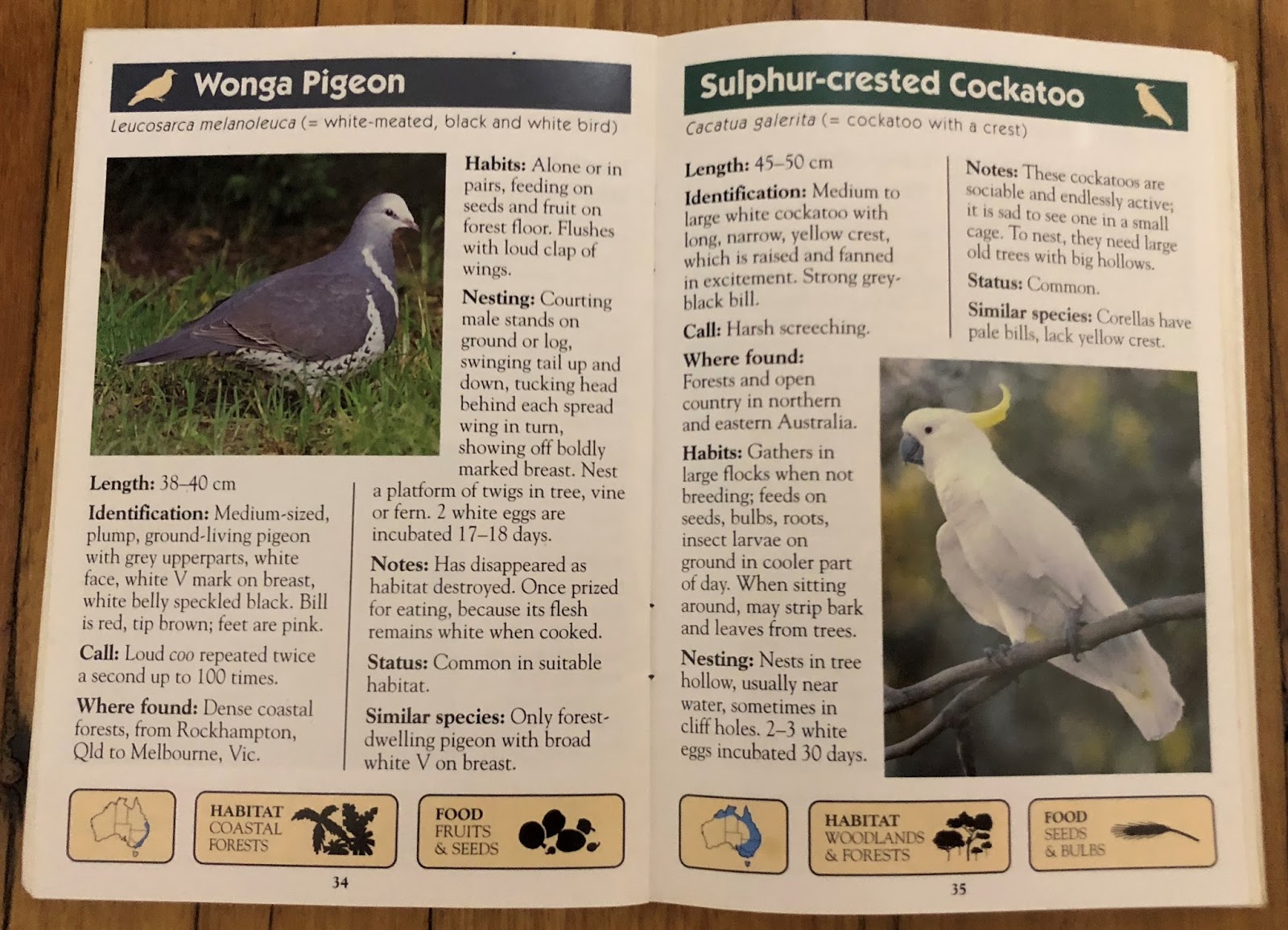
The Photographic Field Guide Birds of Australia by Jim Flegg is the book we use to identify new birds we come across but a little gem we started off with is Steve Parish's First Field Guide to Australian Birds. It packs a lot into its 56 pages but it isn't overwhelming for a beginner as may be the case with the more detailed books.


Linking to Keeping Company


Monday, 16 April 2018

Christian Classics: The Screwtape Letters by C.S. Lewis (1942)


The Screwtape Letters is a satirical work of fiction that gives the reader a window into the spiritual world using the vantage point of a demon named Screwtape. In a series of letters to his young nephew, Wormwood, Screwtape instructs him in how to bring about the downfall of the young man he has been assigned to plague.
There are so many memorable passages and wise insights in this book. Often when we look at something from an opposing stance we are forced to see things we would not have seen from a position of agreement. This is the device C. S. Lewis uses in The Screwtape Letters and he does it exceptionally well.
He warns us that there are two equal and opposite errors we believe about devils. One is to disbelieve in their existence and the other is to believe and have an unhealthy and excessive interest in them. He reminds us that the devil is a liar and that Screwtape is not always seeing things truly, himself.
Lewis said of this book that he’d never written anything more easily or with less enjoyment; that it was easy to twist his mind into a diabolical attitude but it was spiritually stifling. The world he had to enter ‘was all dust, grit, thirst and itch. Every trace of beauty, freshness and geniality had to be excluded.’

Some highlights of this book:

Men are killed in places where they knew they might be killed and to which they go, if they are at all of the Enemy’s party, prepared. How much better for us if all humans died in costly nursing homes amid doctors who lie, nurses who lie, friends who lie, as we have trained them, promising life to the dying, encouraging the belief that sickness excuses every indulgence, and, even, if our workers know their job, withholding all suggestion of a priest lest it should betray to the sick man his true condition!

Wormwood's 'patient' is a young unmarried man and the setting is at the start of WW2. Screwtape encourages him to turn the man's gaze on himself. He also advises him on ways to inculcate pride, selfishness, lust and fear in his patient and to exploit him during his dry spells:

Now it may surprise you to learn that in His effort to get permanent possession of a soul, He relies on the troughs even more than on the peaks; some of His special favourites have gone through longer and deeper troughs than anyone else...
He cannot ravish. He can only woo...
He leaves the creature to stand up on its own legs - to carry out from the will alone duties which have lost all relish. It is during such trough periods, much more than through the peak periods, that it is growing into the sort of creature He wants it to be. Hence the prayers offered in the state of dryness are those which please Him best...He wants them to learn to walk and must therefore take away His hand; and if only the will to walk is really there He is pleased even with their stumbles. Do not be deceived, Wormwood. Our cause is never more in danger than when a human, no longer desiring, but still intending, to do our Enemy’s will, looks around upon a universe from which every trace of Him seems to have vanished, and asks why he has been forsaken, and still obeys.


Whatever their bodies do affect their souls. Whenever there is prayer, there is the danger of His own immediate action.

In the last generation we promoted the construction of...'a historical Jesus' on liberal and humanitarian lines; now we are putting forward a new 'historical Jesus' on Marxian, catastrophic, and revolutionary lines.

Martin Luther said that 'the best way to drive out the devil, if he will not yield to texts of Scripture, is to jeer and flout him, for he cannot bear scorn.' Lewis uses his sharp wit and inspired imagination to open our eyes to the true nature of the spiritual world & to help us understand that there are spiritual beings whose purpose is to undermine our faith and prevent the formation of virtues.

I've used this book with students around the age of about 14 or 15 years and up.


Linking this to the Official 2018 TBR Challenge


Tuesday, 10 April 2018

6 Years of Blogging: Then & Now...


Six years ago this month I published my first blog post. I'd always enjoyed writing and had been part of a Charlotte Mason Families Newsletter for a few years where families took turns sending out a newsletter to a whole lot of other families around Australia. (Erin at Seven Little Australians was one of the families we 'met' through this newsletter). I was slow to get into blogging, partly because of time restraints but also because I didn't like the idea of writing to an unknown audience. I like good two way conversations & the immediate feedback that facilitates communication and understanding.
However, over the past six years, I've met some of my readers, have had email conversations with others, or have communicated via blog comments, so I feel like I've got to know some of you more.

So what's different now compared to back then?

In April 2012 all our seven children were still living at home.
Our two eldest had finished their degrees and were working fulltime.
One girl was still studying at University.
I was homeschooling the four youngest who were aged 7 to 17 years.


Since then we've had two weddings, an engagement, and the birth of our first grandchild five months ago. We've also had some difficult things to face including the loss of my Dad after a long neurological illness, and a year later, the sudden death of my brother at age 46 years.
Six children have graduated after being home educated from start to finish. 
Four have moved out of home. For the first time in 29 years, the kids at home each have their own bedroom.
My 13 year old is keeping me busy these days...a few more years of home education with her and then maybe I'll start with the grandchildren.

The most popular posts have been the following:

AmblesideOnline Year 1 Review

AmblesideOnline Year 6

Written Work in a Charlotte Mason Education

Starting Out With Home Education

Ten Things to make Time For

Most of my readers are located in the USA followed closely by those in Australia, then the U.K. New Zealand, Canada and in recent years, South Africa.
Apart from home educators, the most frequent comments I receive are from book bloggers, some of the friendliest people out there in the blogging world.
If you haven't visited these blogs, check them out if you'd like to read some great reviews:

Sharon @Gently Mad Sharon is a musician and couples her book reviews with links to some great classical music videos.

Brian @Babbling Books has interesting insights into the characters presented in the books he reads.

Some homeschooling bloggers I like to visit - these two ladies are 'all-rounders' and I've enjoyed watching their growth in writing over the past few years:

Amy @ HearthRidge Reflections - Amy recently had some of her poetry published

Silvia Cachia - Silvia is articulate & thoughtful in two languages!


My husband bought me a new phone for Christmas and now that I have one that works properly, I've been posting regularly on Instagram & have been enjoying the community there.

So I have some questions for my readers:

What type of content would you like to see in future posts?


Homeschooling a large family
Using AmblesideOnline
Book reviews
Charlotte Mason ideas & practice
Home education generally
Parenting
Nature study
Handicrafts
Curriculum suggestions/reviews
Homeschooling teens/highschool
Chatty & random stuff 

Thank you to everyone who continues to read this blog. If you have been following me from the beginning and have never commented, I'd love to hear from you. Much has changed in my own life since 2012 and I imagine it's been the same for you. Let me know if any particular type of posts are helpful to you.

Now...a day in the park with my granddaughter


Friday, 6 April 2018

Handicrafts: colourful coasters


What You Need:

3 sheets of thin cork (packs of 15 available from Riot craft stores)
Thick white paper (such as a page from an art journal - not printer paper as it's too thin)
Glue (stick glue is fine)
A black waterproof marker
Matte/Gloss Mod Podge (I think we ordered ours from here. Expensive but goes a long way)
Paint brush for Mod Podge
Waterproof stamp pads

What You Do:

  • Stick the 3 pieces of cork on top of each other (the cork from Riot has peel-off adhesive backing) 
  • Put a circular object on the cork and trace around it, and then do the same on a piece of paper (Both circles should be the same size)   
  • Cut out the circle on the cardboard and paper
  • Glue the paper to the cork
  •  Using a waterproof marker, draw or stencil a pattern onto the paper, then leave till fully dry.


Cover the paper with Mod Podge (waterproofs & seals), and leave to dry.


Rub stamp pads onto the paper to add colour


Do another 1-2 coats of Mod Podge & let dry thoroughly before use


We use these stamp pads for all sorts of projects:


Mod Podge is also avaiable at Spotlight here in Australia


Moozle hunting up craft supplies...


Monday, 2 April 2018

First They Killed My Father by Loung Ung (2000)

Loung Ung was five years old when the Khmer Rouge army took over the city of Phnom Penh in April 1975. Her father had been a high ranking official in the previous government so when the Marxist regime came to power he had to flee from the city to the countryside with his wife and seven children in order to hide his identity. His former position as a government official rendered him ‘morally corrupt,’ while his Chinese born wife was considered ‘racially corrupt.’


First They Killed My Father is an eloquent and harrowing story of survival seen through the eyes of a young child.
For the first couple of chapters Loung’s narrative is mostly concerned with her upbringing, family background, and their life as a middle class family living in the city. Loung is a spunky, precocious child and she sees her world through the eyes of such a child. The innocence and naïveté of her perspective is at first disarming, but as her story progresses and she becomes a witness and a victim of unthinkable atrocities, it is almost surreal. How could a child possibly go through such trauma and survive?
Yet she did, as did other children, but at what a cost!
Loung writes as a ‘daughter of Cambodia’ and records details of her life under the Khmer Rouge that includes the loss of half of her immediate family, her time as a child soldier and a graphic account of an attempted rape upon her when she was about 8 or 9 years old.

Loung’s older brothers were taken to labour camps and later her sister, Keav, was sent to a teen work camp. Six months later after contracting dysentery, Keav died before her parents could get to see her. When they asked if they could take her body home they were told that her body had been thrown out because they needed the bed for the next patient.
One day two soldiers came for her father and he was taken away under the pretext that his help was needed to move a wagon stuck in the mud. He never returned.

...we all know that what we feared most has happened. Keav, and now Pa, one by one, the Khmer Rouge is killing my family. My stomach hurts so much I want to cut it open and take the poison out...
“Chou,” I whisper to my sister, “I’m going to kill Pol Pot. I hate him and I want to make sure he dies a slow and painful death.”
I do not know what he looks like, but if Pol Pot is the leader of the Angkar then he is the one responsible for all the miseries in our lives...I am a kid, not even seven years old, but somehow I will kill Pol Pot...
I despise Pol Pot for making me hate so deeply. My hate overpowers and scares me, for with hate in my heart I have no room for sadness. Sadness makes me want to die inside...Rage makes me want to survive and live so that I may kill. 


There were some striking similarities between this book and Life and Death in Shanghai which I read last year, although Cambodia’s situation was unique in that the regime swept in almost overnight and squeezed their atrocities into such a short window of time. An estimated two million Cambodians were systematically killed between 1975 and 1979. I remember reading that the odds of an average Cambodian surviving Pol Pot's rule was slightly over 2 to 1. Considering how young Loung Ung was it’s incredible that she survived at all.
Some of the similarities I found were:

•    the Utopian dream of a classless society, which of course never eventuates because power goes hand in hand with corruption, and envy is never satisfied

When I ask Kim (Loung’s 10 year old brother) what a capitalist is, he tells me it is someone who is from the city. He says the Khmer Rouge government views science, technology, and anything mechanical as evil and therefore must be destroyed. The Angkor says the ownership of cars and electronics such as watches, clocks, and televisions created a deep class division between the rich and the poor...These devices have been imported from foreign countries and are thus contaminated...
Imports are defined as evil because they allowed foreign countries a way to invade Cambodia, not just physically but also culturally. So now these goods are abolished..

•    the harnessing of the youth to spread intimidation along with the loss of respect for older people. Traditionally Asian societies have a reverence for the aged so this was huge shift for both societies

•    Disdain for the educated; utilitarianism; no place for the disabled - and there were plenty of disabled people in Kampuchea as a result of the extensive use of landmines by the regime

'In the new agrarian society, there is no place for disabled people.'

Without taking her pulse or touching her, the nurse asks Keav a few brief questions and hurries away, saying she will return later to check on her and bring some medicine. Keav knows this is a lie. There is no medicine. There are no real doctor sort nurses, only ordinary people ordered to pretend to be medical experts. All the real doctors and nurses were killed by the Angkar long ago.

•    Changing the meaning of common language, rewriting history & the destruction of historical markers e.g.  antiquities, historical sites, cultural expressions

•    Cult of personality - both Mao & Pol Pot were treated as gods


The Khmer Rouge government also bans the practice of religion. Kim says the Angkar do not want people worshipping any gods or goddesses that might take away devotion to the Angkar.

•    Breakdown of family structures and religion

“In Democratic Kampuchea,” the chief continues, “we are all equal and do not have to cower to anyone. When the foreigners took over Kampuchea, they brought with the bad habits and fancy titles. The Angkor has expelled all foreigners so we no longer have to refer to each other using fancy titles...the children will change what they call their parents...”


•    Propaganda, terror, forced labour, hopelessness

 In a Khmer Rouge hospital, people moaned and whimpered in pain, but did not scream. Here at the hospital in the newly liberated zone, people scream in pain because they’re fighting to live.

•    No dissent or criticism of the regime allowed

•    No appreciation for beauty, no room for diversity

I’ve read a good number of books about the Marxist regimes that held power during the 20th Century, mostly those concerning Stalinist Russia, Maoist China, & Pol Pot’s Kampuchea. You would think that the knowledge we have now of the parallel circumstances that existed between these regimes would be sufficient to help us discern the roots that give rise to the fruits of this type of movement. As a system of government, communism seems to have had its day, but as a system of ideas, it lives on. ‘Political Correctness is Cultural Marxism. It is Marxism translated from economic into cultural terms’:


Some interesting links to check out:

This article on Genocide compares the Nazi system of classification and symbolization, the first two operations in the genocidal process, with the Khymer Rouge exterminations of people in the Eastern Zone:

At Phnom Pehn the Khmer Rouge issued every man, woman and child from the Eastern zone a new blue and white checked scarf, a kroma. The Khmer Rouge then required them to wear the scarf at all times. 

Power Kills'As a  government's power is more unrestrained, as its power reaches into all the corners of culture and society, and as it is less democratic, then the more likely it is to kill its own citizens.'

Large corporations & institutions can tend toward totalitarian structures:


Linking to Carole's Books You loved: April