Friday, 10 July 2015

Coming Late to Ambleside Online - some thoughts on the high school years


One ship sails East,
And another West,
By the self-same winds that blow,
'Tis the set of the sails
And not the gales,
That tells the way we go.

Like the winds of the sea
Are the waves of time,
As we journey along through life,
'Tis the set of the soul,
That determines the goal,
And not the calm or the strife.

Ella Wheeler Wilcox


I wanted to write about our experience in navigating the high school years for those who are late to start Ambleside Online (AO) and who find themselves having to combine or skip years.
By the time we'd made the move to the AO curriculum, we had already graduated three students who have since completed their respective degrees. I was confident enough just looking at the AO curriculum that it would work for us even though we were late starters. I've seen enough plans and curriculum to know that whatever you do, something will get missed. We can't cover everything but if our intent is to have children who know how to educate themselves, ultimately they will fill in any gaps they think they need to. Isn't that what we all do as adults?

Some background:

When we started using AO as our curriculum four years ago, I placed two boys (15 & 17 years) in Year 8 and my 7 year old daughter in Year 1.
For Benj, who was 12 years of age at the time, I did something a little different - a mix of some AO Year 5 books and selections from previous years that he hadn't read but I wanted him to. (eg. Age of Fable, Madame How & Lady Why - he followed the old one year schedule for this.)
This allowed him to carry on independently so I could focus on my main concern at the time, my soon to be 17 year old (I wrote about him here).
When Benj was 13 years old, I started him in Year 6 because I thought he'd enjoy the books, especially some of the science selections (eg. The Sea Around Us) and because he wanted to do some Modern History. I beefed things up a bit in places, added in some extra Modern History at his request, and his Maths kept pace with his age/grade level.
After completing that year, I did think about jumping him ahead to his actual 'school year' which would have been Year 9, but Ambleside's Years 7 & 8 are two of my favourite places in the AO curriculum. I just think they are exceptional and worthy of inclusion whether a student is 12, 14 or 17 and I didn't want him to miss either of those years.

So, here we are coming to the end of AO Year 8 (his 'official' grade 10) with two years of home education to go. We've been thinking and praying about what to do now, looking at our son's inclinations and talking with him about different options.
He definitely wants to go to university and is interested in an engineering or maths related field, which is not surprising as Dad is an electrical engineer.
He is also very people oriented, musical and creative, and I keep thinking that these affinities may lead to a different scenario - what that could be I don't know, but I don't want to close any doors prematurely.
Four of our five children who have graduated so far made their final decision on a vocational pathway close to the end of their last year of home education and one of them completely surprised us with the direction she took.

We teach our children at home all the way through to a Year 12 equivalent. This means we don't go through the normal channels for school leavers entering tertiary study in Australia, which is via the Higher School Certificate. (See here if you're interested in how we've navigated this previously). So we have to factor this into the plans for our children's final years of home education.

The minimal requirements for most of the universities we'd be looking at would be:

SAT 1 plus 2 Open University units
or
4 Open University units (the equivalent of 1 Semester)

We'll start off with one unit, which will probably be related to Physics or Maths, and see what the workload is like before adding any more - while at the same time continuing with AO.
Benj would like to study the time period of the two World Wars in his final years of home education and this coincides with AO Year 11.
Some of the ladies on the AO Forum have mentioned how full that year is and how much they couldn't fit in and had to let go. My thoughts at this stage are to spread Year 11 out because it is such a huge area to cover and there are so many good books and other resources available. I also think this is a good time to study Australian politics in more depth.
Year 12 books focuses more on the thoughts and ideas which have influenced history and made Today what it is. It's an important area to consider before entering the university environment and I'd like to add selected books from that year.

University preparation (ie units via Open University) would be spaced out over two years and would be used for credit towards a degree. SAT preparation is mostly timed essays, wide reading and continuing with Maths.

Our school year starts in January and Benj will be finished Year 8 in August of this year and I'm thinking that the rest of the year will be a continuation of the areas of work unrelated to specific AO years eg. Science, Maths, Shakespeare, Picture Study, Plutarch etc with perhaps a biography or two from Years 9 & 10. Benj really likes Churchill's History of the English Speaking People series and would like to finish 'The Age of Revolution' and 'The Great Democracies' before we start Year 11 next year, which would require him to read about two chapters per week.

Additional thoughts:

I've heard many comments over the years about the American content of AO being a stumbling block to Aussie users, more so in the high school years but the only major challenges for us have been Years 4, 9 and 10 where American History (and Government in the high school years) are a focal point.

The AO Forum receives many questions regarding placement for late comers to the curriculum. While it's an important question, and it is helpful to get advice, I don't think there is a right or wrong answer, unless you totally underestimate or overestimate your child's abilities.
Coming in late can trigger panic and a cramming mentality if we're not careful. This video by Andrew Kern helps address this temptation (it's also very encouraging generally & I highly recommend watching it!)

Starting at a lower year than 'grade level' isn't a second-rate choice you should only consider if your child is struggling. It isn't second-rate to treat a child as a unique individual.

I think the bottom line is that a child is challenged but not overwhelmed. For children in the high school years, my concern is that they keep their love of learning and become self-learners, self-motivated and responsible.
Placing Benj in a year that was 'lower' than his official grade level hasn't mattered in the long run. It had enough challenge with a few additions in place and also the added benefit of allowing him to gain more independence because I knew he could handle the content of his books. He was able to go ahead and order his day around what we did as a group, taking responsibility for managing himself.

I knew he could handle his actual grade level but there were other factors that influenced the decision to start where we did with all four children (one being that I would have had to almost re-write Year 9, which I did later on, and Year 10. I didn't have the time or opportunity to do this properly back then.
Subjects such as Maths, were separate from their AO years, and continued on without being affected.
I have no qualms about skipping years 9 & 10 and giving Benj the opportunity of getting stuck into a time period he's really interested in. He has enjoyed the AO years he has done and while I think I could have chosen a couple of different scenarios which would have worked just as well, the choice was prayerfully done and in the bigger scheme of things it hasn't mattered.

“In his heart a man plans his course, but the LORD determines his steps”
Prov. 16:9

I've been reviewing books on History, Literature and Science related to the 20th Century and will post about them and our two year schedule at a later date.


Saturday, 4 July 2015

Madame How & Lady Why: Chapter 5 - The Ice-Plough

I must tell you that there are sometimes—not often, but sometimes—pages in Madam How's book in which one single letter tells you as much as a whole chapter; in which if you find one little fact, and know what it really means, it makes you certain that a thousand other great facts have happened... You feel like Robinson Crusoe when, walking along the shore of his desert island, he saw for the first time the print of a man's foot in the sand. How it could have got there without a miracle he could not dream. But there it was. One footprint was as good as the footprints of a whole army would have been. A man had been there; and more men might come. And in fear of the savages...he went home trembling and loaded his muskets, and barricaded his cave, and passed sleepless nights watching for the savages who might come, and who came after all. 
 
And so there are certain footprints in geology which there is no mistaking; and the prints of the ice-plough are among them. 

Charles Kingsley 


The photo above is of the glaciated Nant Ffrancon valley in North Snowdonia, Wales.
I used some of the resources below just for my own interest & education in this area. The videos would be enjoyed by most children even though they may not understand some of the content. Glaciers, Madame How's ice-ploughs really are a fascinating study.
I've put some other resources on my Ambleside Online Pinterest board.
Also see Ambleside Online's study guide by Katie Barr for this book.

What is a glacier?

A mass of ice which moves down a valley from above the Snowline towards the sea under the force of gravity.


How do glaciers affect land?

According to my Penguin Dictionary of Geography, more lakes are due to glacial erosion than any other cause. Glaciation is the covering of an area, or the action on an area, by an ice-sheet or glaciers. The video below is a clear and thorough explanation of glacial erosion - 'plucking,' cirques, glacial horns, the formation of roche moutonnées and other landforms - about 7 minutes in length.


Nant Ffrancon is a deeply glaciated and visually dramatic valley in north Snowdonia
- See more at: http://www.visitsnowdonia.info/nant_ffrancon-211.aspx#sthash.9Dd0Nx78.dpuf
Nant Ffrancon is a deeply glaciated and visually dramatic valley in north Snowdonia
- See more at: http://www.visitsnowdonia.info/nant_ffrancon-211.aspx#sthash.9Dd0Nx78.dpuf
Nant Ffrancon is a deeply glaciated and visually dramatic valley in north Snowdonia
- See more at: http://www.visitsnowdonia.info/nant_ffrancon-211.aspx#sthash.9Dd0Nx78.dpuf


Glaciers with chocolate: Did you know that glaciers hold nearly 2% of Earth's water?


Not the greatest picture - I took this photo of my husband standing in front of the Fox Glacier in the South Island of New Zealand on our honeymoon. It was a very eerie, surreal atmosphere & an awe-inspiring sight.


This one below is the Tasman Glacier at Mount Cook. We took our four eldest children aged 2 to 8 years at the time up the Ball Hut Road when we spent some time living in New Zealand and looked down on this from a different angle. Spectacular, but I was glad to get off the side of Mount Cook. I was waiting for an avalanche to take us all out.


What is an iceberg? 

A mass of land ice which has broken off or "calved" from the end of a glacier or from an ice shelf, and is afloat in the sea.

Pg 88:
Snowdonia - good photos of glacial activity and its effect on the land. Old earth perspective. Some fantastic photos of the area here and here


Pg 89 - the power of ice & snow. Some news photos of effects of a winter storm in New England, January, 2015. 

Pg 91 - Kingsley mentions the Esquimaux (Eskimo) in relation to living in a permanent winter environment. There are many videos related to life in the Arctic but here are two from 1959 and 1950 that I have actually watched & thought were quite good:


What is a Moraine?

Material, mostly rock and soil, left behind by a moving glacier.
Pg 92 & 93

 Mueller Glacier, NZ with moraine in the foreground (Wikiwand)


Pg 94 to 96 - An academic article on glacial geology which I thought tied in well with Kingsley's observations.

'Many of the surficial geologic deposits which are the foundation for the fertile farmland soils and deposits we extract from sand and gravel pits were laid down during glaciation.

Pg 99 - rochers moutonnes: the glacial erosion video above explains these plus other terms very well.


http://www.uoguelph.ca/~sadura/glref/gl42.html


Page 100 - Serpentine rock

Pg 100
Glen Muick

'Spittal' is an old Scots word meaning 'a refuge on a remote hill pass' and is said to come from a time when there were wolves on the hills. Loch Muick lies a short distance away. Lochnagar is on the skyline to the right.

 © Copyright Nigel Corby and licensed for reuse under this Creative Commons Licence

I mentioned this in a previous post on MHLW but it relates to this chapter so here it is again - a PDF for children on glacial erosion and the shaping of the Matterhorn in the Swiss Alps. One mention of millions of years.

Posts for previous chapters of Madame How & Lady Why:

I. The Glen
II. Earthquakes
III. Volcanoes
IV. The Transformations of a Grain of Soil
V. The Ice Plough


Friday, 3 July 2015

Stretching out a Week...

We don't usually follow the official school holidays except over Christmas and New Year but some of our regular activities such as dance lessons are suspended over the holidays between school terms which leaves us with some free time. Road traffic reduces dramatically during school holidays and with the combination of that and a reduced schedule we usually do some things we don't always get the time or inclination to do at other times.
We had a week's holiday a couple of weeks ago & I didn't want to have a complete break so soon after that, so I'm doing something that works well for us - ie. stretching our weekly schedule out over two weeks.
I printed each child's schedule at the beginning of the week. This is Benj's:


If there are certain things I want each of them to get done, those are given priority. Looking at the schedule above, I know that dictation and Jensen's probably won't get done but I'm fine with that.
I usually plan a few outings or catch up with family and friends during our 'extended week' and we
also make a time to meet my husband near his work and have lunch together. This was a priority so I made sure we did it earlier in the week.

Benj is reading through the poetry of George Herbert and he came across the following poem which intrigued him:


Paradise

I bless thee, Lord, because I GROW
Among thy trees, which in a ROW
To thee both fruit and order OW.


What open force, or hidden CHARM
Can blast my fruit, or bring  me HARM
While the inclosure is thine  ARM:


Inclose me still for fear I START.
Be to me rather sharp and TART,
Than let me want thy hand and ART.


When thou dost greater judgements SPARE,
And with thy knife but prune and PARE,
Even fruitful trees more fruitful ARE:


Such sharpness shows the sweetest FREND,
Such  cuttings  rather heal than REND,
And such beginning touch their END.

(The old spelling is retained in order to preserve Herbert's ingenious construction: furnishing new rhymes by the dropping of a single letter at a time - Albatross Book of Verse, edited by Louis Untermeyer)

I suggested he try writing a poem of his own using a similar construction. He managed the construction but had a hard time coming up with a serious poem! 


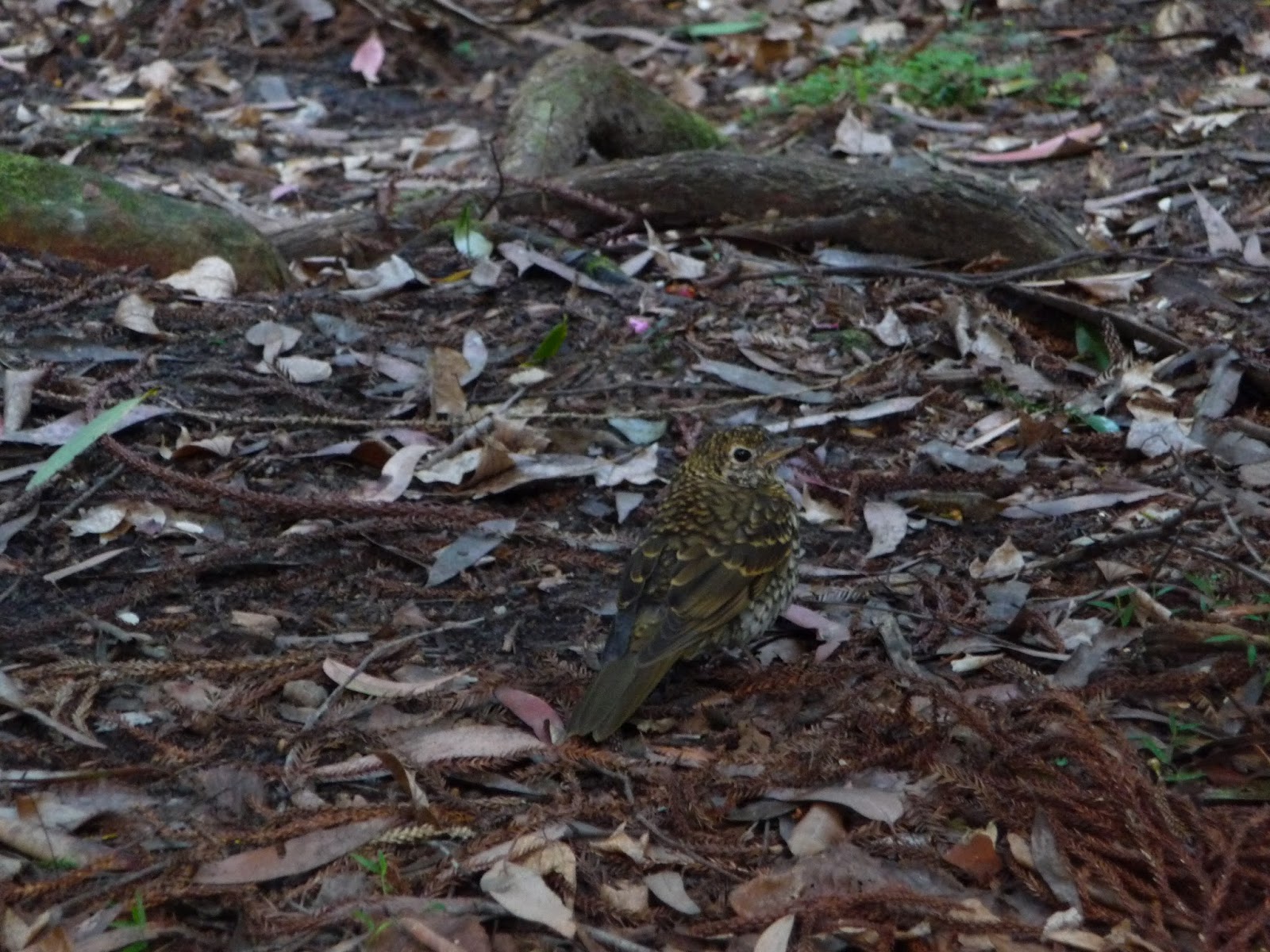
 Another priority was a bush walk. We've been doing regular nature study but hadn't had a good observing time outdoors. We went to a park a little way out of our area today that we hadn't visited in ages and found some interesting fish to draw and a bird we hadn't seen before.


Very well camouflaged...identification anyone?


A trip up to our local lookout...


Some climbing on the rocks & trees...


And then I read aloud in the warm afternoon sun, which we haven't experienced much of in recent times. 

When we got home, I had a look at the flowers I pressed a couple of weeks ago. They were nicely dried so I put them into my nature notebook.


Linking up with Weekly Wrap-Up 


Monday, 29 June 2015

Books for Beginning Readers: History

This is a follow on post from Books for Beginning Readers: Nature & Science. These are books that were favourites in our home. Besides being readable for beginning readers, the stories are based on historic events and history has been an area all of my children have loved.

Step into Reading Books - these are in order of difficulty, starting from the easiest.

The Bravest Dog Ever: The True Story of Balto by Natalie Standiford. Balto carries a diphtheria vaccine to the town of Nome, in Alaska during a terrible storm in 1925.


Tut's Mummy by Judy Donnelly - from the death of Tutankhamen over three thousand years ago to the discovery of his tomb and its treasures in 1922 by English archaeologist, Howard Carter.


The Titanic Lost & Found by Judy Donnelly - after the sinking of the Titanic in 1912, the ship lay on the ocean floor for over 70 years until 1985, when it was found by 'Argo,' a specially made underwater robot, the invention of scientist Robert Ballard.


The book is a step up from Tut's Mummy & introduces paragraphs.


The Trojan Horse: How the Greeks Won the War by Emily Little - 6 short chapters. Archaeologist Heinrich Schliemann had read Homer's Iliad and believed that the city of Troy did actually exist. In 1870 he went to Turkey and began to dig...


'An I Can Read Book'


Buffalo Bill and the Pony Express by Eleanor Coerr


Based on a real character. Not much historical content but a fun read for boys especially. One of my boys knew this book inside out & we heard him narrate a chunk of it while he was asleep one night.


Sam the Minuteman by Nathaniel Benchley - a young boy's experience of the Battle of Lexington, the famous battle that marked the beginning of the American Revolution. My Aussie kids loved this and its companion book, George the Drummer Boy.


The start of the American Revolution from George the Drummer Boy's view.

We've got an older hardback copy which I couldn't place when I was looking through the other books but it was another favourite.


 Follow the Drinking Gourd: a Story of the Underground Railway by F.N. Monjo - 6 short chapters. The writing in this book is of a smaller print than any of the other books I've posted here.


Crazy Horse: Sioux Warrior by Enid Meadowcroft is more of a short chapter book but it is an interesting read for a beginner who is ready for something more than one of the shorter readers above. 11 chapters, 80 pages & large print.


The author has written three other books about American Indians in this series.


Friday, 26 June 2015

The Saltzburg Connection by Helen MacInnes (1968)


http://www.bookdepository.com/Salzburg-Connection-Helen-MacInnes/9781781163290/?a_aid=journey56


Settling down for a cozy read of this Cold War novel, I started to absorb myself in the character of former British spy, Richard Bryant. The story was interesting to start with but by the end of the second chapter it became completely engrossing after a most unexpected occurrence, and continued tense and unpredictable to the very end.

Twenty-two years after the end of World War II, Richard Bryant set out alone to uncover a secret. At the close of the war the retreating Nazis hid a sealed chest in an Austrian lake, high up in the Alps, and Richard Bryant was one of the few people alive who knew of its existence.
Bryant's success in his solitary mission unleashed a train of events and implications that touched everyone connected with him, catching them up in a tangled web of intrigue and danger.
This book was definitely a page turning, thoroughly enjoyable novel of the Cold War Era although I did find the plot convoluted at times and had difficulty working out which side the characters belonged to - then again that's the nature of espionage.
Helen MacInnes and her husband experienced the Europe of World War II as the Nazis were rising to power and her first book, Above Suspicion, was drawn from that experience. The antagonists in her books are usually either Nazis or Communists and as her editor of twenty-five years said of her:


Besides the ability to craft a credible and realistic story, MacInnes' writing is of a high quality and very descriptive.
We have old plain hardbacks or paperback editions of her books with tacky pictures on the front but the book above is one of the newer editions brought out by Titan Books in 2013.
MacInnes' books contain some adult themes but I haven't found anything yet in her books that is objectionable or unsuitable for about age 15 years and up. My teen-aged children really liked this book.


Monday, 22 June 2015

I Can Jump Puddles by Alan Marshall (1955)


I initially picked up this book knowing it was an Australian Classic but with little knowledge of its content. It had been on our bookshelf, unread for years, until a few months ago when it caught my eye and I decided to use it for our read aloud. It is a fictionalised autobiography of the author and has sold over three million copies.

In the early 1900's, not long after Alan Marshall had just started school, a polio epidemic swept through Victoria. Very little was known about Infantile Paralysis (poliomyelitis) at the time and the word 'Paralysis' was associated with idiocy. When it became known that Alan had been struck down with the disease, the first question many people asked was, "Have you heard if his mind is affected?"
After he contracted polio, Alan's legs were left paralysed. Not long afterwards, the muscles in his legs began to contract and the sinews behind his knees tightened,  forcing his legs into a kneeling position. It was decided that he needed surgery and so he was admitted to the hospital twenty miles away. 
Reading about a young boy's hospital experience in the early 1900's makes you realise and appreciate how much things have changed over the years.
Alan was the only child in a ward full of adult males. Visiting hours were strict; parents were not allowed to stay with their children and not much was communicated to either patients or families about anything. Admission to hospital was a frightening enough experience for an adult, let alone a six year old boy.
After he had recovered from his surgery, Alan returned home. His parents didn't have enough money to buy a wheelchair so his father made him a long, three-wheeled vehicle out of an old perambulator and each morning he was pushed to school in the pram by the children who lived down the road. Once at school, he left his pram near the door and walked into the school on his crutches.

'Children make no distinction between the one who is lame and the one who has the full use of his limbs. They will ask a boy in crutches to run here or there for them and complain when he is slow.'

Alan's father was a horse trainer and Alan had always wanted to be a horseman. After his illness his father explained to him that he could never ride - not until he was a man and could walk again - his legs could not grip and as he had to hold onto the pommel to keep his balance upon the horse, he had no control of the reins:

'I listened to him in silence. I did not believe what he said was true. I wondered that he believed it himself. He was always right; now for the first time he was wrong.
I had made up my mind to ride.'

This book is not just the moving story of a little boy who defies and overcomes a major disability but it is also a picture of a period that has passed. In the preface to his book Marshall writes:


'The men and women here described are a product of that period and they too are passing. The influences that made them self-reliant, forthright and compassionate, have given way to influences that can develop characters just as fine, but the mould has changed and the product is different.'

Some of the most memorable and inspiring features of the story concerned Alan's attitude to his 'disability.' As far as he was concerned, he didn't have one.

'Having a normal mind my attitude to life was that of a normal child and my crippled limbs could not alter this attitude.'

This is an inspiring book to read. Both poignant and humorous, there are some beautifully written nuggets contained within its pages. One of my favourite passages is here, when Alan is taken out into the sunshine after his prolonged stay in hospital. Although Marshall wrote the book as an adult looking back on his childhood, he never lost the ability to see with the eyes of a child. My ten and fifteen year old's enjoyed this description of Alan's science lesson:

'Once a week we were given a lesson called "Science." I liked this lesson because then we were allowed to stand round he table and you could push and shove and have fun. 
Mr. Tucker opened the cupboard contains some test tubes, a spirit lamp, a bottle of Mercury and a leather disc with a piece of string attached to the centre. He placed these things on the table and said, "Today we are concerned with the weight of air which is fourteen pounds to the square inch."

This didn't make sense to me but the fact that I was standing beside Maggie Mulligan made me wish to shine so I proffered the information that my father had told me the fuller you are with air the lighter you are and you couldn't sink in the river. I thought this had some bearing on the subject...
The teacher was not impressed...
He then wet the leather disc and pressed it in the desk and none of us could pull it off except Maggie Mulligan who ripped the guts out of it with one yank and proved air didn't weigh anything.'

I Can Jump Puddles used to be required reading in Australian schools but it has largely been forgotten and most of Marshall's books are out of print. It's surprising that a book that deals with overcoming disability, written by someone who has been such an inspiration to children and adults in many different parts of the world has been neglected, especially when we now have a greater awareness of the needs and rights of the disabled.

Alan Marshall was awarded the O.B.E. for his services to the physically handicapped in 1972 and died in 1984.

This article was written for the 100th anniversary of Alan Marshall's birth and I quote from it below:

'...I think sooner or later, the Education Department will once again promote his work as an example of not giving in to adversity. And I think that's one of the reasons he was universally accepted. You could take his story and present it to any people in any country, and they could identify with his struggle against his pain and suffering. He really made good.'

I read this book aloud to a 10 and 15 year old & edited some parts for my younger listener. It would be a great read for older children in high school around 14 or 15 years of age. As with 'A Fortunate Life,' another wonderful Aussies classic, the author ultimately rejected God. I think this is important to discuss as it gets to the heart of what we believe about the character of God and why people suffer.

I Can Jump Puddles
by Alan Marshall is my entry for 'A Forgotten Classic' in the Back to the Classics Challenge.