Saturday, 28 January 2017

Classical Academic Press - Review & Give Away! French for Children, Primer B

At the beginning of last year my nearly 11 year old daughter started using French for Children, Primer A (FFCA) published by Classical Academic Press after a number of years of informal French study. It proved to be timely for her to commence learning this language using a more formal approach and we were both very happy with the material. I wrote about our experience here.
 
French for Children Primer B (FFCB) was published late last year and Classical Academic Press kindly sent me a copy for review purposes. I really like this Curriculum and so my review is unabashedly positive, but it is my honest opinion.
My now just turned 12 year old daughter started using FFCB in December last year and it followed on seamlessly from their previous text. It is recommended for Grades 5 to 7 and follows the same style and format as FFCA with a couple of new additions.


Overview of FFCB

17 weekly chapters, including 3 review chapters and an end-of-book review
258 pages
6 DVDs
1 CD - contains chants, vocabulary, grammar, dialogues, Say it Aloud exercises and dictation exercises. (Also available as a downloadable audio file)
There are schedules for covering the curriculum in either half a year or a full academic year of 30 weeks.


New features include:

•    an alphabetical glossary or 'mini dictionary' of all vocabulary words from Primers A & B
•    Vocabulary also listed by chapter from which it first appeared in both Primers (12 pages)
•    Appendices condensed and organised into charts: e.g. prepositions, verbs & verb conjugations, past participles

Previous concepts learned throughout FFCA are referred to briefly before they are gone into more thoroughly e.g. FFCA covers the present tense and FFCB reviews this and then introduces the future tense in Chapter 9 and the past tense in Chapter 11.
FFCA teaches Irregular verbs, Part 1 and FFCB continues with part 2 & 3.

Some thoughts:

If you were coming from a different curriculum and were thinking of starting with FFCB instead of FFCA, your child should be familiar with the following concepts first:

Infinitives
Negatives
Informal, formal forms
Definite & indefinite articles
Preposition 'de'
Cognates
verb tenses (present)

Past participle - some knowledge required

The DVD's by Joshua Kraut are excellent and contain some built-in review of the content covered in FFCA but they mostly concentrate on new material.
Speaking of DVD's, some kids (notably mine) are put off by the tone, accent or attitude of some speakers ("Do we have to listen to him?") but Mr Kraut gets the thumbs up from my lot. He is easy to listen to, has a sense of humour without being too obvious about it, and is generally very pleasant.
Below is the complete video for Chapter 1:


As I mentioned in my review of FFCA, the only thing I'd add to this curriculum would be listening to French folksongs. I have a YouTube playlist of a variety of folksongs here that we've used previously and a newer playlist here of the songs we're doing this year.

Classical Academic Press is giving away two French for Children: Primer B bundles for USA residents. Enter via Rafflecopter at Expanding Wisdom and There's No place Like Home!


Giveaways end at midnight on February 14th and February 22nd. Winners will be contacted by email. Winners that do not respond by the deadline given in the winners’ email will be replaced by random drawing.


a Rafflecopter giveaway


Friday, 13 January 2017

A New Year and New Paths

We've been slowly getting back into our normal routine after taking holidays over the Christmas break and early January. Moozle is starting back with Term 2 of Ambleside Online Year 6 and Benj has officially graduated and is beginning on a new path.

Today we did some 'formal' nature study with our nature notebooks after a couple of months of being informal and just mostly observing. We identified a new bird in our backyard, the Brown Cuckoo Dove (Macropygia Phasianell), also know as a pheasant pigeon. I snapped a photo but only managed to get his tail before he flew off into the bush. He sounds almost like an owl, 'whoop, whoop.'


The Handsome St. Andrew's Cross Spider


Moozle's Notebook


My notebook


I'm ridiculously happy about my Lebanese eggplant. It's quite difficult to grow anything edible around here between the wallabies and the possums, so everything is in pots on the verandah.
Moozle is growing two corn plants in pots from seeds her Aunty P gave her and they seem to be doing well. I've never used eggplant as the first time I ate it years ago I was violently sick afterwards!  It's taking me years to be game enough to try it again and when I did I was fine. Now I have to find some good recipes...


After five years of using Singapore Maths, we've made the transition to Saxon 76. (I have the old hardback 3rd edition books). I usually start Saxon with the 54 book but I decided to keep on with Singapore for a while longer. I gave her a placement test about a month ago and I was pleasantly surprised that she managed it well as maths, unlike some of her siblings, hasn't been her favourite subject.


French


We started Classical Academic Press French for Children Primer B late last year and have been pleased with it. No surprise, as their Primer A was excellent. (I wrote a review here)
Stay tuned towards the end of January for a review of Primer B and a giveaway!


Moozle thinks she might be an architect (which is an improvement on a 'cat lady' i.e. having a house full of felines and occasionally selling one) and loves this series of DVDs which she watches with her Dad. She even drew up some plans for a granny flat to build for us when we get old!


This week we were reading about the element helium for science and this video my Aunty in Scotland posted recently was very timely!


Benj has enrolled at Campion College and will be studying a Bachelor of Liberal Arts Degree beginning in late February. He's only just turned 17 and in the past we've waited until our kids were 18 before starting university but Campion is a different kettle of fish to the large mainstream institutions. It only has about 200 students and receives no government funding. There was an intersting article recently in The Australian newspaper recently:

'...if our civilisation has a future in Australia, it is connected to Campion College. For Campion has done something that no other institution of higher learning has attempted in Australia. It has dedicated itself entirely to teaching undergraduates about the great tradition, based on the great books, of Western civilisation.

In the meantime he is doing a Swim Australia Teaching course, building up his night driving hours so he can get his licence, teaching piano, and heading off to a youth camp next week. Plus he will be using his great organising skills to clean up the pantry and the storage under the stairs for me.

Our Reading

Moozle:

Penrod by Booth Tarkington - this is a free read for Ambleside Online Year 6 which she enjoyed.

Silver Brumby Echoing by Elyne Mitchell - another book in a much loved series.


Tales of a Korean Grandmother by Frances Carpenter - written in 1947, these 32 traditional tales provide a peek into Korean culture.


Benj: 

 Lord of the Rings trilogy - his annual re-reading

The Martian by Andy Weir - just be aware there is some language in places, noteably on the first page. The film was very good and according to my eldest boy, the book is great, so he bought it for his younger brother for Christmas.


Older ones in the family read:

The Hunt for Red October by Tom Clancy


The Survivor by Vince Flynn with Kyle Mills - Sadly, Vince Flynn died about three and a half years ago. My husband really enjoyed his novels and as he'd read just about all his others, I bought this one. Sometimes authors who take on another's work do a complete hash but fortunately, this was done in a similar style and my husband enjoyed it.

And finally, for the Aussie mums out there (or any others who may be visiting Australia later in the year) the Mum Heart Conference will be held at Newcastle in June. I was so refreshed when I went along in 2015 so I felt very honoured to be asked to speak at one of the sessions and to run a Charlotte Mason workshop this year. Hope to see some of you there!


Linking up at Weekly Wrap-up
&
Keeping Company


Monday, 9 January 2017

Back to the Classics 2017


 I love this challenge.  Here are my potential reads:


1.  A 19th Century Classic - any book published between 1800 and 1899.

 The Refugees by A. Conan Doyle (1893)
Sense & Sensibility by Jane Austen (1811)
 

2.  A 20th Century Classic - any book published between 1900 and 1967.


The Keys of the Kingdom by A.J. Cronin (1941)


3.  A classic by a woman author. 


 The Rosemary Tree by Elizabeth Goudge (1956)
The Murder of Roger Ackroyd by Agatha Christie (1926)

 
4.  A classic in translation.  Any book originally written published in a language other than your native language. 


Anna Karenina by Leo Tolstoy (1877)


5.  A classic published before 1800. Plays and epic poems are acceptable in this category also.


On Friendship by Cicero (44BC)
The Iliad by Homer  (c.760–710 BC)
 

6.  
A romance classic. I'm pretty flexible here about the definition of romance. It can have a happy ending or a sad ending, as long as there is a strong romantic element to the plot.


I Capture the Castle by Dodie Smith (1948)


7.  A Gothic or horror classic. For a good definition of what makes a book Gothic, and an excellent list of possible reads, please see this list on Goodreads. 

The Hound of the Baskervilles by A. Conan Doyle (1902)
 

8.  A classic with a number in the title. Examples include A Tale of Two Cities, Three Men in a Boat, The Nine Tailors, Henry V, Fahrenheit 451, etc.


The House of the Four Winds by John Buchan (1925)
 

9.  A classic about an animal or which includes the name of an animal in the title.  It an actual animal or a metaphor, or just the name. Examples include To Kill a Mockingbird, Of Mice and Men, The Metamorphosis, White Fang, etc. 


 The Goshawk by T.H. White (1951)
 

10. A classic set in a place you'd like to visit. It can be real or imaginary: The Wizard of Oz, Down and Out in Paris and London, Death on the Nile, etc.


Under the Yoke by Ivan Vazov (1888) - set in Bulgaria. I'd love to visit any of the countries around the Balkans.
 

11. An award-winning classic. It could be the Newbery award, the Prix Goncourt, the Pulitzer Prize, the James Tait Award, etc. Any award, just mention in your blog post what award your choice received.


The Forgotten Daughter by Caroline Dale Snedeker (1933) Newbery medal


12. A Russian Classic. 2017 will be the 100th anniversary of the Russian Revolution, so read a classic by any Russian author. 

Cancer Ward by Alexander Solzhenitsyn (completed in 1966; published in 1968)
We by Yevgeny Zamyatin (1924)


Thursday, 5 January 2017

Te Deum

Te Deum

Not because of victories 
I sing,
having none,
but for the common sunshine,
the breeze,
the largess of the spring.

Not for victory
but for the day's work done
as well as I was able;
not for a seat upon the dais
but at the common table. 

Charles Reznikoff (1894-1976) 


Thankful for my lovely daughters and daughter-in-law for a lovely birthday afternoon tea...


Grateful for fun in the sun


The pleasure of her first motor bike ride


Old school music


 Some new board games (see here for how Takenoko is played)


And a new card game - great for up to about 10 players


Playing with bunnies


Listening to podcasts for inspiration for the new year...


Looking forward to a new year and to the pleasure of connecting with my readers. I've enjoyed the rapport centred around books, ideas, and home education - feasting at the 'common table.' Thank you to all who have visited and commented or emailed me privately. It wouldn't be worth blogging if you didn't visit and talk to me! 


Linking up with Weekly Wrap-up and Finishing Strong


Friday, 23 December 2016

A Reading Plan for 2017

My tentative plans, subject to change, but set down here with a sincere desire to execute said plans and to participate in the Challenges described below.

A Year Long Read - Norms & Nobility by David Hicks. The Ambleside Online (AO) Forum is reading through this book over the year. It's short but dense and I've wanted to read it ever since I read that the creators of the AO curriculum drew from his work and ideas in the planning of their curriculum (which I use and highly recommend) in the upper years. I probably won't be joining in the online converstion but will use the study notes that Karen Glass will be posting as we progress through the book. I've been listening to the Classical Homeschool Podcasts which discuss David Hick's definition of classical education and they have a good mix of philosophy and practice.


Back to the Classics 2017 - hosted by Karen at Books and Chocolate, this will be my third year for this and I've thoroughly enjoyed finding books to fit into each category as it made me read some books I probably wouldn't have read otherwise. I'll post a more definite plan after Christmas but I'm going to try to choose books that will fit with the next two challenges:


Russian Literature Reading Challenge 2017 - hosted by Keely @ we went outside and saw the stars   (What a great name for a blog!). Keely has a comprehensive list of Russian literature to help you choose. I'd like to read:

The Gulag Archipelago by Alexander Solzenitsyn - I read this when I was about 18 and the USSR was in its prime. Solzenitsyn impressed me then and when I found a secondhand copy of the book earlier this week I decided it was time to read it again.

Cancer Ward by Alexander Solzenitsyn - I wanted to read this last year but didn't get to it.

We by Yevgeny Zamyatin

Some short stories - eg. Gogol, Tolstoy.


Cloud of Witnesses Reading Challenge - hosted by Becky

 For an author to qualify for this reading challenge, they must be among "the cloud of witnesses".... in other words, they must be dead. (They must also be Christian.)

The Weight of Glory by C.S. Lewis (1898-1963) is one book I'd like to read this year. I'll add in some others when I have had a good look at my bookshelves.


Reading the Histories - hosted by Ruth at A Great Book Study - this is a three year reading challenge and I'd like to read a couple of books over that time eg. Plato, Bede, Machiavelli. Ruth has a list of study questions to help with your reading.


Once a year, Brona @ Brona's Books has a month long Australian reading challenge in November. This will be the fourth year for me. Hope to see some of you there and if you need some suggestions just ask.


I forgot to mention my ongoing Classics Club Challenge:


Monday, 19 December 2016

2016 European Reading Challenge - Wrap-up Post


The European Reading Challenge is hosted by Rose City Reader and is on again next year. See here for details. These are the books I've read for the challenge this year that were either set in Europe or were written by a European author:


Greece - Decision at Delphi by Helen MacInnes

Austria - The Third Man by Graham Greene

France - I Will Repay by Baroness Orczy

Germany - All Quiet on the Western Front by Erich Maria Remarque

Netherlands - The Girl With a Pearl Earring by Tracy Chevalier

Turkey - The Road From Home by David Kheridian

Czech Republic - The Metamorphosis by Frank Kafka

Russia - Russia's Man of Steel by Albert Marrin

Poland - The Trumpeter of Krakow by Eric P. Kelly

Italy -  The Confessions of St Augustine - Augustine lived and taught in Rome and afterwards Milan, where he was converted to Christianity.


Friday, 16 December 2016

A Week in Review


We're winding down prior to Christmas and holidays. Benj has finished his Liberal Arts course and has his graduation ceremony tomorrow.
Last weekend he was involved in a performance of Shakespeare's Twelfth Night as part of this course. He got to choose a role and decided to play Valentine, Duke Orsino's servant, mostly because there weren't too many lines! Acting isn't something he enjoys too much so it was a bit out of his comfort zone but he performed his part well.
He spent half the day yesterday trying out keyboards at the music shop. He finished 8th grade piano and passed the exam with Honours so he gets to choose an instrument. We've done that for all our children although our violinist daughter ended up with her choice of a violin before she finished her studies because she needed a good quality violin for the higher grades.

Moozle is finishing up part way through her term of work and we'll just pick up where we left off in January. She had her orchestra audition last week and was given the choice to either move up to the Symphony - she's just old enough, or stay in the Strings & Sinfonia and have the role of lead cellist. She chose the latter, which surprised me, as she tends to want to grow up too quickly being the youngest of seven.

Last week my sister-in-law and I went to a live performance of Handel's Messiah which was excellent. We had a huge storm come over and in the middle of one of the tenor's solos, a great crash of thunder overhead caused us all to gasp and jump - not the tenor. He didn't miss a beat. We were impressed with both him and the storm. It was a very fitting accompaniment to such majestic music.

About a year ago I read The Abolition of Man by C.S. Lewis and it was one of the hardest books I've tackled. This week I found this and thought it would be a good way to 'read' the book again. It's one of those books that needs to be read and re-read to appreciate its depths:


We'll be visiting family in Northern NSW and Queensland during the Christmas break and finding this book was timely as it's set in the Tweed Valley are where we will be spending some time.

Pastures of the Blue Crane by H. F. Brinsmead (1964) is an enjoyable 'coming of age' story which is suitable for around ages 15 and up. Ryl is a 16 year old girl whose mother had died years before and  has had virtually no contact with her father, except for one letter a year. From a very young age she was put into a variety of homes for children and then into boarding school. When her father dies suddenly she is called into his solictor's office where she meets her grandfather for the first time. He and his son had had a disagreement when Ryl was an infant and had not spoken to each other since. Ryl had no idea that he existed. The two had been left a run down old farm and ended up moving from Melbourne to the Northern NSW coast. Now they had to get to know each othe which was not an easy task as both of them are hostile and stubborn.
The descriptions of the area and the journey of the two as they learn to care and rely on each other makes for an interesting read. There is an unlikely twist to the story but I appreciated the way the author explored the growth of two misanthropic characters in their relationship with each other and the issue of race relationships. The author touches on the 'Kanakas' or 'Blackbirds' and the White Australia Policy.


Linking up at Weekly Wrap-up


Monday, 12 December 2016

Back to the Classics 2016 Wrap-up Post


This is my wrap up post for the 2016 Back to the Classics challenge. I diverted somewhat from my original post on the books I intended to read, although that was what I expected would happen.
So here are the books I actually read:

1.    A 19th Century Classic - Far From the Madding Crowd by Thomas Hardy (1874)

2.    A 20th Century Classic - Brideshead Revisited by Evelyn Waugh (1943-1944)

3.    A Classic by a Woman Author - The Five Red Herrings by Dorothy Sayers (1931)

4.    A Classic in Translation - The Confessions of Saint Augustine by Augustine

5.    A Classic by a Non-White Author - Train to Pakistan by Khushwant Singh (1956)

6.    An Adventure Classic - The Tragedy of the Korosko by Arthur Conan Doyle (1898)

7.    A Fantasy, science fiction , or dystopian Classic - The Day of the Triffids by John Wyndham (1951)

8.    A Classic detective novel - Cover Her Face by P.D. James (1962)

9.    A Classic which includes the name of a place in the title - Decision at Delphi by Helen MacInnes (1960)

10.    A Classic which has been banned or censored - The Metamorphosis by Frank Kafka (1915)

11.    A Classic you read in school (high school or college) - All Quiet on the Western Front by Erich Maria Remarque (1929)

12.    A volume of Classic short stories - A Good Man is Hard to Find by Flannery O'Connor


Friday, 9 December 2016

The Confessions of Saint Augustine (354-430)


The Confessions of Saint Augustine is the final book I've read this year as part of the Back to the Classics 2016 challenge. It's taken me all this year to get through it, not because it is a difficult read, (except for Book Ten which made my head spin) but because it is meaty and needs time to be chewed.


For those unfamiliar with the story of Augustine's life, this book records the backward looking thoughts and musings of a gifted intellectual and sensual man who lived a dissolute life for many year before saw Christianity as a religion fit for a philosopher. He recalls his struggles with moral difficulties and inordinate desires, and the crucial events in his life leading up to his conversion to Christianity, all against the backdrop of the decaying Roman Empire.
The foreword to the above edition of the book says:

His stories serve as hooks on which he hangs his big ideas, so that his journey from first rejecting to eventually embracing the Christian faith acts as a structure for him to teach his readers what it means to remember, to be human, to fail, and eventually to make peace with themselves and with God.

Confessions is less autobiography, and more performed theology. It delivers weighty theology, but it refuses to separate dogmatics from devotion, and embodies within its firm the message it conveys - that Christianity is a matter of relationship, conviction and action, not merely of intellectual belief.


Confessions is made up of thirteen books but the edition I read only includes the first ten. Some editions end with Book Nine as that is where the narrative of Augustine's life ends. Book Ten is included in Blaiklock's edition as it highlights that Confessions was not merely intended as a story, but its purpose was to teach the Christian faith. Book Ten also recalls Augustine's comments on 'Remembering' in his opening chapters.

I won't attempt to 'review' this book but rather share some comments thoughts that stood out to me and to recommend this particular edition as very accessible and readable.
Each Book has a short introduction that gives us some background on the times, and the events of Augustine's life. 

Book One

...You made us for yourself and our heart is restless until it finds rest in you.

The house of my soul is narrow for your entry. Let it be enlarged by you. It is in ruins. Rebuild it.


On the beginnings of sinfulness:

That I was innocent lay rather in the frailty of my limbs than in my mind's intent. I myself have watched a very small child manifesting jealousy. It could not speak but glared, pale and hostile, at its companion at the breast.

In my very childhood, however...I had no love for learning and hated to be driven to it. Yet I was driven, and it did me good...


You have decreed, and so it stands, that every man's undisciplined spirit is his own punishment.

...some man seeking a reputation  for eloquence before a human arbiter, with an audience of men around him and in the act of assailing his foe with hate, takes the utmost care not to commit a fault of speech, but no care at all lest, through the rage if his spirit, he should destroy a fellow-man...

Book Two

On his parent's ambitions for him and his father's pains to ensure his education:

Their sole care was that I should make the best possible speech and be a persuasive orator.
For who did not praise the man, my father, when beyond his family's means, he provided whatever was needed for a long journey for my studies' sake? For many citizens of far greater wealth took no such trouble for their children. Yet the same father took no thought of the kind of man I was becoming in your sight, or how chaste I was, provided I was cultivated in speech - though uncultivated in your field, God, you who are the only true, good husbandsman of that field which is our heart.


My sin oozed like a secretion out of fat.

Emulation contends for the top place, but what is higher than you?


Book Three

Augustine goes to Carthage at the age of seventeen where 'a whole frying-pan of wicked loves sputtered all around me.'
He lives with a girl who bears him a son, '...not yet in love, but I was in love with love.'
Verse and poetry I can change to real nourishment - this sentence jumped out to me. Poetry is a form of nourishment, at least I know it is for me & is something I expressed here.

Augustine writes about his mother Monica's prayers for him, especially when he became deceived with the Manichaean cult. When Monica went to a saintly bishop for counsel, he advised her to pray to the Lord for him. The bishop himself had been deluded by their teachings at one stage but she still pressed him, weeping, that he should speak to Augustine. His reply was, 'Leave me, and God go with you. It is not possible that the son of such tears should perish.'

Book Four

This book covers Augustine's life from the ages of nineteen to twenty-eight where he taught the art of rhetoric in Thagaste and Carthage. He tells of the 'disgusting an unruly lack of discipline' among his students, the illness of his close friend, his scorn of his friend's baptism and then his anguish as that friend had a sudden relapse and died.

For I felt his soul and my soul were one soul in two bodies. That is why life was a horror to me, because I did not wish to be only half alive.

Book Five

Augustine 'escaped' to Rome in 383, tricking his mother by going secretly by night so he could get away from her without her knowing. Later he became ill and almost died. He wrote of this episode:


If my mother's heart had been struck with such a wound, it would never have been healed. I cannot find words to express what her love for me was...I cannot then see how she would have been healed, if a death like that had struck through the heart of her love.


At this time too, Augustine became disillusioned by the Manichaeans when their great leader, Faustus, couldn't address Augustine's intellectual difficulties.
Augustine took up a position at Milan as a professor of Rhetoric where he met Bishop Ambrose, a man he admired and who was to greatly influence him.

Book Six

Monica arrives in Milan with Alypius, Augustine's former pupil, to find her son deeply influenced by Ambrose, who had been helping the young man address his moral difficulties. Monica also came under his influence and renounced her superstitious practices.
Alypius, although he had avoided such sports, was dragged along by some friends to a gladiator show. Augustine said that although Alypius forbade his mind to contemplate such things, it was his ears that he should have closed . As a result he becomes intoxicated with the gladiator shows and encouraged others to go as well.

The noise entered through his ears and unlocked his eyes...the sight of blood was like drinking barbarity. He did not turn away but fixed his eyes on it. Unknowingly he gulped down the Fiends of Hell.

Book Seven

Augustine is thirty-one and still wrestling. His is an inquisitive but undisciplined mind and I found it so interesting that he was influenced by Platonist writing to seek for 'incorporeal truth.'

With strongest hunger then I laid hands on the venerable writings of your Spirit, above all the apostle Paul...I began and found that whatever I had read in the Platonists was said in Paul's writing along with the praise of your grace...

He also takes pains to enumerate those things that the Platonists knew nothing of:

Those pages do not hold the face of holiness, the tears of confession, 'your sacrifice, a troubled spirit, a broken and contrite heart', the salvation of your people...No one sings in those books: 'Shall not my soul be subject to God? Of him comes my redemption, he is my God and my salvation...
In the Platonist writings no one hears him call:'Come to me all that labour.' They scorn to 'learn of him because he is gentle and quiet in heart.'


Book Eight

"Give me chastity and self-control but not yet."

Augustine's story comes to a climax as he hears the story of Victorinus, a former idol worshipper, who makes an open profession of faith in Rome. This inspired Augustine to want to do the same but the chains of his own making bound him.

...for I was afraid you might quickly hear me from afar, and swiftly heal me from the malady of lust, which I preferred to be sated rather have have extinguished.

Augustine is very honest and doesn't flinch in acknowledging his wilfulness and moral dilemma. This is so refreshing to read.
Augustine converts to Christianity and the rest is history, literally. Today he is regarded as one of the greatest fathers of the church and also one of the most important figures of Western Christianity.

Book Nine

There is an overview of Monica's life: her upbringing, marriage, conversations with her son and then her death.

Those who would find heir happiness outside themselves fade easily away and dissipate their persons on the ephemeral things before their eyes...If only they could see the eternity within their hearts.

Book Ten

My soul's Virtue, enter my soul, and shape it to yourself to have and to hold it without spot or wrinkle.

Men go to wonder at the heights of the mountains, and the huge billows of the sea, the broad sweeps of the rivers, the curve of ocean and the circuits of the stars, and yet pass by themselves...


Augustine's thoughts on memory makes up the bulk of Book Ten. This was the most difficult part of the book for me and I had to continually go over what I'd read to make sense of it.

What shall I say when I am convinced that I remember forgetfulness? Shall I say that what I remember is in my memory? Shall I say that forgetfulness us in my memory fir this very purpose, so that I shall not forget?

Late I came to know you, Beauty ancient yet new.


Augustine returned to Africa in 387 A.D. and later became Bishop of Hippo. He died while the town was besieged by the Vandals in 430 A.D.

Blaiklock writes:

This us what fascinates the classical historian. Augustine's cameo pictures of Thagaste, Maduara, Carthage, Rome, and later of Hippo are of sombre interest...
How little does the present know of the future! No one knew, when Augustus was establishing the frontiers of an imperial world, frontiers which were to hold precariously through four vital centuries of history, that the pivot of the human story had been moved one night from the Palatine to Palestine. No one knew in Thagaste that the frightened schoolboy, who was bad-tempered Patricius' son, was to leave behind him writings six times as voluminous as the whole corpus of Cicero himself, established theology through a millennium and more of strife and strain, and form one of the bridges between a dying world and that world's rebirth.

The Vandals scattered and slew Augustine's parishioners. Two centuries later the Moslems came that way with the desert trailing behind them. Augustine's work did not perish. It was blowing in the air. It steadied Medieval Christendom in varied ways, shaping Gregory, Charlemagne and Aquinas, and gusting more widely to touch Calvin, Luther, Pascal...


This is my Classic in Translation entry for the Back to the Classics 2016 challenge. (Confessions was originally written in Latin)

Also linking this to the 2016 Reading Europe Challenge


Tuesday, 6 December 2016

Back to the Classics: Train to Pakistan by Khushwant Singh (1956)


The Partition of India in 1947 is something I've been interested in for a long time but it wasn't until I read Train to Pakistan by Khushwant Singh that I had any idea of the scope of the tremendous upheaval, tragedy and heartache it caused. An arbitrary line drawn by an 'Empire on whom the sun was setting,' divided a nation and created the twins countries of India and Pakistan. Former neighbours and friends became deadly enemies, people lost their homes, and an estimated one to two million lost their lives.
The author chose a true-to-life work of fiction to tell his story. Every character in the story was modelled on a real person that passed through Khushwant Singh's own life. He was about 32 years of age at the time of Partition and witnessed firsthand the atrocities committed by Hindus, Sikhs and Muslims, and records them without taking sides or showing favour. He and his family were forced to flee from Lahore in 1947, leaving behind his home, his belongings and his closest friends.


The Story

In 1947 the new state of Pakistan was formerly announced, setting in motion the mass exodus of ten million Muslims, Hindus and Sikhs. Northern India was in chaos and only in the remote villages on the frontier was there any semblance of peace.
Mano Majra was one of these villages, known mostly because it boasted a train station. Not that many trains stopped there. In fact, it was only two slow passenger trains, one from Delhi to Lahore in the mornings and another from Lahore to Delhi in the evenings, that were scheduled to stop and then only for a few minutes. The express trains and the morning mail train rushed through without pausing. Goods trains shed and collected wagons on the sidings, and throughout the night the villagers could hear the whistling and puffing of engines and the clanging of metal couplings. The trains were the villagers' alarm clocks, signalling their mealtimes, their siestas and their prayer times. That is, up until the summer of 1947.

After Partition, the trains became less punctual, disturbing the rhythm of the village. A unit of Sikh soldiers arrived and machine guns were mounted at the railway station. Trains coming from Delhi stopped and changed their drivers and guards before continuing on to Pakistan. Trains from Pakistan heading to Delhi with their Hindu and Sikh refugees would run through without stopping.
But one morning, the train from Pakistan stopped at Mano Majra and the only person to emerge alive out of the fifteen hundred on board was a guard from the tail end of the carriages.

It was a botched up surgical operation. India's arms were chopped off without any anaesthetic, and streams of blood swamped the land of the five rivers known as the Punjab.

An order came to evacuate all the Muslims in Mano Majra to a refugee camp and from there, be placed on a train to Pakistan. Sikh agitators arrived in the village after the Muslims had left and drummed up support for a revenge attack on the next train to Pakistan. For hundreds of years the Hindus, Sikhs and Muslims had lived together as neighbours in this village and now those former neighbours and friends who had just left were to be murdered.
Iqbal, born a Sikh and educated in England, came to Mano Majra with his head full of theory to spread his message of communist reform. Learning that the train to Pakistan was to be sabotaged, he found he had nothing to say to the people of Mano Majra:

Should he go out, face the mob and tell them in clear ringing tones that this was wrong - immoral? Walk right up to them with his eyes fixing the armed crowd in a frame - without flinching, without turning...
Then with dignity fall under a volley of blows, or preferably a volley of rifle shots. A cold thrill went down Iqbal's spine.
There would be no one to see this supreme act of sacrifice...It would be an utter waste of life! And what would it gain? A few subhuman species were going to slaughter some of their own kind - a mild setback to the annual increase of four million...
In a state of chaos self-preservation is the supreme duty.

If you really believe that things are so rotten that your first duty is to destroy- to wipe the slate clean - then you should not turn green at small acts of destruction. Your duty is to connive with those who make the conflagration, not to turn a moral hosepipe on them - to create such a mighty chaos that all that is rotten like selfishness, intolerance, greed, falsehood, sycophancy, is drowned. In blood, if necessary.


It was left to another, a most unlikely character, the local 'budmash' or worthless thug, to put his life on the line for the sake of someone he cared about. 

Final thoughts

This was a brutal, gross, and at times crude novel. It's not the sort of book you'd leave sitting on your coffee table and I don't recommend it unconditionally, but it was a heartfelt, candid and literary account written by an excellent author. I learnt more from this one book of fiction than I would have gleaned from a shelf-full of political or historical titles. It was a powerful and awful account. Although there wasn't a political theme to the book, I couldn't help imbibing the political atmosphere of those days. Mano Majra was a miniature India that mirrored the whole nation. It also mirrored humanity in its portrayal of the fluidity of human reasoning - we can justify anything we decide to do. We are so readily manipulated by the opinions of others and the voices of those who stir and agitate.

The photography in this edition of the book is the work of Margaret Bourke-White who lived and travelled in India during 1946 and 1947. She was sent by Life magazine to cover the emerging nations of India and Pakistan after spending four years in Europe during World War II where she witnessed the Nazi concentration camps. According to one of the articles below, some British soldiers and journalists who had witnessed the Nazi death camps claimed Partition’s brutalities were worse.
The copy I have above is out of print but available secondhand or there is this edition here which doesn't include the images by Margaret Bourke-White. The images are online here.

Further reading:

The Great Divide: The violent legacy of Indian Partition

Khushwant Singh (1915-2014) - Obituary

BBC article - The Hidden Story of Partition and its Legacies


Train to Pakistan is my pick for the Back to the Classics 2016 category for a Classic by a Non-White Author.

Friday, 2 December 2016

'You see but you do not observe.'


My 11 year old daughter is full of Sherlock Holmes' quotes this week and included this one in her nature journal after quoting it at every opportunity:

You see, but you do not observe.


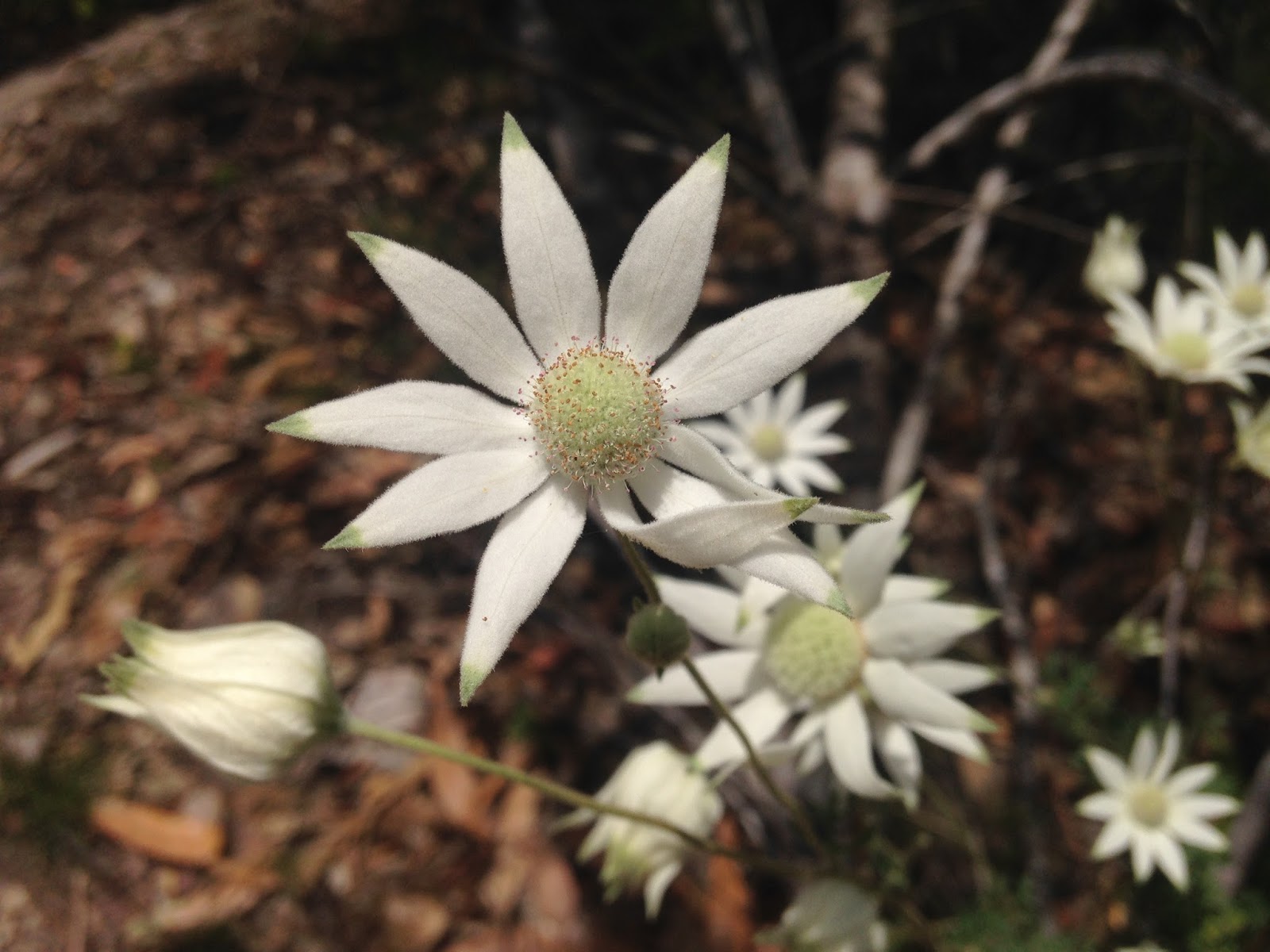
Flannel flowers in bloom - so named because they have a lovely soft, flannel-like feel to their petals.


Not a great photo but I was excited to find this and identify it when we got home: Lambertia formosa commonly known as Mountain Devil or Honey Flower. It was quite striking and the first time I've come across it. It belongs to the Grevillea family.


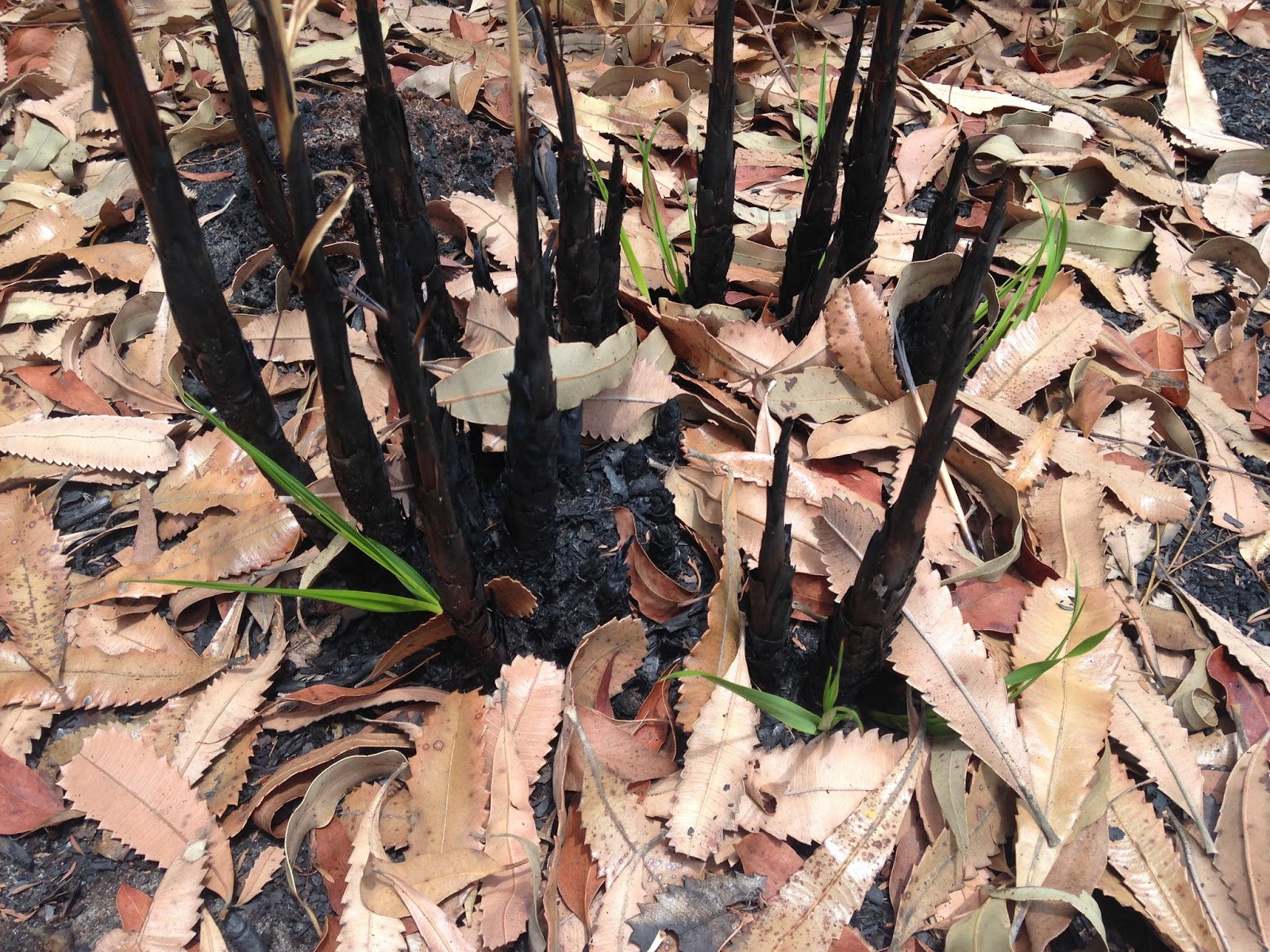
New growth after controlled backburning in the bush


Australian Magpie - there is a website to track aggressive magpies. We've never had a problem with them, thankfully!


One of our regular visitors, the laughing kookaburra


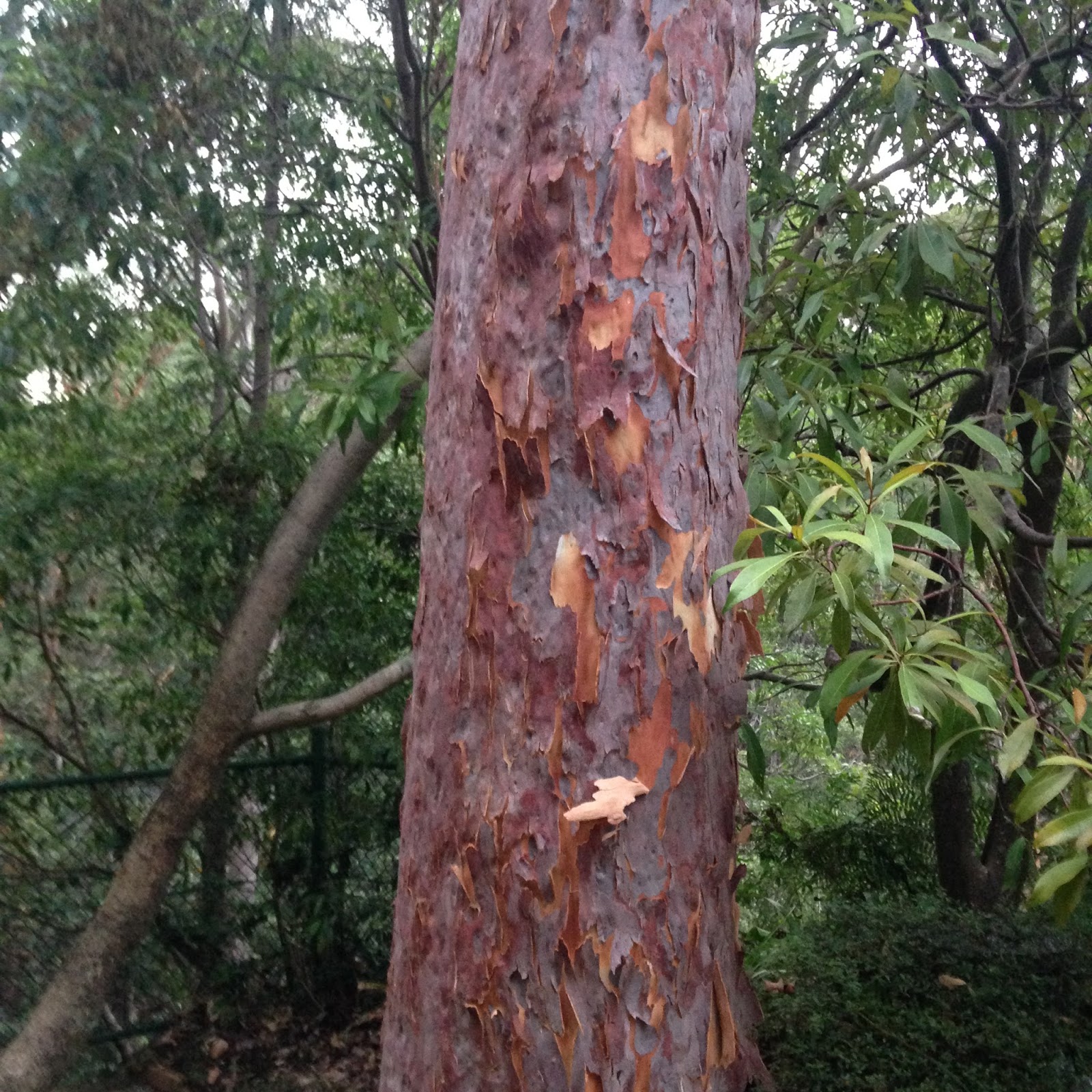
Oops...I forgot to add, 'Tis the season of the shedding of bark for the Angophora costata, or Smooth-barked Apple...'
It's an Australian native, doesn't produce apples and is notorious for dropping its branches and making an awful mess at this time of year.


Linking up with Celeste at Keeping Company