Monday, 26 October 2020

Charlotte Mason Highschool: The Outsiders by S.E. Hinton (1967)

The Outsiders is a coming of age sort of story which works really well, probably because the author wrote the book when she was just seventeen years old. It is told very simply and directly from the viewpoint of Ponyboy, a fourteen year old ‘Greaser.’ The author captures the main character’s  personality and concerns so well and so naturally.

Ponyboy lives with his two older brothers, Darry and Sodapop. Their parents were killed in a car accident and twenty year old Darry has taken on the role of keeping the family together. He is bent on avoiding any situation that would give an opportunity for the authorities to send the younger boys off to boys’ homes. He has had to grow up fast and work hard and Ponyboy, not understanding his older brother’s situation, believes he doesn't care and sees everything he does as unnecessary interference in his life.

Something that really struck me about this book was the value placed on the role of parents. This isn’t something you’d normally encounter in a book dealing with the struggles of adolescence and it was quite refreshing.

‘Darry and Sodapop were my brothers and I loved both of them, even if Darry did scare me; but not even Soda could take Mom and Dad’s place.’

Johnny was the Greaser gang’s pet, everyone’s kid brother. His father was always beating him and his mother ignored him unless she was angry and then she just yelled.

He could stay out all night and nobody would notice. When Ponyboy complained about his older brother, Johnny said, ‘I ain’t got nobody,’ 

Ponyboy was startled out of his misery:

Shoot...you got the whole gang. Dally didn’t slug you tonight ‘cause you’re the pet. I mean, golly, Johnny, you got the whole gang.’

‘It ain’t the same as having your own folks care about you,’ Johnny said simply. ‘It just ain’t the same.’

The Greasers were from the poorer side of town while their rival gang, the 'Socs,' were well-heeled and drove around in cars looking for Greasers to fight with. The two gangs were continually warring with each other but one night one of them was killed and everything changed for Ponyboy. Two gang members ended up on the run and suddenly it was no longer 'us' and 'them.' Ponyboy's former enemies are just like him - human.  

'Soda fought for fun, Steve for hatred, Darry for pride, and Two-Bit for conformity. Why do I fight? I thought, and couldn’t think of any real good reason. There isn’t any real good reason for fighting except self-defence.’

The Outsiders is a quick but memorable read suitable for around the age of 15 yrs and up. 

I first heard about the book when I hosted a ‘Mum Culture’ evening where a group of us discussed some of our most memorable reads. The gist of The Outsiders was mentioned, although the title had been forgotten and immediately someone else jumped in and said, “I loved that book!” and told everyone the title. So of course, I had to it check it out.

The ultimate test came when I gave it to my 15 year old daughter to read and she gave it her tick of approval also.

(I happened to notice that Ambleside Online has it as a free read in Year 11. I missed that in previous years so I don’t know if its been added lately or I just didn’t see it.)


Sunday, 18 October 2020

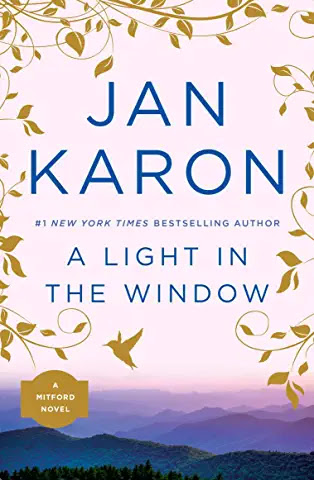
A Light in the Window by Jan Karon (1995)


A Light in the Window 
is the second book in Jan Karon’s beloved Mitford series. At Home in Mitford introduced Father Tim, Mitford’s rector and lifelong bachelor, and this book continues developing the characters and relationships that were introduced in there.

Father Tim’s relationship with his delightful neighbour, Cynthia, is getting more serious but there are some complications that arise, one of them being a wealthy and manipulative widow who has her eyes on the poor rector and seeks to beguile him with her gourmet cooking. An Irish cousin turns up unexpectedly, plants her uninvited self firmly in place, and proceeds to behave very strangely. Then there is Father Tim’s own personal struggles as he wrestles with his future and contemplates the words of C.S.Lewis, “We are not necessarily doubting that God will do the best for us; we are wondering how painful the best will turn out to be.”

‘In all the years of his priesthood, he had pastored the need of others. Now, he found himself pastoring others to meet his own needs.’

Father Tim is in his early 60’s and had been diagnosed with diabetes in At Home With Mitford. His relationship with his neighbour is blossoming but he has difficulty with intimacy and there are frequent allusions to his relationship with his father, a cold and distant man.

‘He believed he had never married because he was married to his calling. The truth was, he had a complete lack of the equipment demanded for truly loving.’

There is much humour scattered through this book even as it deals with serious issues. I enjoyed reading about the interactions in a small country town, the way the author deals with the ordinariness of life, its ups and downs, its hopes and disappointments, and the daily living out of a life of faith.

An aspect of this book that I liked is that Cynthia sees past the exterior of a man who is a bit overweight and has recently been diagnosed with diabetes, to see someone who is worth getting to know. She bypasses Andrew Gregory, a suave, articulate man-about town and chooses the unlikely Father Tim instead. It takes a while for Father Tim to realise this!

‘Diabetes was the sorriest of infirmities to drag to a dinner party.’

‘What was he, after all, when you came down to it, but a country parson? Not tall and trim and debonair like Andrew Gregory, who owned a closetful of cashmere jackets, could speak Italian, French, and a bit of Russian, and drove a Mercedes the size of a German tank.’

I’m looking forward to slowly reading my way through this refreshing and gentle series of fourteen books.


Saturday, 10 October 2020

Charlotte Mason Highschool - a 15 Year Old's Year

This is a review of what we've done this year. It's based on Ambleside Online Year 10 but with some adaptions for Australian content, personal interests, and substitutions I wanted to make - books I have and wanted to use or thought were important to include. I've linked to reviews or thoughts I've shared on some of the books.

Theology/Devotional/Apologetics

The Screwtape Letters by C.S. Lewis - a great book for a teen reader; full of humour but deadly serious!

By Searching by Isobel Kuhn - autobiography of a missionary to China that concentrates on the struggles of faith in her youth. I like to include a Christian biography each year and also a book that is set or focussed on the Asia Pacific region. This book worked for both categories.

Women of the Word by Jen Wilkin - we took turns reading this aloud: 'How to Study the Bible With Both Our Hearts & Minds.'

How Should We Then Live by Francis A. Schaeffer. I've used this now with all seven of our children. It's a book I think is very important as it traces key moments in the history of Western culture and the thinking of the people behind those moments in order to shed light on modern times. Schaeffer draws on his study of theology, philosophy, history, sociology and the arts in this work.


History

The Great Democracies by Winston Churchill

A Short History of Australia by Ernest Scott - out of print but online here. We used this book last year, the relevant chapters for this year and will continue with it for the first part of Year 11.

Killer Angels by Michael Shaara - the American Civil War. This was a free read because we had the book and Hails wanted to read it.

Biographies

Queen Victoria by Lytton Strachey. We also watched The Young Victoria, the 2009 production which concentrated on the lead up to Victoria's coronation and her marriage to Albert. I read Queen Victoria by Lucy Worsley thinking I could possibly use that but it had too much information on the improprieties of some of the royals for a 15 year old. A pity as it also touched on many other important characters of the time such as Benjamin Disraeli and William Gladstone although there were chapters I could have assigned that would have worked but I felt we'd covered enough in the end.

L'Abri by Edith Schaeffer - a book I wanted to include at some point so I used it this year.

Science & Natural History


A Short History of Nearly Everything by Bill Bryson - we started this last year and finished it in Term 1 of this year.  I read it aloud and it was engaging and an excellent book to discuss.

Microbe Hunters by Paul de Kruif -  as per AO schedule

The Planets by Dava Sobel - a very literary guide to the planets. The author obviously loves her subject but she does wax very lyrical so I wasn't sure if Hails would enjoy it but she did and it inspired many written narrations. 

The Girl Who Drew Butterflies by Joyce Sidman - a beautifully illustrated book about Maria Merian, an artist, adventurer and scientist in 17th century Europe.

Six Easy Pieces by Richard Feynman -  I wasn't expecting Hails to like this but she has so far. We started it later than scheduled and will finish it in the next couple of months.

Nature Studies in Australia by William Gillies - we finished this earlier in the year. 

The Wilderness by Amy Mack - a very short book (26 pages) Read aloud

Exploring Creation With Physical Science by Jay Wile - very good for experiments.

All Things Bright and Beautiful by James Herriot - I've been reading this series aloud for a couple of years. We've just started the next book, 'All Things Wise and Wonderful.' Hilarious and touching memoirs of a Yorkshire vet in the early to mid 1900's.


Archaeology 

I wrote about our archaeological studies a la Charlotte Mason here. Our main book has been God, Graves & Scholars by C. W. Ceram. We also made use of the free Dig School resources that were offered during COVID.

We continued with 50 Architects You Should Know that we started two years ago and finished it earlier this year.

Geography

Eothen by Alexander Kingslake 

Notes From a Small Island by Bill Bryson - we didn't finish this one (16 out of 29 Chapters). I bought the book at the end of our U.K. trip last year thinking it would be a great way to re-live some of the places we visited but in the end I was sick of the author's lewd, crude and obnoxious comments, not to mention his deplorable behaviour towards others on his travels through the U.K. in 1995. Very disappointing as we really liked his The Short History of Nearly Everything but he whined and complained in almost every chapter in this book and I had to edit so much on the fly I got fed up!! Not recommended and I'm not the only one who felt that way - I checked out Goodreads later. Apparently he must have lost the plot with this one.

We regularly use Seterra for map drills.


Australian Literature

The Book Thief by Markus Zusak - I read this years ago and thought it was 'O.K.' but Hails really enjoyed it. I liked the movie a lot more so we'll watch that some time soon.

Pied Piper, Trustee From the Toolroom and No Highway by Nevil Shute. These books weren't set here but I included them as an introduction to Shute who made his home here. The books I've read that have an Aussie setting are a little too mature for a 15 yr old, I think.

All the Green Year by Don Charlwood - a coming of age Aussie story.

General Literature

We used all the suggestions in AO Year 10 except Uncle Tom's Cabin and added In This House of Brede, which she loved, Mary Barton, and Martin Chuzzlewit. I didn't require narrations from these.

Shakespeare's Henry V - the play and then we watched the Kenneth Branagh DVD

Short Stories - I chose four from the AO selections

Essays - selections from AO and from God in the Dock by C.S. Lewis

Other

Plutarch - the Life of Alexander - this was one of the best lives we've read!

Ourselves by Charlotte Mason

One Blood by Ken Ham, Carl Wieland & Don Batten

How to Read a Book

The Deadliest Monster - liked this very much

Invitation to the Classics

Personal, Career, and Financial Security by Richard J. Maybury

Health

How Not to Diet by Dr Michael Greger - whole foods, plant based

HIIT sessions with me

Swimming several times a week

Art/Music

Musicianship & AMEB Studies for the cello
Folksongs & Hymns

The Arts by Van Loon

Picture Study - I put together a Charlotte Mason style study on the Australian artist Tom Roberts.

Masterpiece Society - we've used their watercolour and acrylic courses and they are very good for teaching technique. (affiliate link)


Free Reads

Hails is a very fast and voracious reader and I can't keep up with her but her favourite books lately are: 
Anything and everything by P. G. Wodehouse
Agatha Christie re-reads
Regina Doman's fairy tale retellings (the first two only at the moment)
Books by John Flanagan (The Ranger's Apprentice etc.)
The Walking Drum by Louis L'Amour
Witch Wood by John Buchan - one of the very few of this author's books she hadn't read before.

This year she read some more Dickens (who hasn't been her favourite author) and is in the process of reading War & Peace by Tolstoy.

I asked her to write about some of her favourite books and here is what she wrote: Ten Favourite Books of a 15 Year Old.

I've read and heard comments that using the Charlotte Mason method in highschool doesn't provide a rigorous enough education - it's too gentle, doesn't cover STEM subjects, won't prepare kids for university etc., etc. I really don't agree, if you provide a broad feast with enough of a challenge and plenty of living books to provide the mental sustenance a young person needs.
See this article I wrote for Afterthoughts:  'Charlotte Mason Doesn't Work for Highschool.' 


Monday, 28 September 2020

Nature Study: Spring in Australia

Hails and I finished our 6 week Natural History Illustration course offered by the University of Newcastle this month and we are planning to join a session with a Nature Club in October via Zoom. Covid has opened up some online educational opportunities that weren't available to us before, and they've been free, too. A bush walk during the first week in spring was too early to spot many wildflowers but a week later they were all out in their splendour.


One of our Natural Illustration assignments - quick field sketches. My kookaburra did not cooperate. 
My page is the one with the large blank section!


A trip to the beach. We were sitting outside the fish and chip shop and this pelican came along to check out the menu. 

He decided it looked pretty good and went in to place his order


This is his usual eating hole

Interesting sculpted rocks

 
A wee froggie that jumped out of some washing I had hanging outside


Notebooking our spring flowers


A couple of suspicious looking characters hanging around the neighbourhood


Friday, 25 September 2020

The Snow Child by Eowyn Ivey (2012)


Magical realism is not a genre I’m that familiar with and when I picked up a copy of The Snow Child at the library I wasn’t aware that it was in this category until I started reading it and was a few chapters in. I was expecting a fairytale retelling and in some ways it was, but it took on a life of its own and added a heavy dose of gritty reality. Gritty, but wondrous, and beautifully written. 

Generally I’m unimpressed with much modern writing that tries to pass as literature. It often feels forced or clumsy but Ivey’s writing was poetic, and like that of a naturalist. I could picture the Alaskan landscape of the 1920’s that she described and sense the wild danger of the place. 

The story is loosely based on a Russian fairy tale that Mabel, one of the main protagonists, remembered from her childhood and its theme is repeated throughout the story, so in one sense I felt that I was reading a fairytale, but the realistic setting tripped me up. As I said, magical realism isn’t something I’ve had much experience with so I spent most of the book trying to work out what on earth was going on. The ending was sort of expected but it also left me up in the air. 

BUT...I still loved the story and it lingers in my thoughts. A little unsolved mystery.

‘...the land was vast before her...No fields or fences, homes or roads; not a single living soul as far as she could see in any direction. Only wilderness.'

'It was beautiful, Mabel knew, but it was a beauty that ripped you open and scoured you clean so that you were left helpless and exposed, if you lived at all.'

Ivey very sensitively portrayed a marriage that was worn out by the burden of loss and hardship; a couple that had waited years to communicate their pain about the past to each other, only to find that their own personal view of the situation had been so skewed. It's a strange thing, this blocking of the heart and how we build up our own narrative without understanding the intent of another.

The friendship between two women of very diverse natures and backgrounds played a major part in the narrative as well and was one of my favourite themes in the book.

The idea of fading, often using the colour gray, recurred a few times in the story and described not only a physical aspect but also that of the soul - a general wearing out and despondency of spirit.

‘...she spotted a few strands of silver in his reddish-brown beard. When had they appeared? So he, too, was graying. Each of them fading away without the other’s notice.’

‘Everything was sparkled and sharp as if the world were new, hatched that very morning from an icy egg.’

The Snow Child is a poignant story of friendship, marriage, childlessness, love, loss, grief, beauty and nature. Due to the nature of some of the themes, this book is best for an adult reader. The magical realism of the story wouldn't be everyone's cup of tea but I think it's a very worthwhile read.


Tuesday, 22 September 2020

Back to the Classics 2020 Challenge: Final Wrap Up


Well, this is the earliest I've ever posted my final wrap-up for the Back to the Classics Challenge! I've managed to fit in a lot of books so far this year, thanks mostly to Covid! I'm very happy to have finally read The Lord of the Rings...and to have enjoyed them so much. They were just the right books to read as we went into lockdown here. I also watched the movies, which I'd put off viewing until I'd read the books.

A pleasant surprise for me out of this list was Martin Chuzzlewit. I've read just about all of Dickens' novels, and wasn't busting to read any of his others but by chance I found this book, had no idea of its storyline, and had never seen it reviewed. I decided to read a chapter and if I found it too rambling I'd give it a miss, but I fell into it headlong and continued. A great read!

A book that made me cry (which doesn't happen very often) was The Death of Ivan Ilyich. A perfect (short) book to pick up for a first introduction to a Russian writer.

Saplings was very different to anything else I'd read by Noel Streatfeild - definitely not for children like many of her other books; a tragic tale of the impact of WW2 on a family.

Sadly, Miss Pym Disposes is the last of of Josephine Tey's crime/detective noels I had left to read. I've thoroughly enjoyed her books.

The only book I didn't really like was The Island of Doctor Moreau. There was a reason it was my abandoned classic!

19th century Classic: Martin Chuzzlewit by Charles Dickens (1843-5)

20th Century Classic: Doctor Zhivago by Boris Pasternak (1957-8)

Classic by a Woman: The Making of a Marchioness by Frances Hodgson Burnett (1901)

Classic in Translation: The Death of Ivan Ilyich by Leo Tolstoy (1886)

Classic by a Person of Colour: To Sir With Love by E.R. Braithwaite (1959)

Genre Classic: The Murder at the Vicarage by Agatha Christie (1930)

Classic With a Name in the Title: Miss Pym Disposes by Joesphine Tey (1946)

Classic With a Place in the Title: Pilgrim's Inn by Elizabeth Goudge (1948)

Classic With Nature in the Title: The Scent of Water by Elizabeth Goudge (1963)

Classic About a Family: Saplings by Noel Streatfeild (1945)

An Abandoned Classic: The Island of Doctor Moreau by H.G. Wells (1896)

Adapted Classic: The Lord of the Rings by J.R. Tolkien (1949)


Monday, 14 September 2020

Come, Tell me How You Live by Agatha Christie Mallowan (1946)


Come, Tell me How You Live, which Christie describes as 'a meandering chronicle' of life on an archaeological dig, is just delightful! I came across this book accidentally when I was looking for some of her crime novels with an archaeological setting.

Agatha Christie met the distinguished young archaeologist, Max Mallowan, in 1930 when she visited Leonard and Katherine Woolley in Baghdad. Her first marriage had come to an end a few years previously and she and Mallowan were married about six months after they met and enjoyed forty-six years together until her death in 1976. During the pre-war years, Agatha accompanied Mallowan on all his digs and took an active part in the photography, recording and preservation of the finds. Come, Tell me How You Live was written to answer a question that was asked of her very often:

'So you dig in Syria, do you? Do tell me all about it. How do you live? In a tent?...'

The book was begun before the war but was put aside for four years while she was engaged in volunteer work in war-time London and Max was serving overseas. In 1944 she picked it up again and said that it was a joy and refreshment to her to live those days again.

'Writing this simple record has been not a task, but a labour of love. Not an escape to something that was, but the bringing into the had work and sorrow of today of something imperishable that one not only had but still has.'

Come, Tell Me How You Live revealed a side of Agatha Christie that I would never have guessed existed. Her warmth, humour and honesty shone through the writing and I felt I got to know her as a person and not a detached narrator. It was such a pleasure to read about her relationship with Mallowan. They obviously were very secure and comfortable with each other. I had to laugh when she describes an 'archaeological packing,' which consists mainly of books. (I can relate to that!) Mallowan asks if she has room in her suitcases and promptly rams two immense tomes on top of her smugly packed clothes and forces down the lid. The next morning...

'At nine a.m. I am, called in as the heavy-weight to sit on Max's bulging suitcases.

'If you can't make them shut,' Max says ungallantly, 'nobody can!'

Max saw everything through an archaeological lens. Seeing a folded printed linen dress in one of Agatha's suitcases he asked what it was and when told commented that it had 'fertility motifs all down the front.' Another time he suggested she wear 'the greenish buff with the Tell Halaf running lozenge pattern.' He described everything in pottery terms - 'pinkish buff,' and was obsessed with Tells.

Agatha continued her crime writing while on the field and found much inspiration for her books in her Middle Eastern travels. One day, one of the expedition team who had newly arrived and was very sociable, interrupted her while she was getting down to the gory details of a murder. He asked if he could join her in the office while he labelled some objects, but she had to be firm:

'I explain clearly that it is quite impossible for me to get on with my dead body if a live body is moving, breathing, and in all probability talking, in the near vicinity.'

Mice, fleas, mechanical breakdowns, fighting workers, eccentric personalities, post office dramas, conniving sheiks, are all a part of life and are described vividly.

'Anointing beds with carbolic merely stimulates the fleas to even greater displays of athletics. It is not, I explain to Mac (a young archaeological assistant), so much the bites of the fleas. It is their tireless energy, their never ending hopping races round and round one's middle that wears one out. Impossible to drop off to sleep when fleas are holding the nightly sports round and round the waist.'

I've shared in a previous post the Archaeological Studies I'd put together for my daughter in which I included some fiction as an added interest and also because she's always hunting for books to read. After reading Christie's memories of her and Mallowan's archaeological expeditions in the Middle East and enjoying it so much, I decided I'd add this to her reading in Year 11.

252 pages.


Linking to the 2020 NonFiction Reading Challenge at Book'd Out: Memoir


Thursday, 3 September 2020

To Sir With Love by E.R. Braithwaite (1959) Non-fiction

Edward Ricardo Braithwaite was born in 1920 in the former British Colony of Guiana (now independent Guyana.) Both his parents were middle-class Caribbean intellectuals and were educated at Oxford. Braithwaite attended an elite school in British Guiana and then studied engineering in New York. In 1939 he went to England for post-graduate study and volunteered for service with the Royal Air Force in 1940. 

To Sir With Love opens after the end of WWII and the author's demobilisation. At this time Britain had an urgent need for people with an electronic background and Braithwaite was confident he would find work in this area. However, after a string of employers rejected his application for work purely because of the colour of his skin, he became bitter and disillusioned.

As a boy he had grown up British in every way and it was without hesitation that he signed up with the R.A.F. and was ready to lay down his life for the preservation of the ‘British Way of Life.’ As a West Indian Colonial, his ties to Britain were strong but the reality was that ‘it is wonderful to be British - until one comes to Britain.’

‘I am a Negro...I had believed in freedom, in the freedom to live in the kind of dwelling I wanted, providing I was able and willing to pay the price; and in the freedom to work at the kind of profession for which I was qualified, without reference to my racial or religious origins...’

It was very interesting to read his comparison of prejudice in the USA to that of what he experienced in Britain.

'I reflected on my life in the U.S.A. There, when prejudice is felt, it is open, obvious, blatant; the white man makes his position very clear, and the black man fights those prejudices with equal openness and fervour, using every constitutional device available to him...In Britain I found things to be very different. I have yet to meet a single English person who has actually admitted to anti-Negro prejudice; it is generally believed that no such thing exists here...The betrayal I now felt was greater because it had been perpetrated with the greatest of charm and courtesy.’ 

In many respects the war had been an equaliser. Communal fear and terror had promoted communal virtues but now that the war was over and economic recovery was taking place, those virtues were dissipating. After eighteen months without work Braithwaite became bitter and disillusioned, a state he described as a cancerous condition, but a chance encounter with a kindly, wise, older man in a London park changed the course of his life. The elderly man struck up a conversation with the reluctant, truculent younger man and in the end encouraged him to take up teaching. Braithwaite did so and his experience in a school in the slums of the East End of London makes up the substance of his book.

This passage reminded me so much of Charlotte Mason's ideas of education and her belief that every child should have a liberal education, regardless of their background and capabilities:

‘Assembly was a simple affair without religious bias or emphasis. It began with a hymn and prayer in which every child joined...the invocation for guidance, courage and Divine help was for each and all. After prayer the Head read a poem, La Belle Dame Sans Merci. The records which followed were Chopin’s Fantaisie Impromptu and part of Vivaldi’s Concerto in C for two trumpets.

They listened, those rough looking, untidy children; every one of them sat still, unmoving and attentive, until the very echo of the last clear note had died away...they were listening, actively, attentively listening to those records...their bodies were still, but I could feel that their minds and spirits were involved with the music.’

To Sir With Love is an inspiring and articulate true account of a man who rose above bitterness, dealt with his own arrogance and prejudice, and enabled a bunch of feral teenagers to embark on adult life with dignity and hope. A book well worth reading and a great story for a future (or present) teacher to immerse themselves in. 


Linking to 2020 Back to the Classics and 2020 Non-Fiction Reading Challenge @ Book'd Out: A Book Related to an Occupation.


Tuesday, 1 September 2020

A Peek into Ambleside Online Year 10

We only have about five weeks left of Ambleside Online Year 10, so while we're still in progress I thought I'd share some of what we've been doing in recent times. I've mentioned before that this year Miss 15 yrs ('Hails') had developed a liking for free form poetry. One of her favourite compositions is 'Home,' which was published in the latest edition of the Common Place Quarterly.

 
This year we've only done one of Plutarch's Lives - Alexander, as it's spread over 24 weeks. We finished it about a month ago and now we are doing Shakespeare's Henry V. I stopped including both Plutarch and Shakespeare each term some years ago as it always felt a little crammed with everything else we do.
The Life of Alexander has been one of the best lives we've done since we began studying Plutarch eight years ago with Hails' three older brothers.

The Wilderness by Amy Mack - we finished this last week. It's only 40 pages but it is a delightful look at a little 'wilderness' the author found near her home where she observed Australian native flora & fauna.


We started reading James Herriot's third memoir about his veterinarian career a few weeks ago. This book contains 'Vets Might Fly' and 'Vets in a Spin,' and begins with the author's wartime R.A.F. training in London. As he goes through the misery of rigorous training on a foggy morning, his thoughts go back to another foggy morning in the Yorkshire Dales when he was woken at 5.30 a.m. by a phone call from Lord Hulton whose sow had a prolapsed uterus.

"It was no good me telling him that I had seen five prolapsed uteri in pigs in my limited experience and had failed in every case. I had come to the conclusion that there was no way of putting them back...
And the journey to the Hulton farm was not enlivened by my memories of those five other sows. I had tried everything; full anaesthesia, lifting them upside down with pulleys, directing a jet from a hose on the everted organ, and all the time pushing, straining, sweating over the great mass of flesh which refused to go back trough that absurdly small hole. The result in each case had been the conversion of my patient into pork pies and a drastic plummeting of my self-esteem."

Hymn: There is a Fountain


Folksong: Country Roads


Music Appreciation/Composer: This is another area where we've diverged from the AO Curriculum and have adjusted to our specific circumstances. Hails is studying the cello at a fairly high level and is also involved in an orchestra so she covers a wide variety of classical music. We tend to focus on listening to the pieces she has to study. This year they've included Joseph Haydn, Astor Piazzolla, and César Franck.

Artist/Picture Study: Charles Condor - An Early Taste of Literature, 1888. We've concentrated on some Australian artists this year. We look at about 5 or 6 pieces from the same artist over a term and after about 2 weeks studying one painting Hails write a description of it from memory. In the past she has also done a quick sketch of a composition from memory.


When we finish up the year I'll write some more about the books etc. we've used this year.

Free Reading

Some books Hails has read in July & August with her ratings:

Books by P.G. Wodehouse - all 10/10:

A Damsel in Distress
Something Fishy 
Jeeves in the offing
The Small Bachelor
Summer Moonshine
The Adventures of Sally

Little Dorrit by Charles Dickens 9/10

Shirley by Charlotte Bronte 9/10

Books by Ngaio Marsh - all 10/10

Hand in Glove
Dead Water
Death at the Dolphin
Vintage Murder
Overture to Death
Death at a White Tie

Adam Bede by George Eliot 8/10 


Monday, 24 August 2020

Doctor Zhivago by Boris Pasternak (1957-8)

Doctor Zhivago by Boris Pasternak (1890 - 1960) is an epic Russian novel that takes place during the socialist revolution of 1905 and the years up to World War II. Philosophical and beautifully written, it is sometimes difficult to follow as it has a cast of thousands and everyone is known by about three or four different names. Ah! Russian novels!


Doctor Zhivago was first published in the West in 1957 but was banned in the Soviet Union. Pasternak won the Nobel Prize in Literature in 1958 'For his important achievement both in contemporary lyrical poetry and in the field of the great Russian epic tradition.'

Pasternak initially accepted the award but after a brutal denunciation by the Soviet regime he reluctantly renounced it. It was either that or be banished from the country he loved. It wasn’t until 1988, twenty-eight years after his death, that the book was published in Russia for the first time. From what I’ve read about the author, the book is partly autobiographical. 

Yuri Zhivago, the main character, is a physician and poet. Pasternak was born into an artistic family and had a classical education. He went on to study music and philosophy but gave them up to devote himself to poetry. Zhivago’s life reflected that of the author’s in his relationships with women also.

Zhivago was an intellectual and as such, an enemy of the people in the new Communist regime. In many ways he was a victim of the times: forcibly taken by the partisans to work in hospitals on the battlefields, he was removed without notice from his wife, Tonya, and young family, who could only guess at his whereabouts. Given an opportunity to escape his forced detention, he basically walked across Siberia to his old home but found his family had relocated. 

Throughout the novel there are threads of long-term friendships and a vast network of relationships that intertwine and separate throughout. One of these relationships was in the person of Lara whom Yuri had met when he was a boy and later on as he was working in the hospital in town. He had just begun a relationship with her before he was taken by the partisans and they came together again after his escape. He was a complex, sensitive man but his actions at times demonstrated a lack of moral feeling. Although at times he pined for knowledge of his wife and children, he didn’t make any great effort to find them. Zhivago’s internal world reflected his external circumstances:

'Everything established, settled, everything to do with home and order and the common round, has crumbled to dust and been swept away in the general upheaval and reorganisation of the whole of society...'

The author must have been a brave man to try to publish a book like this in Soviet Russia. It is certainly not a glowing account of the rise of the Soviet state. Yuri was at first an admirer of the Communist cause but that admiration dissipated as the book progressed:

‘...he found that he had only exchanged the old oppression of the tsarist state for the new, much harsher yoke of the revolutionary super-state.’

‘Revolutions are made by fanatical men of action with one-track minds, men who are narrow-minded to the point of genius. They overturn the old order in a few hours or days … but for decades thereafter, for centuries, the spirit of narrowness which led to the upheaval is worshipped as holy.’

‘...it turns out that those who inspired the revolution aren’t at home in anything except change and turmoil: that’s their native element; they aren’t happy with anything that’s less than on a world scale.’

He was to ask himself later:

‘Was it possible that in one short moment of over-sensitive generosity he had allowed himself to been enslaved forever?’

Pasternak’s poetic ability shines through his writing so brilliantly that it was difficult to choose what to share here. He also digresses into much philosophical meandering but it is so well-written that I think it adds to the story. Some of these philosophical reflections reminded me of Tolstoy’s writing in Anna Karenina - actually, Tolstoy was a friend of Pasternak’s parents.

Marxism a science?...Marxism is not sufficiently master of itself to be a science. Science is more balanced. You talk about Marxism and objectivity. I don’t know of any teaching more self-centred and further from the facts than Marxism. Ordinarily, people are anxious to test their theories in practice, to learn from experience, but those who wield power are so anxious to establish the myth of their own infallibility that they turn their back on truth as squarely as they can. Politics mean nothing to me. I don’t like people who are indifferent to the truth.’

‘Men who are not free...always idealise their bondage.’

I loved this description:

‘Now the front is flooded with correspondents and journalists...linguistic graphomania and verbal incontinence.’ 

And this one:

‘Everything had changed suddenly - the tone, the moral climate; you didn’t know what to think, who to listen to. As if all your life you had been led by the hand like a small child and suddenly you were on your own, you had to learn to walk by yourself. There was no one around, neither family nor people whose judgement you respected. At such a time you felt the need to entrust yourself to something absolute - life or truth or beauty - of being ruled by it now that man-made rules had been discarded.’

‘How intense can be the longing to escape from the emptiness and dullness of human verbosity, to take refuge in nature, apparently so inarticulate, or in the wordlessness of long, grinding labour, of sound sleep, of true music, or of a human understanding rendered speechless by emotion!’ 

‘There was something in common between events in the moral and the physical world, between disturbances near and far, on earth and in the sky.’

Pasternak was a master of simile and metaphor:

‘The gunfire had died away behind him. There, behind him was the east. There the sun had risen in a drift of mist and was peering dully through floating shadows, like a naked man through a cloud of steam at the baths.’

‘Grief had sharpened Yuri’s vision and quickened his perception a hundredfold. The very air surrounding him seemed unique. The evening breathed compassion like a friendly witness of all that had befallen him. As if there had never been such a dusk before and evening were falling now for the first time in order to console him in his loneliness and bereavement. As if the valley were not always girded by woods growing on the surrounding hills and facing away from the horizon, but the trees had only taken up their places now, rising out of the ground on purpose to offer their condolences.‘ 

An extract from Yuri’s diary in happier times with Tonya and her father who lived with them:

‘At the beginning, during the spring and summer, we had a very hard time. It was all we could do to struggle along. But now we can relax in the winter evenings...The women sew or knit, Alexander Alexandrovich or I read aloud...We read and re-read War and Peace, Eugene Onegin, and Pushkin’s other poems, and Russian translations of Stendhal’s Rouge et Noire, Dickens’s Take of Two Cities and Kleist’s short stories.’

At the end of Doctor Zhivago the Bezprizornaya, homeless children whose parents were killed in the civil war, are mentioned. There is an article here about this: 

My copy of Doctor Zhivago pictured above was published by Vintage in 2002 and was translated from the Russian by Max Hayward and Manya Harari in 1958. 


Linking to Back to the Classics 2020: 20th Century Classic


Thursday, 6 August 2020

Nature Study in Australia: Winter

These are some of our recent nature gleanings. On a visit to a local park this very tame rabbit was having breakfast and remained totally oblivious to us and we were able to have an unplanned nature study observing him/her feeding.


We've used Nature Studies in Australia by William Gillies this year for studying Natural History in Australia and finished it the other week so now I'm reading The Wilderness by Amy Mack (1922) aloud. It's only 26 pages in length but it fits in nicely with the course from U of N. A free online version is available here.


Last week we had a walk down near the creek after quite a bit of rain. We have a waterfall that gives a spectacular display after a good amount of rain and this was the first time that these two had seen it like this. My granddaughter (who's nearly 3 yrs old) pointed to it and called it a shower. 


Here they are having a good splash in a puddle. My grandson (nearly 2 yrs of age) calls any body of water a puddle including the river we visited a couple of months ago.


Miss 15 yrs and I signed up to do the free University of Newcastle's Natural History Illustration course. Hails had already done it about 2 years ago and wanted to do it again so I joined her this time.
This is my rendition of an echidna. We usually see about one a year around our area and I sketched this from a photo as they don't hang around for very long and start to burrow if they sense people are near.


This was this week's lesson was about 'developing good observational skills and accurately recording every detail you see in front of you; looking at both positive & negative spaces, breaking down complex subjects into simplified shapes & depicting a three dimensional object on a two dimensional surface.'
This is my drawing from that:

 
And this is Hails' drawing of a fox and the stages she went through in doing it - yes, she leaves me for dead, but she is very encouraging and likes me drawing (well, trying to) with her. 

A wattle in bloom... a little earlier than usual
Some fungi after all the rain


We've seen some new birds on our birdfeeder or on the camellia trees nearby but haven't been able to identify them yet. Our lyrebird makes an appearance from time to time and today we saw a black cockatoo in a tree just up the road. and we've had our yearly sighting of an echidna.